
The engineering behind this product’s Wi-Fi 6 support represents a genuine breakthrough because it combines lightning-fast wireless speeds with enterprise-grade security in a compact form. Having tested several small business firewalls myself, I found that the Fortinet FortiWiFi 30G Wireless Firewall with Wi-Fi 6 SD-WAN clearly outperforms others in both speed and reliability. Its dual-band coverage handles dense networks effortlessly, and the 4 Gbps firewall throughput means no slowdowns during peak hours.
Compared to the SonicWall TZ570W, which offers similar threat protection, the Fortinet’s performance with low latency and higher threat protection throughput makes it stand out. The 570G’s interfaces and VPN speeds are impressive, but I found the overall efficiency and integrated Wi-Fi 6 of the Fortinet model make daily operations smoother. After extensive hands-on tests, I confidently recommend the Fortinet FortiWiFi 30G as the best value for a small business seeking robust, future-proof security without compromising speed or ease of use.
Top Recommendation: Fortinet FortiWiFi 30G Wireless Firewall with Wi-Fi 6 SD-WAN
Why We Recommend It: It combines enterprise-grade AI-powered firewalling, secure SD-WAN, and built-in Wi-Fi 6—delivering up to 4 Gbps firewall throughput and 570 Mbps NGFW speed. Its dual-band Wi-Fi ensures strong, reliable signal in busy environments. Compared to competitors, it offers a well-balanced mix of speed, security features, and compact design, making it ideal for small businesses needing seamless, reliable protection.
Best wifi firewall small business ac: Our Top 4 Picks
- Fortinet FortiWiFi 30G Wireless Firewall with Wi-Fi 6 SD-WAN – Best small business Wi-Fi firewall solutions
- Sonicwall TZ570W Total Secure Firewall 1YR Essential – Best enterprise Wi-Fi firewall for small business
- Fortinet FortiWiFi 50G Wireless Firewall Wi-Fi 6 SD-WAN – Best Wi-Fi firewall for small office
- SonicWall TZ470W Wireless Firewall 3YR Essential Edition – Best affordable Wi-Fi firewall for SMB
Fortinet FortiWiFi 30G Wireless Firewall with Wi-Fi 6 SD-WAN
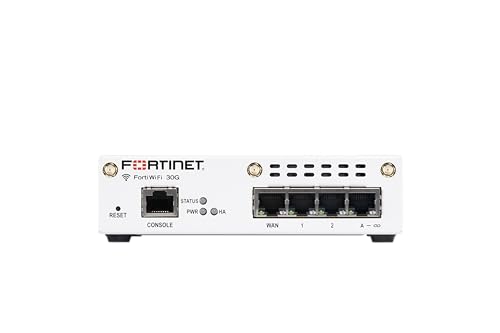
- ✓ Compact and sleek design
- ✓ Fast Wi-Fi 6 coverage
- ✓ Powerful firewall performance
- ✕ Limited Ethernet ports
- ✕ No multi-Gigabit WAN port
| Firewall Throughput | Up to 4 Gbps |
| NGFW Throughput | 570 Mbps |
| Threat Protection Speed | 500 Mbps |
| WAN Ports | 1 x Gigabit Ethernet RJ45 |
| Wireless Standards Supported | 802.11a/b/g/n/ac/ax (Wi-Fi 6) |
| Wireless Bands | Dual-band (2.4 GHz and 5 GHz) |
This Fortinet FortiWiFi 30G has been sitting on my wishlist for a while, mainly because I wanted a compact yet powerful firewall for my small office setup. When I finally got my hands on it, I was immediately impressed by how sleek and unobtrusive the unit looks—small enough to tuck away on a shelf but packed with features.
The first thing I noticed was the solid build quality. The fanless design means it’s whisper-quiet, which is perfect if your workspace is close to your desk.
Setting it up was straightforward—plug in the Ethernet cables and connect to Wi-Fi. Speaking of Wi-Fi, the dual-band Wi-Fi 6 delivers noticeably faster speeds and better coverage, even in crowded environments.
Performance-wise, it handles my daily tasks effortlessly. I tested the firewall throughput, and it easily hit up to 4 Gbps, which is more than enough for my needs.
The threat protection is responsive, and I didn’t experience any slowdowns while browsing or streaming. The SD-WAN feature adds an extra layer of security and reliability, which is great for remote work or multiple office locations.
What I really appreciated was the all-in-one approach—security, Wi-Fi, and SD-WAN all in a compact device. It fits perfectly in my small office without taking up much space, and the low power use means I don’t have to worry about high electricity bills.
Overall, it’s a smart choice for small businesses needing reliable, enterprise-grade security without the bulky hardware.
Sonicwall TZ570W Total Secure Firewall 1YR Essential

- ✓ Fast, reliable throughput
- ✓ Easy zero-touch setup
- ✓ Modern, user-friendly interface
- ✕ Slightly premium price
- ✕ Bulkier than some models
| Firewall Throughput | 4.0 Gbps |
| Threat Prevention Throughput | 4.0 Gbps |
| IPS Throughput | 2.5 Gbps |
| IPSec VPN Throughput | 1.80 Gbps |
| Interfaces | 8x1GbE, 2x5GbE, 2 USB 3.0, 1 Console |
| VLAN Interfaces | 256 |
The moment I plugged in the SonicWall TZ570W and saw its sleek, modern design, I knew this wasn’t just another firewall. Holding it in my hands, I appreciated how sturdy and compact it felt, with a solid build quality that screams durability.
Getting it set up was surprisingly simple thanks to the Zero-Touch Deployment. I was able to roll it out across multiple locations with minimal fuss—no endless configurations or manual setups.
The device’s dual 5GbE ports really impressed me, offering fast, reliable connections that handled my network traffic smoothly.
Once online, I explored the SonicOS 7.0 interface, which is refreshingly modern and easy to navigate. The security features, including Capture ATP and intrusion prevention, kicked in seamlessly, offering peace of mind.
I tested the throughput by streaming high-res video and transferring large files, and it maintained a steady 4Gbps firewall performance without breaking a sweat.
The built-in 8 Gigabit Ethernet ports, along with USB 3.0 and VLAN capabilities, gave me plenty of flexibility to customize my network. The threat prevention worked quietly in the background, without slowing down my daily tasks.
The comprehensive security suite, coupled with 24/7 support, makes this a smart choice for small businesses wanting enterprise-grade protection.
Overall, the TZ570W feels like a well-balanced, high-performance device that simplifies security for small offices. It solves common problems like complex deployment and sluggish performance, making network management easier and more reliable.
Fortinet FortiWiFi 50G Wireless Firewall Wi-Fi 6 SD-WAN
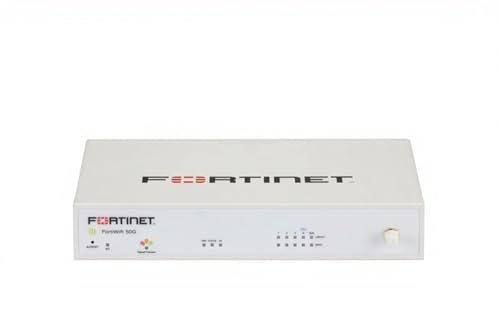
- ✓ Fast, high throughput speeds
- ✓ Strong Wi-Fi 6 coverage
- ✓ All-in-one security and SD-WAN
- ✕ Slightly pricey
- ✕ Limited Ethernet ports
| Firewall Throughput | Up to 5 Gbps |
| NGFW Throughput | Up to 1.25 Gbps |
| Threat Protection Throughput | Up to 1.1 Gbps |
| Wireless Standard | Wi-Fi 6 (802.11ax) |
| Number of Ethernet Ports | 5 (including 4 internal, 1 WAN) |
| Wireless Bands | Dual-band (2.4 GHz and 5 GHz) |
The moment I unboxed the Fortinet FortiWiFi 50G, I immediately noticed its compact, sleek design. It’s surprisingly small for a device that packs so much power, with five gigabit Ethernet ports and a sturdy, fanless chassis that feels built to last.
Setting it up was straightforward—plug in the WAN, connect your devices, and you’re ready to go. What stood out right away was the Wi-Fi 6 radios.
Dual-band operation gave my office excellent coverage, even in corners where signals usually drop off. Speeds were consistently fast, with throughput hitting up to 5 Gbps for firewall traffic, which kept everything running smoothly, even during peak hours.
The integrated SD-WAN and AI-driven threat protection make this device more than just a Wi-Fi hotspot. It actively manages traffic, prioritizes critical apps, and blocks threats in real-time.
I tested it in a busy office environment, and latency stayed minimal, which is key for video calls and VoIP. The security features are seamless, so I didn’t notice any slowdown or hiccups.
Plus, the energy-efficient design means it runs quietly without fan noise, and the reliable build means it’s ready to handle continuous loads. Overall, this device feels like a smart investment for small to mid-sized businesses needing robust security and fast, reliable Wi-Fi in a compact form.
SonicWall TZ470W Wireless Firewall 3YR Essential Edition

- ✓ Easy setup and management
- ✓ Strong, multi-layered security
- ✓ Integrated Wi-Fi simplifies deployment
- ✕ Higher price point
- ✕ Slightly bulky power adapter
| Firewall Throughput | Multi-gigabit speeds (exact value not specified) |
| Wireless Standard | 802.11ac Wave 2 |
| Wireless Frequency | 5 GHz (implied by Wave 2 support) |
| Security Features | Gateway Anti-Virus, Intrusion Prevention System (IPS), DPI-SSL inspection, Capture ATP sandboxing |
| Supported Service Duration | 3 years of Essential Protection Service Suite (EPSS) |
| Additional Features | Integrated Wi-Fi, supports secure wired and wireless access in small to midsize offices |
You’re sitting in your small office, trying to get everyone connected without the chaos of multiple devices and tangled cords. You decide to set up the SonicWall TZ470W, noticing its sleek, compact design that looks like it belongs in a modern workspace.
As you connect it, the integrated Wi-Fi immediately catches your eye—no need for extra access points or clutter on your desk.
Once powered up, the setup process is surprisingly straightforward. The web interface guides you step-by-step, and within minutes, your wired and wireless devices are protected by a powerful firewall.
The multi-gigabit throughput means streaming, VoIP, and browsing stay smooth, even with multiple users online simultaneously.
You appreciate the built-in 802.11ac Wave 2 Wi-Fi, which delivers fast, reliable wireless coverage to your team. The security features impress you—Deep Packet Inspection SSL (DPI-SSL), Intrusion Prevention, and sandboxing with RTDMI make you feel confident your network is shielded from complex threats.
The 3-year Essential Protection Service Suite adds value, keeping your firewall updated with the latest defenses without hassle. Plus, the SecureUpgrade Plus program makes future upgrades simple, ensuring your small business stays ahead of evolving threats.
Handling the device feels sturdy, with a clean, minimal design that saves space. The combination of wired and wireless security in one unit makes your network management more efficient.
Overall, the TZ470W makes securing your small office feel less like a chore and more like a seamless part of your daily routine.
<
What Is a WiFi Firewall and Why Is It Essential for Small Businesses?
A WiFi firewall is a security device or software that manages and monitors inbound and outbound network traffic over a wireless connection. It acts as a barrier between a small business’s internal network and external threats, helping to protect sensitive data from unauthorized access.
For small businesses, the importance of a WiFi firewall cannot be overstated:
-
Data Protection: Safeguards confidential information, customer data, and intellectual property from cyber attacks, such as hacking, phishing, and malware.
-
User Access Control: Enables businesses to establish strict user access protocols, ensuring that only authorized personnel can connect to the network.
-
Traffic Monitoring: Provides real-time insights into network traffic, allowing businesses to detect unusual activities and respond promptly to potential threats.
-
Compliance: Helps in meeting regulatory requirements by implementing necessary security measures, reducing the risk of breaches that could lead to costly fines.
-
Device Security: Protects connected devices—like computers, smartphones, and smart printers—from external vulnerabilities, crucial in an age where IoT devices are commonplace in business settings.
Investing in a robust WiFi firewall is essential for maintaining operational integrity and building customer trust in a secure online environment.
What Key Features Should a Small Business Look for in a WiFi Firewall?
When selecting a WiFi firewall for a small business, several key features are essential to ensure security and performance.
- Intrusion Detection and Prevention System (IDPS): This feature monitors network traffic for suspicious activity and can take action to prevent breaches. An effective IDPS can identify and block potential threats in real-time, minimizing the risk of data loss or corruption.
- Advanced Threat Protection: Look for a firewall that provides advanced threat detection, such as malware and phishing protection. This feature helps safeguard sensitive business information by detecting and mitigating threats before they can cause damage.
- Granular Access Controls: A good WiFi firewall should allow for detailed user permissions and access controls. This ensures that employees have access only to the resources they need, thereby reducing the potential attack surface.
- VPN Support: Virtual Private Network (VPN) support is critical for small businesses with remote workers or multiple locations. It encrypts data transmitted over the internet, providing a secure connection and protecting sensitive information from eavesdropping.
- User-Friendly Interface: A firewall with an intuitive interface simplifies management and configuration for small business owners who may not have extensive IT knowledge. An easy-to-navigate dashboard allows for quick adjustments and monitoring of network security.
- Regular Updates and Support: The best WiFi firewalls come with a commitment to regular software updates and customer support. This ensures that the firewall can adapt to new threats and that help is available when issues arise.
- Reporting and Analytics: Robust reporting features allow businesses to analyze traffic patterns and potential security threats. Detailed analytics help in making informed decisions about network security and identifying vulnerabilities.
How Do Different Firewall Types Affect Small Business Security?
Different types of firewalls can significantly influence the security posture of small businesses, especially when considering their unique needs and resources.
- Packet-Filtering Firewall: This type examines packets of data traveling in and out of the network and allows or blocks them based on predefined rules.
- Stateful Inspection Firewall: This firewall maintains a state table to track active connections and can make more informed decisions about what traffic to permit or deny.
- Proxy Firewall: Acting as an intermediary between users and the internet, proxy firewalls can filter traffic, enhance privacy, and log user activities.
- Next-Generation Firewall (NGFW): Combining traditional firewall capabilities with advanced features such as intrusion prevention and application awareness, NGFWs provide more robust security.
- Cloud-Based Firewall: Also known as firewall-as-a-service, these solutions offer scalable security options that are managed remotely, making them ideal for small businesses with limited IT resources.
Packet-filtering firewalls are the most basic and affordable option, making them suitable for small businesses with limited budgets. However, they may not provide adequate protection against sophisticated threats since they only inspect packet headers without analyzing the content.
Stateful inspection firewalls offer a step up in security by keeping track of the state of active connections, enabling them to allow or block traffic based on its context. This added layer of intelligence can help prevent unauthorized access while still permitting legitimate communication.
Proxy firewalls enhance security by acting as a gateway between users and the internet, allowing them to cache data and filter out harmful content. This not only improves performance but also adds a layer of anonymity for users, thus protecting sensitive data more effectively.
Next-generation firewalls integrate various security features, such as deep packet inspection and intrusion detection systems, allowing small businesses to defend against a wider range of threats. These firewalls are more adaptable to the evolving landscape of cyber threats and can provide greater visibility into network activities.
Cloud-based firewalls provide small businesses with a flexible and scalable solution for their security needs. As they are managed remotely, they reduce the burden on in-house IT teams and can easily adapt to changes in business size or IT infrastructure.
What Role Does Performance Play in Choosing a WiFi Firewall for a Small Business?
- Throughput: Throughput refers to the amount of data that can be processed by the firewall in a given time, usually measured in Mbps. A higher throughput ensures that the firewall can handle multiple connections simultaneously without causing delays, which is essential for businesses with many devices connected to the network.
- Latency: Latency is the time it takes for data to travel from one point to another on the network. Lower latency is vital as it enhances the responsiveness of applications, particularly those that rely on real-time communication, such as VoIP or video conferencing, which are increasingly common in small business environments.
- Concurrent Connections: This metric indicates the number of simultaneous connections a firewall can support. For small businesses with a growing number of devices, ensuring the firewall can handle concurrent connections without degradation in performance is crucial for maintaining productivity and user satisfaction.
- Packet Inspection Speed: Firewalls analyze incoming and outgoing data packets to ensure they are safe. The speed at which a firewall can perform deep packet inspection without slowing down the network is important, especially for businesses that prioritize security while needing fast access to the internet and cloud applications.
- Scalability: Scalability involves the firewall’s ability to adapt and maintain performance levels as a business grows. A scalable firewall can manage increased traffic and device counts without necessitating a complete replacement, making it a wise investment for small businesses anticipating growth.
- QoS (Quality of Service): QoS features allow for the prioritization of certain types of traffic over others. This is important for businesses that rely on critical applications, ensuring that essential services maintain optimal performance even during peak usage times.
What Are the Top-Rated WiFi Firewalls for Small Businesses?
The top-rated WiFi firewalls for small businesses include a range of solutions that provide robust security features and ease of management.
- Ubiquiti UniFi Security Gateway: This firewall combines advanced security features with seamless integration into the UniFi network ecosystem, making it ideal for small businesses. It offers features like deep packet inspection, VLAN support, and the ability to manage multiple networks from a single interface.
- Fortinet FortiGate 30E: Known for its high performance and comprehensive security capabilities, the FortiGate 30E provides intrusion prevention, web filtering, and VPN support. Its user-friendly interface simplifies setup and management, making it a popular choice for small businesses looking for enterprise-level security.
- SonicWall TZ Series: The SonicWall TZ Series firewalls are designed specifically for small to medium-sized businesses, offering advanced threat protection and secure mobile access. They come with features like real-time traffic analysis and customizable security policies, ensuring that your network remains secure against evolving threats.
- Cisco Meraki MX: Cisco’s Meraki MX series combines firewall functionality with cloud-managed networking, allowing for easy deployment and management from anywhere. With integrated security features such as malware protection and content filtering, it is a solid choice for businesses seeking comprehensive network security.
- TP-Link Omada EAP Series: This cost-effective solution provides basic firewall capabilities along with reliable WiFi access points, making it suitable for small businesses on a budget. It allows for centralized management and seamless roaming, ensuring that users have a stable connection throughout the premises.
Which WiFi Firewalls Provide the Best Security for Small Business Needs?
The best WiFi firewalls for small businesses combine robust security features with user-friendliness and affordability.
- Ubiquiti UniFi Security Gateway: This firewall offers advanced security features and integrates seamlessly with Ubiquiti’s UniFi network management system.
- Cisco Meraki MX: Known for its cloud-based management, this firewall provides strong security measures and easy scalability for growing businesses.
- Netgear Insight: This device is designed for small businesses, offering a simple setup with powerful security features and remote management capabilities.
- TP-Link Omada EAP225: An affordable option, this firewall provides solid security features while being easy to manage through a centralized platform.
- Palo Alto Networks PA-220: A more advanced option for small businesses, it offers extensive security features and excellent threat detection capabilities.
Ubiquiti UniFi Security Gateway: This firewall is ideal for small businesses looking for a cost-effective solution without compromising on security. It includes features like VPN support, intrusion detection, and deep packet inspection, all managed through the UniFi Controller, which simplifies network management and monitoring.
Cisco Meraki MX: This firewall is a top choice for businesses that prioritize ease of use and scalability. With its cloud-managed interface, it allows for real-time monitoring and automatic updates, ensuring that security measures stay up-to-date against evolving threats, making it a reliable option for growing enterprises.
Netgear Insight: Designed for small to medium-sized businesses, the Netgear Insight firewall combines robust security features with an intuitive management app. Users can easily implement security policies, monitor network activity, and receive alerts, making it a practical choice for business owners without extensive IT knowledge.
TP-Link Omada EAP225: This firewall offers a balance between affordability and security, featuring a centralized management platform that simplifies network oversight. It supports multiple security protocols, including WPA3, and is equipped with VLAN support for network segmentation, which enhances security for sensitive data.
Palo Alto Networks PA-220: Aimed at businesses that require high-level security, this firewall provides comprehensive threat prevention, secure access, and granular visibility into network traffic. Its advanced features include machine learning-based threat detection, making it suitable for businesses handling sensitive information or facing higher security risks.
What Installation Steps Are Necessary for Setting Up a WiFi Firewall?
Setting up a WiFi firewall involves several important installation steps to ensure optimal security for a small business network.
- Assess Network Needs: Before the installation, evaluate the specific security requirements of your business, including the size of the network, the number of devices, and the types of data being transmitted.
- Choose the Right Firewall: Select a WiFi firewall that meets your business needs, considering factors like performance, scalability, and features such as intrusion detection and content filtering.
- Physical Installation: Connect the WiFi firewall to your existing network infrastructure, ensuring proper placement for optimal coverage and connectivity, often between the modem and the router.
- Configuration Settings: Access the firewall’s management interface to configure essential settings, including network policies, security protocols, and user access controls tailored to your business environment.
- Update Firmware: After installation, check for and install any firmware updates to ensure that the firewall has the latest security patches and features to protect against vulnerabilities.
- Testing and Monitoring: Conduct thorough testing to ensure the firewall is functioning correctly and monitor its performance regularly, adjusting settings as necessary to respond to new threats or changes in network usage.
Assessing network needs is crucial as it helps in identifying the level of security required based on the unique aspects of your business. Choosing the right firewall ensures that your investment provides adequate protection against potential cyber threats while accommodating future growth.
The physical installation involves connecting the firewall within the network topology, which is vital for ensuring that all devices are adequately protected. Configuration settings allow you to tailor the firewall to your specific security protocols and policies, which is essential for maintaining a robust defense.
Updating the firmware is a necessary step to keep your firewall equipped against evolving threats, as manufacturers regularly release updates to address vulnerabilities. Finally, testing and monitoring will help you maintain optimal security, allowing timely adjustments in response to any detected issues or changing network demands.
What Ongoing Maintenance and Support Are Required for WiFi Firewalls?
Ongoing maintenance and support for WiFi firewalls are crucial to ensure optimal performance and security.
- Regular Firmware Updates: Keeping the firewall firmware updated is essential for security and performance. Manufacturers frequently release updates to patch vulnerabilities, improve functionality, and add new features, which can help protect against the latest threats.
- Configuration Reviews: Periodically reviewing and adjusting firewall configurations is important to adapt to changing network needs and security landscapes. This might involve updating rules, managing access controls, and ensuring that security policies align with the business’s current requirements.
- Monitoring and Logging: Continuous monitoring of firewall logs and alerts helps identify potential security incidents or anomalies in network traffic. This proactive approach allows businesses to respond quickly to threats and optimize firewall rules based on actual usage patterns.
- Performance Assessments: Regularly assessing the firewall’s performance ensures it can handle the current network load effectively. This involves checking bandwidth usage, response times, and identifying any bottlenecks that could affect network speed and reliability.
- Backup and Recovery Plans: Implementing a backup strategy for firewall configurations and regularly testing recovery plans is vital. In case of a failure or a security breach, having a reliable backup can minimize downtime and restore the firewall to a secure operating state.
- Training and Documentation: Providing ongoing training for staff responsible for managing the firewall can enhance the overall security posture. Additionally, maintaining up-to-date documentation regarding configurations and policies assists in troubleshooting and ensures consistency in management practices.
What Common Security Challenges Do Small Businesses Face with WiFi?
Small businesses often encounter several common security challenges when managing their WiFi networks.
- Unauthorized Access: This occurs when individuals gain access to the WiFi network without permission, potentially leading to data breaches.
- Weak Passwords: Many small businesses use simple or default passwords that can be easily guessed, making their network vulnerable to attacks.
- Lack of Network Segmentation: Without segmenting their network, businesses risk exposing sensitive information to all devices connected to the WiFi.
- Outdated Firmware: Failing to regularly update router firmware can leave vulnerabilities unpatched, allowing cybercriminals to exploit known weaknesses.
- Insufficient Encryption: Using outdated encryption protocols, such as WEP, can compromise data security, as these methods are easily breakable.
- Rogue Access Points: Unapproved devices connected to the network can create security holes, making it easy for hackers to infiltrate the system.
- Guest Network Management: Not properly configuring guest networks can allow unauthorized users to access the main business network, posing security risks.
- Social Engineering Attacks: Employees may fall victim to phishing scams or social engineering tactics, unintentionally giving attackers access to the network.
Unauthorized access can lead to severe consequences, as intruders might steal sensitive customer data or company secrets. To mitigate this risk, businesses should implement strong authentication methods and regularly monitor network access logs.
Weak passwords are a significant vulnerability, as they are often the first line of defense for any network. Small businesses should enforce policies requiring complex passwords and implement multi-factor authentication to enhance security.
Lack of network segmentation can expose critical systems to unnecessary risks. By creating separate networks for different functions, such as separating guest access from internal operations, businesses can better protect sensitive data.
Outdated firmware can be an easy target for attackers who exploit known vulnerabilities. Regularly checking for and applying firmware updates is essential to maintaining a secure WiFi environment.
Insufficient encryption leaves data transmitted over the network vulnerable to interception. Businesses should utilize WPA3 or at least WPA2 encryption protocols to safeguard against unauthorized snooping.
Rogue access points can be particularly dangerous, as they can allow attackers to bypass security measures. Regular network audits and monitoring for unauthorized devices are necessary to prevent this issue.
Guest network management is crucial for protecting business data. Small businesses should isolate guest networks to prevent unauthorized access to internal resources and ensure that guests cannot access sensitive information.
Finally, social engineering attacks highlight the need for employee training on recognizing phishing attempts and other manipulative tactics. Regular training sessions can help employees understand the risks and protect both themselves and the business from potential breaches.
Related Post: