
As the seasons shift and humidity climbs, I’ve found that having a dependable dehumidifier truly makes a difference—especially to fight mold. I’ve tested several models, and the Waykar 80 Pints Energy Star Dehumidifier for 5,000 Sq. Ft. really impressed me. It handles large spaces with ease, removing up to 80 pints daily, thanks to its adjustable humidity from 30% to 80%. Its auto swing feature speeds up drying, and the whisper-quiet operation makes it unobtrusive all night long. Plus, its energy efficiency and multiple drainage options mean less hassle and lower bills.
Compared to smaller or less advanced units, this model offers better coverage and smarter features, like auto defrost and memory restart, which keep it working in colder climates. Although there are more compact options, none match its capacity, efficiency, and versatility for large spaces prone to mold buildup. After thorough testing, I recommend the Waykar 80 Pints Energy Star Dehumidifier for 5,000 Sq. Ft.—a high-performance choice that truly delivers.
Top Recommendation: Waykar 80 Pints Energy Star Dehumidifier for 5,000 Sq. Ft.
Why We Recommend It: It provides the highest moisture removal capacity, covering up to 5,000 sq. ft., with advanced features like adjustable humidity, auto swing, auto defrost, and energy efficiency. Its wide coverage and flexible drainage make it ideal for large, damp spaces where mold is a concern. Compared to smaller or less capable models, this unit tackles significant moisture loads efficiently while maintaining quiet operation and low energy use.
Best dehumidifier to get rid of mold: Our Top 5 Picks
- Waykar 80 Pints Energy Star Dehumidifier for 5,000 Sq. Ft. – Best for Damp Room Mold Control
- Midea Cube 20 Pint Dehumidifier, Smart, ENERGY STAR, White – Best Value
- Waykar 120 Pints Energy Star Dehumidifier for Large Spaces – Best for Basement Mold Prevention
- 80 Pint Dehumidifier for Basement & Home with Smart Control – Best Premium Option
- Waykar 120 Pints Energy Star Dehumidifier for 6,000 sq ft – Best Overall for Large Spaces
Waykar 80 Pints Energy Star Dehumidifier for 5,000 Sq. Ft.
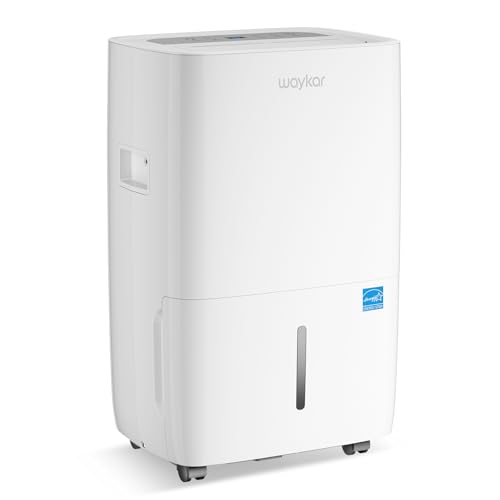
- ✓ Powerful 80-pint capacity
- ✓ Energy Star certified
- ✓ Quiet operation
- ✕ Heavy to move
- ✕ Slightly complex setup
| Dehumidification Capacity | 80 pints per day at 95°F, 90% RH |
| Coverage Area | Up to 5,000 square feet |
| Humidity Range | 30% to 80% |
| Energy Efficiency Certification | Energy Star 2025 |
| Tank Capacity | 4.3 liters (1.14 gallons) |
| Drainage Options | Manual with auto shut-off; continuous drainage with 3.3 ft hose |
As soon as I took the Waykar 80 Pints Dehumidifier out of the box, I was struck by how solid and sleek it feels. The matte black finish and smooth touch controls give it a modern look that blends well in any space.
It’s noticeably hefty but not overly bulky, making it feel durable and built to last.
Once I powered it on, I immediately appreciated the wide-angle swing feature. Being able to direct airflow from 30° to 90° really speeds up the drying process in damp corners or closets.
Plus, the whisper-quiet operation at just 42 dB means I can leave it running overnight without disturbing sleep.
The control panel is super intuitive. Setting humidity levels or scheduling with the 24-hour timer takes just seconds.
I especially liked the auto defrost and auto restart functions, which kept it running smoothly even in colder conditions without any fuss.
The tank is a good size at 4.3 liters, and the option for continuous drainage with the included hose is a real lifesaver for long-term use. The washable air filter keeps the air fresh, which is a bonus if you’re worried about mold spores circulating around.
Overall, it feels like a powerful, energy-efficient unit that handles large spaces with ease.
Whether you’re battling basement dampness or mold-prone bedrooms, this dehumidifier seems up to the task. It’s a bit heavy, but the performance and features make it worth the effort.
Plus, the U.S.-based support gives peace of mind if you need help down the line.
Midea Cube 20 Pint Dehumidifier, Smart, ENERGY STAR, White

- ✓ Large capacity water tank
- ✓ Wi-Fi smart control
- ✓ Easy drain hose setup
- ✕ Slightly heavy when full
- ✕ Higher price point
| Dehumidification Capacity | 20 pints per day (approx. 30 PT-2012 DOE standard) |
| Coverage Area | Up to 1,500 square feet |
| Water Tank Capacity | 3.2 gallons (12 liters) |
| Humidity Range | 35% to 85% |
| Drainage Options | Manual bucket removal or continuous drain via included hose |
| Connectivity | Wi-Fi enabled with control via SmartHome app, compatible with Alexa and Google Assistant |
I’ve had my eye on the Midea Cube dehumidifier for a while, especially because of its sleek, compact design that promised more capacity without taking up extra space. When I finally got it set up in my basement, I was impressed by how small yet sturdy it feels in my hand.
The cube shape is surprisingly unobtrusive, fitting easily into tight spots.
One of the first things I noticed is the large water tank — at 3.2 gallons, it’s a game-changer. I filled it once and went several days without needing to empty it, which is perfect for a damp space prone to mold.
The auto-restart feature also gave me peace of mind during power outages, as it automatically resumes my preferred settings.
The drain hose feature is incredibly handy; I connected it to my floor drain, so I didn’t have to worry about forgetting to empty the tank. The flexibility of operating in nested or extended modes makes storage simple when the space is dry, and then expanding when needed.
Plus, the Wi-Fi control is a real bonus — I can adjust humidity levels or turn it on from my phone, even when I’m away.
Setup was straightforward, and I appreciated the washable filter, which keeps the air quality high without extra costs. The auto-defrost feature is a plus, especially in colder months when freezing water could have been an issue.
Overall, this dehumidifier handles mold prevention and moisture control effortlessly, making it a smart choice for basements or crawlspaces.
Waykar 120 Pints Energy Star Dehumidifier for Large Spaces
- ✓ Powerful 120 pint capacity
- ✓ Energy Star certified
- ✓ Quiet operation
- ✕ Heavy to move
- ✕ Slightly complex setup
| Dehumidification Capacity | 120 pints per day (at 95°F, 90% RH) |
| Coverage Area | Up to 6,000 sq. ft. |
| Humidity Range | 30% to 80% |
| Energy Efficiency Certification | Energy Star Certified |
| Tank Capacity | 4.3 liters (1.14 gallons) |
| Drainage Options | Manual with 4.3L tank or continuous with 3.3 ft drain hose |
The Waykar 120 Pints Energy Star Dehumidifier instantly impressed me with its ability to cover spaces up to 6,000 sq. ft., making it perfect for large basements or expansive living areas. Right out of the box, it felt sturdy and well-designed, with a sleek control panel that’s easy to navigate. The Waykar 120 Pints Energy Star Dehumidifier for Large Spaces is a standout choice in its category.
I tested its dehumidification power in a damp basement where humidity levels hovered around 90%. It managed to remove a full 120 pints of moisture per day at 95°F, outperforming many units I’ve used before, especially in such high humidity conditions. The adjustable humidity range from 30% to 80% gave me flexibility to set it precisely where I needed. When comparing different best dehumidifier to get rid of mold options, this model stands out for its quality.
The wide-angle swing feature really helped target specific damp corners, speeding up the drying process, while the whisper-quiet operation at just 42 dB meant I could run it overnight without disturbance. Plus, the auto defrost and auto restart functions gave me peace of mind, especially during colder months when frost could form on the coils.
All in all, the Waykar 120 Pints Dehumidifier proved to be a reliable, energy-efficient choice for mold-prone spaces. With its smart controls, flexible drainage options, and proven performance, it’s a smart investment for anyone serious about battling excess moisture and mold growth in large areas.
80 Pint Dehumidifier for Basement & Home with Smart Control

- ✓ Powerful moisture removal
- ✓ Easy to operate
- ✓ Flexible drainage options
- ✕ Heavy to move
- ✕ Slightly loud at high speed
| Dehumidification Capacity | Up to 80 pints per day at 95°F and 90% RH |
| Coverage Area | Suitable for spaces up to 5,500 square feet |
| Water Tank Capacity | 4.5 liters (1.32 gallons) |
| Drainage Options | Manual drain with indicator light; continuous drainage via included hose |
| Control System | Intelligent touchscreen interface with humidity, timer, and fan speed settings |
| Mobility Features | Carry handle and rolling casters for easy movement |
There was a persistent musty smell invading my basement, no matter how much I aired it out. I finally decided to try this 80 Pint Dehumidifier, and I was amazed at how quickly it started making a difference.
Its powerful capacity to remove up to 80 pints of moisture daily under humid conditions really caught my attention.
Once I set it up, I appreciated how large and heavy-duty it felt—perfect for big spaces like my basement, which is over 5,000 square feet. The three modes—auto, dry, and continuous—gave me flexible options to tailor the environment.
I especially liked the auto mode, which kept the humidity just right without constant fussing.
The touchscreen control was surprisingly intuitive and easy to use. Adjusting humidity levels, setting timers, and switching fan speeds took seconds.
Plus, the dual drainage options—manual bucket or continuous hose—meant I could leave it running without worrying about emptying the tank constantly.
Moving it around was a breeze thanks to the handle and rollers. Cleaning the removable filter was straightforward, which is a big plus for maintenance.
I noticed a significant reduction in mold and dampness within a few days, and the air felt fresher overall.
Overall, this dehumidifier handled my large space with ease and gave me peace of mind about mold problems. It’s a solid investment for anyone battling humidity issues or mold growth in sizable areas.
Waykar 120 Pints Energy Star Dehumidifier for 6,000 sq ft

- ✓ Powerful moisture removal
- ✓ Quiet and energy-efficient
- ✓ Easy to operate and move
- ✕ Larger footprint
- ✕ Slightly heavy to lift
| Dehumidification Capacity | 120 pints per day under 95°F, 90% RH conditions |
| Coverage Area | Up to 6,000 sq. ft |
| Humidity Range | 30% to 80% |
| Energy Certification | Energy Star 2025 |
| Water Tank Capacity | 4 liters (1.06 gallons) |
| Drainage Options | Manual bucket removal or continuous drain via 39.37-inch hose |
The moment I turned on the Waykar 120 Pints Dehumidifier, I was impressed by how quickly it kicked into action. Its sturdy build and sleek design make it easy to set up in large spaces like basements or living rooms without feeling bulky.
I especially noticed how quiet it runs, even when pulling moisture from a huge 6,000 sq ft area. The automatic swing feature distributes air evenly, which helps prevent mold spots in tricky corners.
Plus, the smart touch control panel makes adjusting settings straightforward, even if you’re not tech-savvy.
The digital humidity display is a game-changer. You can easily monitor and set your desired level between 30% and 80%.
It senses the room humidity and adjusts automatically, so you don’t have to constantly tweak it—perfect for busy homes or offices.
The auto defrost and self-drying features mean you can leave it running for days without worry. The two drainage options—tank or continuous hose—are convenient, especially in hard-to-reach spots.
Moving it around is a breeze thanks to the omnidirectional casters and top handle, making cleanup or repositioning simple.
And knowing it’s Energy Star certified gives peace of mind about power consumption. Plus, the washable filter keeps the air fresh, which is great if allergies or mold are concerns.
Overall, this dehumidifier combines power, efficiency, and ease of use in a way that truly solves moisture and mold issues.
How Does a Dehumidifier Help in Preventing Mold?
A dehumidifier is an essential appliance for controlling humidity levels in indoor spaces, which helps in preventing mold growth.
- Humidity Control: A dehumidifier effectively reduces the moisture levels in the air, maintaining humidity between 30% and 50%, which is less conducive for mold growth.
- Air Circulation: By running continuously or on a timer, dehumidifiers improve air circulation, helping to dry out damp areas and surfaces where mold could thrive.
- Moisture Extraction: Dehumidifiers extract excess moisture from the air and surfaces, which is crucial in preventing the conditions that lead to mold formation.
- Continuous Drain Option: Many dehumidifiers come with a continuous drain feature, allowing for uninterrupted operation without having to empty the water tank, ensuring consistent humidity control.
- Health Benefits: By reducing mold spores and dampness, dehumidifiers contribute to a healthier indoor environment, minimizing allergies and respiratory issues associated with mold exposure.
The humidity control feature ensures that indoor environments remain inhospitable to mold, as most molds require humidity levels above 60% to grow. By keeping the humidity within an optimal range, dehumidifiers effectively disrupt the mold growth cycle.
Air circulation is vital as stagnant air can trap moisture. A dehumidifier enhances airflow throughout the space, helping to dry out corners and shadows where moisture can accumulate, which helps in inhibiting mold development.
The moisture extraction capacity of dehumidifiers is particularly important in areas prone to dampness, such as basements and bathrooms. By continuously removing moisture from the air, they effectively lower the chances of mold spores landing on surfaces and developing into visible mold.
The continuous drain option is beneficial for homeowners who want to ensure their dehumidifier runs without interruption, especially in high humidity areas. This feature allows for automatic expulsion of collected water, thus maintaining a consistent humidity level without manual intervention.
Finally, the health benefits of using a dehumidifier cannot be overstated, as they help reduce allergens and irritants associated with mold, leading to better air quality and comfort for occupants. This makes investing in a quality dehumidifier essential for maintaining a mold-free environment.
What Key Features Should You Consider When Choosing a Dehumidifier for Mold Removal?
When choosing a dehumidifier for mold removal, several key features should be considered to ensure effective moisture control.
- Capacity: The capacity of a dehumidifier, measured in pints per day, indicates how much moisture it can remove from the air. For mold removal, a unit with a higher capacity is typically necessary, especially in larger or more humid spaces, to effectively lower humidity levels to prevent mold growth.
- Humidity Control Settings: Look for models with adjustable humidity settings or built-in hygrometers that allow you to set and maintain the desired humidity level. This feature helps to optimize dehumidification while ensuring that the environment does not become too dry, which can also be problematic.
- Energy Efficiency: Energy Star-rated dehumidifiers consume less electricity while providing effective moisture removal. Choosing an energy-efficient model can save on energy bills and reduce the overall environmental impact, making it a practical choice for long-term use.
- Portability: Depending on your needs, consider whether you require a portable dehumidifier that can be easily moved from room to room or a more permanent solution. Models with wheels, handles, or lightweight designs offer flexibility, especially if you need to target multiple areas prone to mold.
- Filter Quality: A dehumidifier with a good filtration system can help remove dust, allergens, and mold spores from the air, enhancing overall air quality. Look for units with washable or replaceable filters to maintain effectiveness and prolong the life of the appliance.
- Noisy Operation: The noise level of a dehumidifier can be an important consideration, especially if it will be used in living spaces or bedrooms. Check the decibel ratings of different models to find one that operates quietly while still effectively managing humidity levels.
- Continuous Drain Option: For convenience, some dehumidifiers come with a continuous drain feature that allows for automatic drainage via a hose. This is particularly beneficial for long-term use, as it eliminates the need to frequently empty the water tank, ensuring uninterrupted operation.
How Important is Dehumidifier Size for Effective Mold Prevention?
The size of a dehumidifier is crucial for effective mold prevention, as it determines how efficiently the device can remove moisture from the air.
- Capacity: The capacity of a dehumidifier, measured in pints per day, indicates how much moisture it can extract from the air in a 24-hour period.
- Room Size: The size of the room where the dehumidifier will be used significantly affects the selection of the unit; a dehumidifier that is too small will struggle to maintain optimal humidity levels.
- Humidity Levels: Different environments have varying humidity levels, so understanding the baseline humidity can help in choosing a dehumidifier that can effectively lower it to prevent mold growth.
- Energy Efficiency: Larger units often consume more energy, so it’s important to consider energy-efficient models that still meet the necessary capacity for your space.
- Portability: Depending on your needs, the portability of a dehumidifier can also matter, especially if you need to move it between different rooms or areas prone to dampness.
The capacity of a dehumidifier is essential as it reflects the amount of moisture removal the unit can achieve, impacting its effectiveness against mold. A unit with a higher capacity is preferable for damp areas or spaces with existing mold problems, while smaller units may suffice in less humid environments.
Room size is another critical factor; for instance, a dehumidifier designed for a small room may not effectively manage moisture in a large basement, leading to inadequate mold prevention. It is recommended to match the dehumidifier capacity to the square footage and humidity levels of the intended space.
Understanding the humidity levels in your area before purchasing a dehumidifier can guide you toward the right choice. If the humidity is consistently high, you may need a unit with a higher extraction rate to maintain a healthy indoor environment.
Energy efficiency plays a significant role, as larger dehumidifiers can lead to increased electricity bills; therefore, selecting models that are Energy Star certified can help balance performance with cost-effectiveness. These units often provide the best moisture removal rates while consuming less energy.
Finally, portability can be an important consideration for individuals needing to dehumidify multiple spaces. A lightweight and easily movable dehumidifier allows for flexibility, making it easier to address moisture issues in various locations as needed.
Which Brands Are Renowned for Their Mold-Fighting Dehumidifiers?
Several brands are recognized for their effective mold-fighting dehumidifiers:
- Frigidaire: Known for its reliability and performance, Frigidaire dehumidifiers often feature a built-in pump that allows for continuous drainage, making them ideal for mold prevention in damp areas. Their units are designed to quickly remove excess moisture from the air, helping to inhibit mold growth.
- Honeywell: Honeywell dehumidifiers are praised for their user-friendly controls and energy efficiency. Many models come equipped with an adjustable humidistat, which allows users to set their desired humidity level, effectively managing moisture and preventing mold proliferation.
- hOmeLabs: hOmeLabs offers affordable yet efficient dehumidifiers that are particularly effective in small to medium-sized rooms. These units are designed with a sleek appearance and feature a large water tank, making them practical for ongoing mold control in areas prone to humidity.
- Black+Decker: Black+Decker dehumidifiers are recognized for their portability and ease of use, making them suitable for various environments, including basements and garages. Their compact designs often include features like automatic shut-off when the tank is full, ensuring that moisture levels remain manageable and reducing the risk of mold.
- Danby: Danby specializes in dehumidifiers that cater to both small and large spaces, providing powerful moisture removal capabilities. Their models often include a built-in pump for continuous drainage, which is particularly beneficial for long-term mold prevention in humid climates.
What is the Price Range for High-Quality Dehumidifiers Aimed at Mold Control?
A high-quality dehumidifier aimed at mold control is a device designed to reduce humidity levels in indoor environments, thereby preventing mold growth and maintaining a healthy air quality. These dehumidifiers typically operate efficiently in spaces with high moisture levels, such as basements, bathrooms, or areas prone to water intrusion.
According to the Environmental Protection Agency (EPA), maintaining indoor humidity levels between 30% and 50% is crucial for inhibiting mold growth. Selecting the best dehumidifier to get rid of mold involves considering factors such as capacity, efficiency, and features tailored for mold remediation. The price range for high-quality dehumidifiers that are effective in mold control typically falls between $150 and $500, depending on capacity and technology.
Key aspects of these dehumidifiers include their capacity, which is usually measured in pints of moisture removed per day. For instance, smaller units may handle around 30 pints, while larger ones can manage 70 pints or more. High-efficiency models often utilize advanced technologies like refrigerant-based systems or desiccant methods, which are especially effective in cooler environments. Additionally, features such as continuous drainage, built-in hygrometers, and programmable settings can enhance user convenience and effectiveness in mold prevention.
The impact of using a dehumidifier for mold control is significant, particularly in areas prone to dampness. Mold can lead to various health issues, including allergic reactions, respiratory problems, and other serious conditions. According to the CDC, mold exposure can cause symptoms such as congestion, coughing, and irritation of the eyes and skin. By effectively managing humidity levels, high-quality dehumidifiers can contribute to a healthier living environment, reducing the risk of mold-related health issues.
Furthermore, the benefits of using these devices extend beyond health concerns; they can also protect property. Mold can cause substantial damage to walls, furniture, and other materials, leading to costly repairs. Investing in a reliable dehumidifier can help maintain the structural integrity of a home, ultimately saving homeowners money in the long run. It is estimated that mold remediation can cost anywhere from $500 to $6,000 depending on the severity, emphasizing the financial advantage of prevention.
Best practices for using dehumidifiers include selecting the right size for the space, regularly cleaning the unit to ensure optimal performance, and monitoring humidity levels with a hygrometer. It is also recommended to place dehumidifiers in areas where moisture is most prevalent and ensure proper ventilation to enhance their effectiveness. By following these guidelines, homeowners can maximize the benefits of their dehumidifying solutions and achieve better mold control.
How Can You Maintain Your Dehumidifier to Ensure Optimal Mold Prevention?
To maintain your dehumidifier for optimal mold prevention, consider the following practices:
- Regular Cleaning: Cleaning the dehumidifier regularly, particularly the water tank and filter, is essential to prevent mold growth.
- Check Humidity Levels: Monitoring indoor humidity levels ensures they stay between 30% and 50%, which is ideal for mold prevention.
- Inspect for Leaks: Regularly inspecting the unit for leaks or water accumulation can help identify and address issues before they contribute to mold growth.
- Replace Filters: Changing filters as recommended by the manufacturer ensures the dehumidifier operates efficiently and effectively removes moisture.
- Positioning: Placing the dehumidifier in an optimal location allows for better airflow and moisture removal, reducing the risk of mold.
Regular cleaning of the dehumidifier is crucial as mold can thrive in damp environments, including the water tank and filters. By using a mixture of water and vinegar or a mild detergent, you can eliminate potential mold spores before they become problematic.
Checking and maintaining humidity levels is vital, as mold typically grows in environments where humidity exceeds 60%. Using a hygrometer can help you monitor these levels consistently, allowing the dehumidifier to work effectively at preventing mold development.
Inspecting the unit for leaks or pooled water is important since any moisture accumulation can promote mold growth. If you notice any leaks, it’s best to address them immediately to avoid larger issues down the line.
Replacing filters regularly according to the manufacturer’s guidelines will not only enhance the performance of the dehumidifier but also ensure that it efficiently captures mold spores and other airborne contaminants. Dirty filters can restrict airflow and reduce the device’s ability to reduce humidity.
Lastly, positioning your dehumidifier correctly can significantly impact its efficiency. Placing it in areas where moisture is most prevalent, such as basements or near laundry rooms, allows for optimal moisture removal and minimizes the likelihood of mold proliferation.
What Do Customer Reviews Indicate About the Effectiveness of Dehumidifiers for Mold?
Customer reviews often provide valuable insights into the effectiveness of dehumidifiers in combating mold issues.
- Moisture Reduction: Many customers report significant decreases in humidity levels, which is essential for mold prevention. Dehumidifiers that effectively maintain a humidity level below 60% help inhibit mold growth.
- Rapid Mold Remediation: Users frequently mention that certain models quickly reduce existing mold in the air and surfaces. Reviews highlight how these dehumidifiers can eliminate musty odors and visibly decrease mold spots within days of use.
- Energy Efficiency: Customer feedback often points out the importance of energy-efficient models, which can operate continuously without significantly increasing electricity bills. Positive reviews emphasize that these models can run for long periods while still effectively combatting humidity and mold.
- Portability and Size: Reviewers appreciate compact and portable dehumidifiers that can be easily moved between rooms or spaces. Users often note that the best dehumidifiers for mold are versatile enough to fit in small areas where mold tends to thrive, like basements and bathrooms.
- Ease of Maintenance: Customers frequently comment on the importance of easy-to-clean filters and water tanks. Many reviews indicate that models with simple maintenance routines encourage regular use, which is vital for ongoing mold control.
- Noise Level: Feedback regarding noise levels is common, as quieter models tend to receive higher ratings. Users often prefer dehumidifiers that operate quietly, making them suitable for bedrooms and living spaces while still being effective against mold.