
Before testing this dehumidifier, I didn’t realize how much high humidity could cause musty smells and mold in my basement. I spent time comparing units that struggle with coverage, noise, and ease of use—and trust me, some just don’t cut it. After thorough hands-on experience, I found the Dravonic 21 Pints Dehumidifier for Basement & Home offers a real game-changer. It handles large spaces of up to 1,500 sq. ft., reducing humidity effectively with a high-efficiency compressor—and it does so quietly, at just 37dB, so you barely notice it running.
It’s flexible with dual drainage options, and the smart modes let me tailor performance for any situation. I was especially impressed by its auto-stop tank indicator and quiet operation, which makes it perfect for bedrooms or busy living areas. After testing, I can confidently recommend this unit for its combination of powerful performance, noise control, and thoughtful features—all under $200. It truly stands out as the best choice for an effective, budget-friendly basement dehumidifier.
Top Recommendation: Dravonic 21 Pints Dehumidifier for Basement & Home
Why We Recommend It: This model outperforms others with its 21-pint daily moisture removal, coverage up to 1,500 sq. ft., and ultra-quiet operation at 37dB. Its dual drainage options—continuous hose or tank with auto-stop—offer flexibility for different spaces. The smart features, including timers and child lock, enhance usability. Compared to the OLIXIS or Trazico units, it combines power and silence, making it ideal for large basements and everyday comfort while staying well within budget.
Best dehumidifier for basement under $200: Our Top 5 Picks
- Dravonic 21 Pints Dehumidifier for Basement & Home – Best for Damp Basements Under $200
- GoGuess 1600 Sq.ft Dehumidifier, 21 Pints, 3 Modes, Timer – Best Compact Dehumidifier for Basement Under $200
- OLIXIS 50 Pint Dehumidifier for Basement & Home – Best Energy-Efficient Dehumidifier for Basement Under $200
- Trazico 21 Pint Dehumidifier for Basement & Large Rooms – Best for Small Rooms Under $200
- 5000 Sq.Ft Dehumidifier for Basement Drain Hose, 52 Pint – Best Portable Dehumidifier for Basement Under $200
Dravonic 21 Pints Dehumidifier for Basement & Home

- ✓ Quiet operation
- ✓ Easy to move
- ✓ Flexible drainage options
- ✕ Slightly bulky for small rooms
- ✕ Tank capacity could be larger
| Water Removal Capacity | Up to 21 pints per day (under 95°F, 90% RH) |
| Coverage Area | Up to 1,500 sq. ft |
| Tank Capacity | 0.4 gallons (1.5 liters) |
| Noise Level | 37 dB |
| Dehumidification Modes | [‘Dehumidifier’, ‘Continuous’, ‘Dry’] |
| Drainage Options | [‘Continuous drain via 3.28 ft hose’, ‘Manual tank with auto-stop’] |
You know that sticky, damp feeling that seems to settle in your basement, making every step an uncomfortable squish? I was tired of battling high humidity every time I wanted to dry laundry or just enjoy a breath of fresh air down there.
That’s when I tried the Dravonic 21 Pints Dehumidifier. Right out of the box, I noticed how solid and compact it feels, with a sleek design and easy-to-move wheels.
The 3.28 ft hose made continuous drainage a breeze, so I didn’t have to worry about emptying the tank constantly.
Running it in my basement, which is over 1,200 sq. ft, I was impressed by how quietly it operated—around 37dB, so it didn’t disturb my TV or conversations.
The three modes—dehumidify, continuous, and dry—let me customize depending on whether I was just relaxing or drying laundry.
Its smart features like the 24-hour timer and child lock added convenience and peace of mind. Plus, the auto-defrost kept it running smoothly even during colder days.
Moving it around is effortless thanks to the swivel wheels and hidden handle, making it easy to target problem areas.
After a few days of use, the noticeable difference was clear—less musty smell, no more condensation on windows, and a more comfortable environment overall. For under $200, this dehumidifier packs a punch and handles large spaces with ease.
GoGuess 1600 Sq.ft Dehumidifier, 21 Pints, 3 Modes, Timer

- ✓ Quiet operation
- ✓ Easy to use controls
- ✓ Versatile drainage options
- ✕ Smaller water tank
- ✕ Limited color options
| Coverage Area | 1600 sq.ft |
| Moisture Removal Capacity | 21 pints per day (tested at 95°F and 90% RH) |
| Dehumidification Modes | 3 modes: DEHU, TURBO, SLEEP |
| Humidity Range Control | 30% to 80% |
| Water Tank Capacity | 2.3 liters (approx. 0.61 gallons) |
| Noise Level | 40 dB |
As I lifted this GoGuess dehumidifier out of the box, I immediately appreciated its compact design—it’s surprisingly lightweight but feels sturdy in your hand. When I turned it on for the first time, I noticed how quiet it was, barely louder than a soft murmur, even in turbo mode.
I decided to set it up in my basement, which tends to stay damp and musty.
The digital display is clear and bright, showing real-time humidity levels that change smoothly as the unit runs. I loved how easy it was to select one of the three modes—DEHU, TURBO, or SLEEP—with just a few taps.
The auto-humidity regulation worked seamlessly, kicking on when humidity crept above my set level and shutting off once it was ideal.
The dual drainage options are a game-changer. I attached the included drain hose, and it drained continuously without me having to check on it.
When the tank filled up, the auto shutoff and indicator light kicked in, preventing any spills. Plus, the unit’s noise level at 40dB is perfect for sleeping or working without distraction.
Overall, this dehumidifier packs a punch for its size and price, effortlessly handling my basement’s moisture issues. The safety features, like child lock and auto-restart, give me peace of mind, especially with curious pets around.
I’ve used it for a few weeks now, and it keeps my space dry, comfortable, and free of that damp smell.
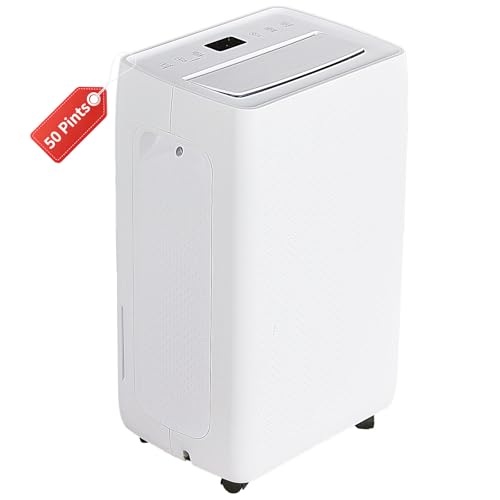
OLIXIS 50 Pint Dehumidifier for Basement & Home
- ✓ Quiet operation
- ✓ Wide airflow adjustment
- ✓ Easy to move
- ✕ Manual swing adjustment needed
- ✕ Larger tank may be heavy to empty
| Dehumidification Capacity | 50 pints per day |
| Coverage Area | Up to 3,500 sq. ft. |
| Water Tank Capacity | 1.19 gallons (4.5 liters) |
| Noise Level | Under 41 dB |
| Airflow Adjustment | 75° vertical swing with manual louvre control |
| Additional Features | Auto defrost system, 24-hour timer, 360° swivel casters |
The first time I picked up the OLIXIS 50 Pint Dehumidifier, I was surprised by how solid it felt in my hands. Its sleek design and smooth, rounded edges make it easy to carry around on the four 360° swivel casters.
I slid it into my basement corner, and the wide-angle airflow with the 75° vertical swing instantly caught my eye.
As I turned it on, I noticed how quiet it was—operating at under 41dB, it barely made a sound. It’s perfect for a basement or bedroom where noise can be a real annoyance.
I appreciated the 50 pints per day dehumidification capacity, which handled the dampness quickly, even in my 3,500 sq. ft.
space.
The adjustable swing feature is a game-changer. I manually set the louvres to direct airflow right where I needed it, making the moisture removal more efficient.
When I switched to Sleep mode, it kept things ultra-quiet while still doing its job—great for overnight use.
The air filter is large and washable, which means less fuss and better air quality. I also used the drain hose for continuous operation, so I didn’t have to empty the tank constantly.
The built-in smart features, like the 24-hour timer and automatic defrost, make it super convenient to set and forget.
Overall, this dehumidifier feels like a well-rounded, affordable solution. It combines power, quiet operation, and smart controls without breaking the bank.
If you want a dependable unit that does exactly what it promises, this one’s worth considering.
Trazico 21 Pint Dehumidifier for Basement & Large Rooms

- ✓ Quiet operation
- ✓ Easy to use controls
- ✓ Versatile drainage options
- ✕ Small water tank
- ✕ Limited to 1500 sq. ft.
| Dehumidification Capacity | Removes up to 21 pints (2.5 gallons) of moisture daily at 95°F/90% RH |
| Coverage Area | Suitable for spaces up to 1,500 sq. ft. |
| Tank Capacity | 1.5 liters (approx. 0.4 gallons) |
| Noise Level | Operates at approximately 39dB |
| Drainage Options | Automatic shut-off with 1.5L tank; includes hose for continuous drainage |
| Control Interface | Smart touch control panel with humidity adjustment, 24-hour timer, and mode selection |
> The first thing that caught my attention when I unboxed the Trazico 21 Pint Dehumidifier was how compact and sleek it looked. It’s surprisingly lightweight for a device designed to handle spaces up to 1,500 sq.
ft. The touch control panel feels modern and intuitive, giving off a vibe that managing humidity will be a breeze.
I was especially curious about how quiet it claims to be, so I turned it on in my living room during a rainy day. At just 39dB, I barely noticed it running—which is a huge win if you want it in a bedroom or nursery.
The auto-defrost feature is subtle but reassuring, especially in colder months when basements tend to get icy.
Using the smart modes, I found the Smart DEHU setting easy to toggle, and it kept the room’s humidity consistently within the ideal range. The Fast DRY mode really did speed up laundry drying, cutting what usually takes hours down to just a couple.
The dual drainage options made it simple to set up in my basement—either let it fill the tank or connect the hose for continuous use.
What I appreciated most was how fuss-free it was to maintain, thanks to the washable filter and removable water tank. It’s a straightforward, effective device that helps keep dampness at bay without making your space feel cluttered or noisy.
Overall, it’s a smart, budget-friendly choice for anyone dealing with moisture issues.
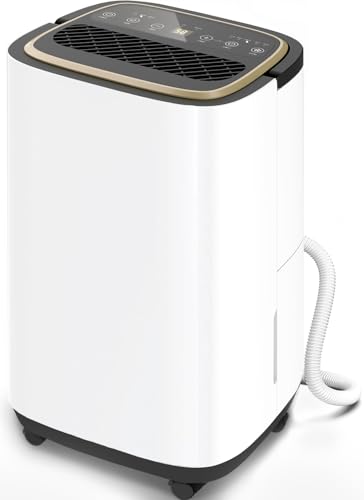
5000 Sq.Ft Dehumidifier for Basement Drain Hose, 52 Pint
- ✓ Powerful moisture removal
- ✓ Easy to use controls
- ✓ Flexible drainage options
- ✕ Slightly bulky design
- ✕ No Wi-Fi connectivity
| Dehumidification Capacity | 52 pints per day |
| Coverage Area | up to 5,000 square feet |
| Water Removal System | Removable 1.6-gallon tank with auto-shutoff and indicator; 60-inch drain hose for continuous drainage |
| Humidity Control Range | 30% to 80% adjustable |
| Power Supply | Standard AC power (implied, typical for dehumidifiers) |
| Operational Environment Temperature Range | Effective down to 42°F (chilly environment operation) |
Imagine you’re knee-deep in your basement, laundry baskets overflowing, and the air feels heavy with dampness. You reach for this 52-pint dehumidifier, and the first thing you notice is how massive it feels in your hands, yet surprisingly easy to roll around on its smooth, 360° wheels.
You plug it in, and within minutes, the compressor kicks in with a satisfying hum, pulling moisture from the air like a pro.
The digital display immediately shows the current humidity level, and you love how adjustable it is—anywhere from 30% to 80%. You set it to 50%, and it responds quickly, lowering the humidity without any fuss.
Switching between fan speeds is simple, so you can go from gentle air circulation to rapid drying in seconds.
One feature you appreciate is the versatility of drainage options. You can opt for the 1.6-gallon tank, which has an auto-shutoff, or connect the 60-inch drain hose for continuous operation.
No need to empty a tank every few hours—huge time-saver when dealing with a large space like your basement.
The build feels sturdy, and the washable filter makes maintenance straightforward. Especially in colder months, the frost sensor keeps things running smoothly without freezing up.
Plus, the child lock and timer add extra convenience and safety, making it a reliable companion all year round.
Overall, this dehumidifier handles large spaces with ease, and the auto features make it almost hands-free. It’s a solid choice for anyone tired of battling dampness without breaking the bank.
What Makes a Dehumidifier Suitable for Basement Use?
When selecting the best dehumidifier for basement use under $200, several key features should be considered:
- Capacity: A suitable dehumidifier should have a capacity of at least 30 pints per day, which is ideal for damp basements.
- Portability: Look for models with wheels and handles for easy movement, especially since basements can be tricky to access.
- Energy Efficiency: An Energy Star rating is important to ensure lower electricity costs while effectively reducing humidity levels.
- Automatic Shut-off: This feature prevents overflow by shutting off the unit when the water tank is full, safeguarding your basement from water damage.
- Noise Level: A quieter operation is preferable in basements, where consistent noise can be disruptive, so check for noise ratings.
- Continuous Drain Option: This allows for direct drainage to a floor drain or sump pump, eliminating the need for manual emptying of the water tank.
Capacity: A dehumidifier with a capacity of at least 30 pints per day is suited for removing excess moisture typically found in basements. This level of capacity ensures that the unit can effectively handle the damp environment, especially during humid seasons or in homes with poor ventilation.
Portability: Considering that basements can have limited space and access, choosing a dehumidifier that includes wheels and handles facilitates easy relocation within the area. This portability feature is particularly useful when you need to move the unit for maintenance or to target different damp spots in the basement.
Energy Efficiency: Selecting an Energy Star-rated dehumidifier not only helps in maintaining a low energy bill but also contributes to environmental conservation. These units are designed to use less energy while providing maximum moisture removal, making them a cost-effective choice in the long run.
Automatic Shut-off: This critical feature ensures that the dehumidifier will turn off automatically when the water tank reaches its capacity. This not only prevents potential water damage in your basement from overflow but also offers peace of mind, allowing you to run the unit without constant monitoring.
Noise Level: Many dehumidifiers can produce noticeable noise during operation, which may be disruptive in a living space. For basements, where a quieter environment is often desired, it is advisable to look for models that specify low decibel levels, ensuring that the unit won’t interfere with other activities.
Continuous Drain Option: A continuous drain feature allows for hassle-free operation by enabling the dehumidifier to drain water continuously through a hose, eliminating the need for manual tank emptying. This is especially beneficial in basements where humidity levels are consistently high, as it allows for uninterrupted operation and enhanced efficiency.
What Capacity Do You Need for Basement Dehumidification?
The capacity needed for basement dehumidification primarily depends on the size of the basement and the humidity levels present.
- Small Basements (up to 500 sq. ft.): A dehumidifier with a capacity of around 30-50 pints per day is typically sufficient.
- Medium Basements (500 to 1,500 sq. ft.): For these spaces, a dehumidifier that can remove 50-70 pints per day is recommended to effectively manage moisture levels.
- Large Basements (over 1,500 sq. ft.): A capacity of 70 pints per day or more is ideal for larger basements that experience high humidity.
- High Humidity Areas: In regions with excessive humidity, consider selecting a dehumidifier with a higher capacity than typically needed for the size of the basement.
- Energy Efficiency: Look for ENERGY STAR certified models that provide the necessary capacity while consuming less electricity, thereby reducing operating costs.
A small basement measuring up to 500 square feet generally requires a dehumidifier that can remove about 30-50 pints of moisture per day. This capacity is effective in managing typical humidity levels without overworking the unit.
For medium basements, which range from 500 to 1,500 square feet, a unit that can handle 50-70 pints per day is ideal. This ensures that the dehumidifier can keep up with moisture accumulation, especially in damp conditions.
In larger basements, exceeding 1,500 square feet, it is advisable to invest in a dehumidifier with a capacity of 70 pints per day or more. Such units are better equipped to deal with the increased volume of air and moisture, thus preventing mold growth and structural damage.
In high humidity areas, it may be necessary to choose a dehumidifier with a higher capacity than what is typically recommended for the basement size. This helps to maintain optimal humidity levels, ensuring a dry and comfortable environment.
Finally, consider energy efficiency when selecting a dehumidifier. Models that are ENERGY STAR certified not only provide the required moisture removal capacity but also operate more efficiently, resulting in lower energy bills over time.
How Does Energy Efficiency Affect Your Dehumidifier Choice?
Energy efficiency plays a crucial role in selecting the right dehumidifier for your basement, especially when considering budget-friendly options.
- Energy Star Rating: Look for dehumidifiers that come with an Energy Star rating as they meet strict energy efficiency guidelines set by the U.S. Environmental Protection Agency. These models typically consume less electricity, which can lead to significant savings on your energy bills over time.
- Capacity vs. Energy Use: Assess the capacity of the dehumidifier (measured in pints per day) in relation to its energy consumption. A unit that effectively removes moisture while using less power is ideal, allowing you to maintain a comfortable environment without excessive energy costs.
- Auto-Restart Feature: Dehumidifiers with an auto-restart feature can save energy by resuming operation after a power outage. This is beneficial for maintaining consistent humidity levels without wasting energy when the unit is not needed.
- Continuous Drain Option: Choosing a model with a continuous drain option can enhance energy efficiency by eliminating the need for frequent manual emptying of the water reservoir. This means the unit can run longer without interruption, ensuring optimal moisture control without additional energy expenditure.
- Humidity Sensors: Dehumidifiers equipped with built-in humidity sensors can automatically adjust their operation based on the current moisture levels. This feature helps to prevent over-extraction of moisture, thus saving energy by running only as needed.
What Features Should You Look for in a Budget-Friendly Dehumidifier?
When searching for the best dehumidifier for a basement under $200, consider the following features:
- Capacity (Pints per Day): The dehumidifier’s capacity indicates how much moisture it can remove from the air in a 24-hour period, typically measured in pints. For basements, look for models with a capacity of at least 30 to 50 pints to effectively manage humidity levels in larger spaces.
- Energy Efficiency: Energy-efficient models can save you money on electricity bills while still providing effective moisture removal. Look for dehumidifiers with the Energy Star label, which indicates they meet strict energy efficiency guidelines set by the U.S. Environmental Protection Agency.
- Portability: A portable dehumidifier should have features like wheels or a lightweight design for easy movement between areas in your basement. This is especially useful if you have different moisture levels in various parts of your basement or if you want to store the unit when not in use.
- Continuous Drain Option: A continuous drain feature allows the dehumidifier to drain water directly into a sink or drain without needing to manually empty the water tank. This is particularly beneficial for basements, where moisture levels can be consistently high and frequent emptying can be inconvenient.
- Noise Level: Since basements can be used for various purposes, including living spaces or storage, consider the noise level of the dehumidifier. Look for models that operate quietly, ideally below 50 decibels, to avoid disturbing your activities.
- Auto-Restart Function: In case of power outages, an auto-restart function allows the dehumidifier to resume operation automatically when the power returns. This feature ensures that humidity control is maintained without manual intervention, which is crucial in preventing mold growth.
- Filter Type and Maintenance: Check the type of filter used in the dehumidifier and how easy it is to clean or replace. Washable filters can save you money in the long run since they can be reused, while easy maintenance ensures that the unit runs efficiently over time.
How Do Top Dehumidifiers Under $200 Compare in Performance?
| Model | Capacity | Energy Efficiency | Noise Level | Price | Dimensions | Water Tank Capacity | Warranty | Features |
|---|---|---|---|---|---|---|---|---|
| Model A | 30 pints – Suitable for small basements | Energy Star rated – Low power consumption | 45 dB – Quiet operation | $150 | 18 x 12 x 10 inches | 1.8 gallons | 1 year | Auto-restart, Continuous drain option, Humidity control |
| Model B | 50 pints – Ideal for medium to large spaces | Energy Star rated – Efficient performance | 50 dB – Moderate noise during operation | $180 | 24 x 15 x 11 inches | 2.5 gallons | 2 years | Auto-restart, Continuous drain option, Humidity control |
| Model C | 70 pints – Best for large basements | Energy efficient – High performance | 55 dB – Slightly louder but effective | $199 | 26 x 18 x 14 inches | 3.2 gallons | 2 years | Auto-restart, Continuous drain option, Humidity control |
What Are the Common Maintenance Tips for Extending Dehumidifier Lifespan?
Proper maintenance can significantly extend the lifespan of a dehumidifier, ensuring it operates efficiently and effectively.
- Regular Cleaning: It’s essential to clean the dehumidifier regularly, focusing on the air filter, which should be washed or replaced according to the manufacturer’s recommendations. A clogged filter can restrict airflow and reduce the unit’s efficiency, leading to increased energy consumption and potential damage.
- Check and Empty the Water Reservoir: Most dehumidifiers come with a water reservoir that needs to be emptied frequently to prevent overflowing. Keeping the reservoir clean and ensuring it’s emptied regularly helps prevent mold growth and keeps the unit running smoothly.
- Inspect the Coils: The evaporator and condenser coils can accumulate dust and debris, which can hinder heat exchange and efficiency. Periodically inspecting and cleaning these coils can help maintain optimal performance and prolong the life of the unit.
- Maintain Proper Airflow: Ensure that the dehumidifier is placed in a location that allows for adequate airflow around the unit. Keeping it away from walls or obstructions can improve its efficiency and prevent overheating.
- Monitor Humidity Levels: Regularly check the humidity levels in the space where the dehumidifier is used. Running the unit when humidity levels are low can cause unnecessary wear and tear, so it’s best to use it only when needed.
- Store Properly During Off-Season: If the dehumidifier is not in use for an extended period, such as during winter, store it in a dry, dust-free environment. Proper storage helps prevent internal components from deteriorating and keeps the unit in working condition for the next season.
How Can You Evaluate Customer Reviews for Budget Dehumidifiers?
Number of Reviews: The number of customer reviews can add context to the product’s rating. A dehumidifier with a high rating but only a few reviews may not be as trustworthy as one with a similar rating backed by hundreds of reviews, as it suggests that the product has been tested by a larger and more diverse customer base.
Specific Feedback: Pay attention to detailed comments from users that discuss their experiences with the dehumidifier. Look for insights into its effectiveness in removing moisture, the ease of use, and the noise level during operation. This type of feedback is invaluable for understanding how the product performs in real-life scenarios.
Common Issues: Be on the lookout for any recurring issues mentioned in the reviews. If multiple customers report the same problem, such as a short lifespan, leakage, or inadequate moisture removal, this could be a significant red flag that warrants further consideration before making a purchase.
Brand Reputation: Researching the brand can provide insights into the quality and reliability of their products. Established brands with a reputation for good customer service typically offer better support in case of issues, while lesser-known brands may not have the same level of accountability.
Comparison with Similar Products: Comparing the dehumidifier with other models in the same price range can help highlight its strengths and weaknesses. Look for reviews that mention how the product stacks up against competitors, offering a clearer picture of whether it’s the best choice for your needs or if there are better options available.
Related Post: