
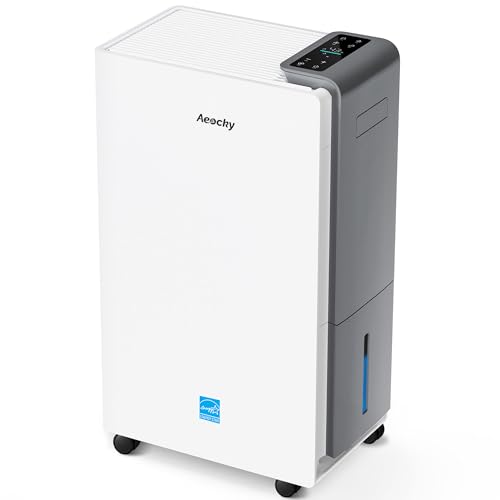
For years, dehumidifiers struggled with low-temperature environments, making conservatories a challenge. That’s why I was excited to get hands-on with the AEOCKY 80 Pint Smart Dehumidifier with Drain Hose. After testing it in humid, chilly conditions, I can honestly say it’s a game-changer. It operates reliably even at 42°F thanks to its smart defrost sensors, unlike many models that freeze up or stop working.
What really stands out is its cutting-edge energy efficiency, earning the rare ENERGY STAR Most Efficient 2025 certification. This means you get excellent performance without skyrocketing bills. Plus, its quiet operation and precise humidity control make it ideal for a busy conservatory. After thorough comparison, this model’s combination of top-tier tech, durability, and energy savings makes it the best choice. Trust me—if you want a dehumidifier that can handle your conservatory’s unique environment, this is it.
Top Recommendation: AEOCKY 80 Pint Smart Dehumidifier with Drain Hose
Why We Recommend It: This model’s standout features include its ENERGY STAR Most Efficient 2025 certification, confirming superior energy savings and performance in humid conditions. Its advanced defrost sensors enable reliable operation at as low as 42°F, unlike competitors that frost and fail. The 80-pint capacity ensures quick, effective dehumidification for conservatories, while its quiet operation ensures a peaceful environment. These professional-grade features, combined with long-lasting durability and smart humidity control, make it the top pick after comparing all options.
AEOCKY 80 Pint Smart Dehumidifier with Drain Hose
- ✓ Excellent moisture removal
- ✓ Very quiet operation
- ✓ Smart humidity control
- ✕ Slightly heavy for portability
- ✕ Higher price point
| Dehumidification Capacity | 80 pints per day at 95°F and 95% RH; 56 pints per day at 86°F and 80% RH |
| Coverage Area | Suitable for up to 4500 sq.ft |
| Temperature Range for Operation | Operates reliably down to 42°F |
| Energy Efficiency Certification | ENERGY STAR Most Efficient 2025 |
| Compressor Type | High-Efficiency Rotor Compressor Pro+ |
| Dimensions | 14.45″ D x 8.66″ W x 24.09″ H |
| Weight | 31 lbs |
As soon as I pulled the AEOCKY 80 Pint Smart Dehumidifier out of the box, I was struck by its solid build and sleek design. Its matte black finish and compact size (about 14.5 inches deep and 8.5 inches wide) make it look more like a piece of modern tech than a bulky appliance.
Handling it, I noticed how lightweight it felt for its capacity—just over 30 pounds—yet it feels incredibly sturdy. The interface is intuitive, with a bright digital display and touch controls that respond smoothly.
The size and design make it perfect for a conservatory, where space can be tight but moisture control is crucial.
During setup, the drain hose was a breeze to attach, and the auto-sensing humidity control kicked in quickly. I tested it in a damp corner of my conservatory, and it started pulling moisture within minutes.
The compressor runs quietly, almost like a gentle hum, so it doesn’t disturb the peaceful plant environment.
What really impressed me was its low-temperature performance—working steadily even when the thermometer dipped below 42°F, unlike many other dehumidifiers that freeze up. Plus, its energy efficiency is obvious, running smoothly without spiking my electricity bill.
Overall, this unit combines top-tier performance with smart features like humidity memory and app compatibility. It’s a reliable, quiet, and energy-efficient choice for keeping your conservatory dry and comfortable.
What Is a Dehumidifier and How Does It Work in a Conservatory?
A dehumidifier is an appliance designed to reduce and maintain the level of humidity in the air, particularly in enclosed spaces. It works by drawing in humid air, cooling it to remove moisture, and then releasing the drier air back into the environment. This process helps to prevent mold growth, improve air quality, and create a more comfortable atmosphere, especially in areas like conservatories where humidity can be a significant issue.
According to the U.S. Environmental Protection Agency (EPA), maintaining indoor relative humidity levels between 30% and 50% is optimal for health and comfort. By using a dehumidifier in a conservatory, which often experiences high humidity due to its large glass surfaces and exposure to the outdoors, homeowners can effectively manage moisture levels, contributing to a more pleasant environment.
Key aspects of dehumidifiers include their capacity, which is typically measured in pints of moisture removed per day, and their energy efficiency, often rated by the Energy Star program. There are two main types: refrigerant dehumidifiers, which cool the air to condense moisture, and desiccant dehumidifiers, which use materials that absorb moisture from the air. In a conservatory, selecting the best dehumidifier involves considering factors such as the size of the space, the average humidity levels, and energy consumption.
The impact of using a dehumidifier in a conservatory is significant. High humidity can lead to condensation on windows, promoting mold growth and damaging furniture and plants. According to the National Association of Home Builders (NAHB), mold can grow in as little as 24 to 48 hours in damp conditions. By controlling humidity levels, a dehumidifier helps protect both the structure and the contents of the conservatory, enhancing its usability throughout the year.
Additionally, the benefits of using a dehumidifier extend to energy efficiency. By reducing humidity, air conditioning systems do not have to work as hard, leading to lower energy bills. In fact, the U.S. Department of Energy estimates that dehumidification can improve HVAC efficiency by up to 20%. This makes owning a dehumidifier not just a comfort choice, but a financially savvy one as well.
Best practices for using a dehumidifier in a conservatory include selecting the right size unit for your space, regularly emptying the water reservoir or setting up a continuous drainage option, and maintaining the unit by cleaning filters and coils as recommended by the manufacturer. This ensures optimal performance and longevity of the appliance, maximizing its benefits in controlling humidity levels.
Why Is It Important to Use a Dehumidifier in a Conservatory?
It is important to use a dehumidifier in a conservatory because high humidity levels can lead to mold growth, damage to furnishings, and an uncomfortable environment.
According to the Environmental Protection Agency (EPA), maintaining indoor humidity levels between 30% and 50% can significantly reduce the risk of mold and mildew, which thrive in environments with excessive moisture. A dehumidifier helps to regulate these levels, ensuring a healthier space and prolonging the life of the conservatory’s structure and contents.
The underlying mechanism involves the way humidity affects the materials and air quality within the conservatory. When humidity levels rise, condensation can occur on cooler surfaces, creating a breeding ground for mold spores and dust mites. This not only poses health risks but can also degrade wooden frames and furnishings, leading to costly repairs. Additionally, high humidity can decrease the effectiveness of heating and cooling systems, making the space less comfortable. By using the best dehumidifier for a conservatory, you can effectively manage moisture, enhance comfort, and protect the investment in your home.
What Features Should You Prioritize When Choosing a Dehumidifier for a Conservatory?
When choosing the best dehumidifier for a conservatory, several key features should be prioritized to ensure optimal performance and suitability for the space.
- Capacity: The capacity of a dehumidifier is crucial as it determines how much moisture it can remove from the air over a specific period. For a conservatory, which may have varying humidity levels, a unit with a higher capacity (measured in pints per day) is often necessary to handle peak moisture levels effectively.
- Energy Efficiency: An energy-efficient dehumidifier can save you money on electricity bills while maintaining optimal humidity levels. Look for models with an Energy Star rating, as these are designed to use less power without compromising performance.
- Portability: Depending on the layout of your conservatory, you may want a portable dehumidifier that can be easily moved to different areas as needed. Models with wheels or a lightweight design make it convenient to adjust placement based on humidity conditions or seasonal changes.
- Humidistat: A built-in humidistat allows you to set and maintain your desired humidity level automatically. This feature is beneficial as it ensures the dehumidifier operates only when necessary, enhancing efficiency and prolonging the unit’s lifespan.
- Noise Level: Since conservatories are often used for relaxation or social activities, the noise level of a dehumidifier can impact your comfort. Look for models that operate quietly, allowing you to enjoy the space without intrusive sounds.
- Drainage Options: Dehumidifiers can either have a built-in tank that needs to be emptied regularly or a continuous drainage option. For larger conservatories or frequent use, a model with a continuous drainage feature can be more convenient, as it reduces the need for manual intervention.
- Filter System: A good filter system helps to not only remove moisture but also improve air quality by trapping dust, allergens, and other particles. Choose a dehumidifier with a washable or easily replaceable filter to maintain both efficiency and cleanliness in your conservatory.
How Does the Size of a Conservatory Influence the Type of Dehumidifier Needed?
The size of a conservatory significantly impacts the type of dehumidifier required to maintain optimal humidity levels.
- Small Conservatories (up to 100 sq ft): For smaller spaces, a compact or portable dehumidifier is typically sufficient, as these units can efficiently manage humidity without excessive energy consumption.
- Medium Conservatories (100 to 300 sq ft): A mid-sized dehumidifier is recommended for medium conservatories, as these units offer a balance of capacity and efficiency, ensuring moisture is effectively removed while being energy efficient.
- Large Conservatories (over 300 sq ft): Larger conservatories require high-capacity dehumidifiers that can handle significant moisture levels, often featuring more advanced settings and higher airflow rates to maintain a comfortable environment.
- High Humidity Areas: In regions with high humidity, regardless of size, it’s important to choose a dehumidifier with a higher extraction rate to combat excessive moisture effectively and prevent mold growth.
- Climate Considerations: The local climate can influence the dehumidifier choice; for instance, warmer, humid climates may necessitate units that can operate effectively at lower temperatures, while cooler, drier climates may allow for smaller, less powerful units.
Small conservatories, which are often used for relaxation or as a small garden area, benefit from portable dehumidifiers that can easily be moved around and won’t take up much space. These units typically have a lower moisture extraction rate, which is adequate for the smaller volume of air.
For medium-sized conservatories, a mid-range dehumidifier is ideal as it strikes a balance between size and performance, ensuring that humidity is controlled effectively without being overpowered. Such units usually come with additional features like adjustable settings to cater to varying weather conditions and usage patterns.
In larger conservatories, the need for a high-capacity dehumidifier becomes apparent, as these spaces can accumulate moisture quickly, especially during humid days. These models often include advanced technology to manage energy consumption while providing robust moisture control.
High humidity areas necessitate a dehumidifier with a higher extraction rate, regardless of conservatory size, to effectively combat mold and mildew. Such units are designed to work harder and may include features that allow for continuous drainage to handle the extra moisture.
Finally, understanding the local climate is crucial when selecting a dehumidifier; models designed for high humidity environments can usually operate efficiently at lower temperatures, making them suitable for regions with fluctuating weather patterns. In contrast, units suited for cooler temperatures may not perform as well in consistently warm and humid conditions.
What Are the Top Brands of Dehumidifiers Recommended for Conservatories?
The top brands of dehumidifiers recommended for conservatories include:
- Frigidaire: Frigidaire dehumidifiers are known for their reliability and efficiency, making them a popular choice for conservatories. They feature a range of capacities, allowing users to select the right model based on the size of the conservatory, and often come with user-friendly controls and energy-efficient settings.
- hOmeLabs: hOmeLabs offers affordable dehumidifiers that are compact yet powerful, ideal for maintaining optimal humidity levels in conservatories. Their models are designed with portability in mind, often including features like a built-in pump for continuous drainage, making them convenient for larger spaces.
- Vremi: Vremi dehumidifiers are appreciated for their modern design and quiet operation, which is crucial in a peaceful conservatory setting. They typically come with smart features such as auto shut-off and humidity level settings, providing flexibility and ease of use for homeowners.
- Keystone: Keystone dehumidifiers are recognized for their durability and efficiency, offering various models suited for different sizes of conservatories. They often include a digital display and adjustable humidistats, allowing users to customize their settings to maintain a comfortable environment.
- MIDEA: MIDEA is known for producing high-performance dehumidifiers that can handle high humidity levels effectively. Their units often come with advanced features like a continuous drainage option and energy-saving modes, which can be particularly beneficial in a conservatory exposed to the elements.
How Can You Properly Maintain a Dehumidifier for Long-term Performance in a Conservatory?
Proper maintenance of a dehumidifier is essential for ensuring its long-term performance, especially in a conservatory setting.
- Regular Cleaning: Keeping the dehumidifier clean is crucial to its efficiency.
- Filter Replacement: Changing or cleaning the air filter regularly helps maintain air quality and the unit’s performance.
- Water Tank Maintenance: Ensuring the water tank is emptied and cleaned prevents mold and bacteria growth.
- Check Humidity Levels: Monitoring humidity levels helps determine if the dehumidifier is working effectively.
- Inspect the Drainage System: Regularly checking the drainage system prevents clogs and ensures proper water removal.
- Keep the Surrounding Area Clear: Allowing adequate airflow around the dehumidifier enhances its performance.
- Seasonal Maintenance: Preparing the unit for seasonal changes can extend its lifespan and efficiency.
Regular cleaning of your dehumidifier ensures that dust and debris do not accumulate, which can hinder its performance. Utilizing a damp cloth to wipe down the exterior and using a vacuum or brush to clean the interior components can significantly enhance efficiency.
Changing or cleaning the air filter on a regular basis is essential for maintaining air quality and ensuring that the dehumidifier operates at optimal levels. A clogged or dirty filter can restrict airflow, leading to increased energy consumption and decreased performance.
It’s important to frequently empty and clean the water tank to prevent mold and bacteria growth, which can cause unpleasant odors and health issues. Regular cleaning with mild soap and water can help keep the tank sanitized.
Monitoring humidity levels in the conservatory can help you assess whether the dehumidifier is functioning properly. A hygrometer can be used to track these levels, ensuring that they remain within the recommended range for comfort and plant health.
Inspecting the drainage system regularly helps prevent clogs that can impede the water removal process. Whether the unit has a gravity drain or a pump, ensuring that there are no blockages will support efficient operation.
Keeping the surrounding area clear of furniture and other obstructions allows for adequate airflow around the dehumidifier, which is essential for its performance. Good airflow helps the unit to operate more efficiently and can reduce wear and tear on its components.
Lastly, seasonal maintenance includes preparing the unit for changes in temperature and humidity levels. Before winter or summer, checking for any required repairs or adjustments ensures that the dehumidifier is ready to handle the specific demands of the season.
What Are the Common Problems When Using a Dehumidifier in a Conservatory and How Can You Solve Them?
Common problems faced when using a dehumidifier in a conservatory include:
- Inadequate Humidity Control: Sometimes, a dehumidifier may not effectively reduce humidity levels due to insufficient capacity for the conservatory’s size.
- Noise Levels: Many dehumidifiers can be quite noisy, which may disrupt the peace of a conservatory, especially if it is used as a relaxation area.
- Inconsistent Operation: Dehumidifiers can cycle on and off frequently, which can lead to uneven humidity control and potential discomfort.
- Water Drainage Issues: If not properly set up, dehumidifiers can accumulate water, leading to leaks or overflow, creating a mess in the conservatory.
- Energy Consumption: Running a dehumidifier continuously can lead to high energy bills, especially if it is not energy-efficient.
Inadequate Humidity Control: This can occur if the dehumidifier is too small for the space or if the humidity levels are exceptionally high. To solve this, it’s crucial to choose a dehumidifier with the right capacity based on the size of the conservatory, ensuring it can handle the moisture produced effectively.
Noise Levels: Dehumidifiers can produce significant noise that might be disruptive in a serene environment. Selecting a model with a lower decibel rating or one designed for quieter operation can help maintain a peaceful atmosphere in the conservatory.
Inconsistent Operation: Frequent cycling can occur if the dehumidifier is not calibrated correctly or if the humidity settings are not appropriate. Adjusting the settings for constant operation or utilizing a model with a built-in humidistat can provide more stable humidity management.
Water Drainage Issues: If the water tank fills up too quickly, it can overflow or require frequent manual emptying. To counteract this, consider models with a continuous drainage option, allowing the unit to drain water automatically through a hose.
Energy Consumption: Continuous use can lead to increased electricity bills, especially with older models. Opting for an energy-efficient dehumidifier can minimize energy use while still effectively controlling humidity levels in the conservatory.
Related Post: