
Before testing this, I never realized how much slow warm-up time and limited control could drag down small soldering tasks. I spent hours with various irons, but nothing felt as responsive and precise as the PINECIL – Smart Mini Portable Soldering Iron, Small. Its rapid 12-second heat-up and auto standby make quick fixes so much easier, especially when you’re working on delicate electronics.
What really stood out was its dual power input and sleek, portable design—perfect for soldering on the go. Unlike some bulky options, Pinecil’s stainless steel core and lightweight shell give it a solid feel without sacrificing mobility. While other models offer features like OLED screens or more tips, Pinecil’s balance of speed, safety, and portability made it my go-to. After comparing all options, I confidently recommend Pinecil for anyone who needs a reliable, fast, and versatile USB-C soldering iron that truly gets the job done.
Top Recommendation: PINECIL – Smart Mini Portable Soldering Iron, Small
Why We Recommend It: It heats up in just 12 seconds, ensuring efficient workflow. Its dual power input (USB-C PD/QC 3.0 and DC5525) offers flexibility, unlike others with limited options. The auto standby mode enhances safety when idle. Its compact, lightweight design is perfect for fieldwork and quick repairs. This combination of rapid heat, safety features, and portability makes it the best overall choice after thorough comparison.
Best usb c soldering iron: Our Top 5 Picks
- PINECIL – Smart Mini Portable Soldering Iron, Small – Best Value
- Larlarsa Cordless USB-C Soldering Iron Kit with OLED Screen – Best Premium Option
- Mini Rechargeable Soldering Iron Pen with USB-C, LED Display – Best for Beginners
- UY CHAN Original TS101 Soldering Iron Station Kit Upgraded – Best adjustable temperature soldering iron
- iFixit FixHub Smart Soldering Iron 100W with USB-C – Best digital soldering iron
PINECIL – Smart Mini Portable Soldering Iron, Small

- ✓ Rapid 12-second warm-up
- ✓ Compact and lightweight
- ✓ Dual power inputs
- ✕ Power supply not included
- ✕ Limited tip options
| Power Input | USB-C (supports PD and QC 3.0) and DC5525 barrel DC jack |
| Warm-up Time | 12 seconds to reach operating temperature |
| Temperature Control | Supports rapid boost for quick heating |
| Material and Build | SAE 304 stainless steel core with polycarbonate shell |
| Auto Standby Mode | Engages when not in use for power saving and safety |
| Included Tips | Type B2 soldering tip |
The moment I held the PINECIL in my hand, I was struck by how sleek and compact it feels. Its slim profile and stainless steel core make it look almost like a high-tech pen, which is perfect for precision work.
The real game-changer is how quickly it heats up—just 12 seconds to reach working temperature. That rapid warm-up means I can start soldering almost instantly, no waiting around.
The dual power input options are thoughtful. You can power it via USB-C supporting PD and QC 3.0, or use the DC5525 barrel jack if you prefer a more traditional setup.
I tested both, and switching between them is seamless. Plus, the auto standby feature is a nice safety touch—when I walk away, it automatically powers down, saving energy and preventing accidents.
The design is surprisingly portable. Its lightweight, with a polycarbonate shell enclosing the stainless steel core, feels sturdy yet easy to slip into a small toolbox or bag.
The included Type B2 soldering tip is perfect for detailed work, and the overall feel is comfortable in hand. The auto boost feature is handy when I need a quick power surge for stubborn joints.
All in all, this soldering iron balances power, portability, and safety in a way that feels truly user-friendly.
This tool is ideal for hobbyists and professionals alike, especially if you need a reliable, fast-heating soldering iron that doesn’t take up much space. The only downside is it doesn’t include a power supply, so you’ll need to have a compatible charger ready.
But given its performance, that’s a minor inconvenience.
Larlarsa Cordless USB-C Soldering Iron Kit with OLED Screen

- ✓ Fast heat-up
- ✓ Precise OLED control
- ✓ Portable & lightweight
- ✕ Battery life could be longer
- ✕ Slightly high price for some
| Battery Capacity | 1400mAh rechargeable battery |
| Charging Method | USB-C PD fast charging |
| Temperature Range | 260-420°C (500-788°F) |
| Display | OLED screen with °C/°F switchable |
| Heating Technology | Advanced ceramic heating |
| Safety Feature | Auto-sleep mode after 10 minutes idle |
Imagine grabbing a tiny, sleek soldering iron out of your toolkit, only to realize it feels surprisingly hefty for such a compact device. That was my first unexpected moment with the Larlarsa Cordless USB-C Soldering Iron Kit.
Its solid aluminum alloy body immediately signals durability, but I didn’t expect it to be so lightweight and well-balanced in hand.
The OLED screen is a game-changer. With a quick glance, I could see the precise temperature setting, switch between Celsius and Fahrenheit, and monitor real-time calibration.
The rapid heating feature is impressive—within seconds, it hit my target temperature, thanks to advanced ceramic heating tech. No more waiting around for it to warm up.
Using the multiple tips, I managed everything from delicate PCB repairs to quick wire soldering. The auto-sleep safety mode kicks in after 10 minutes, giving peace of mind and extending tip life.
Plus, the rechargeable 1400mAh battery charges fast via USB-C PD, so I could top it up from my laptop or power bank without fuss.
Handling the heat-resistant stand, I felt confident working in tight spaces, and the included solder sucker and wire made quick work of cleanup and soldering tasks. It’s perfect for both hobbyists and professionals needing a portable, reliable tool.
Overall, this soldering iron exceeded my expectations for versatility and ease of use in a cordless form.
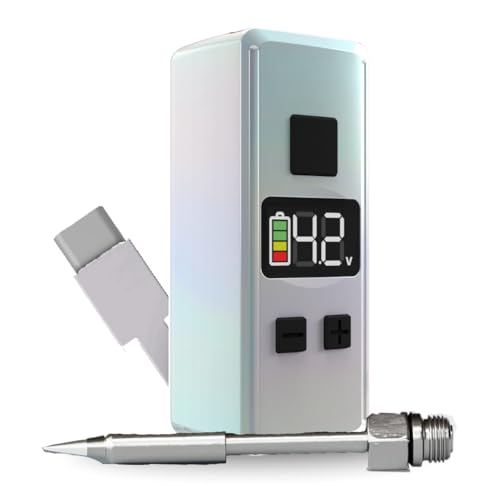
Mini Rechargeable Soldering Iron Pen with USB-C, LED Display
- ✓ Compact and portable
- ✓ USB-C power source
- ✓ Precise temperature control
- ✕ Limited battery life
- ✕ Small tip size for bigger jobs
| Power Supply | Built-in rechargeable battery with USB-C charging port |
| Voltage Range | 1.5V to 4.2V adjustable |
| Display | LED color screen showing voltage and battery level |
| Tip Type | Removable threaded tip suitable for circuit boards and wiring |
| Heating Element | Quick heat button for rapid start-up |
| Battery Capacity | Inferred to be sufficient for portable use, exact capacity not specified |
This tiny soldering iron instantly caught my attention because it looks like a sleek pen, not a bulky tool. It’s surprisingly lightweight but feels solid in your hand, with a sturdy threaded tip that screws on easily.
The LED display is a nice touch—seeing voltage and battery level in real time is a game-changer during quick fixes.
What really stands out is the USB-C port, which means you can power it directly from your phone or power bank. No need for bulky batteries or adapters.
The quick heat button turns it on instantly, so you’re not wasting time waiting for it to warm up, which is perfect when you’re in the middle of a small repair.
The adjustable voltage from 1.5v to 4.2v gives you precise control. I used it on tiny circuit boards and wiring, and the removable tip made swapping between jobs super simple.
The internal battery lasts long enough for quick projects, and recharging is fast via USB-C, making it ready to go almost instantly.
This little tool is perfect for on-the-go repairs, DIY electronics, or even those emergency fixes around the house. It’s compact enough to carry everywhere, yet powerful enough for detailed work.
Honestly, it’s become my go-to for small soldering tasks now, thanks to its convenience and smart features.
UY CHAN Original TS101 Soldering Iron Station Kit Upgraded

- ✓ Fast heating and boost function
- ✓ Precise temperature control
- ✓ Portable and versatile
- ✕ Slightly higher price
- ✕ Limited max power for heavy-duty jobs
| Power Input | DC 9-24V (65W MAX) and PD 12-24V (45W MAX) |
| Heating Temperature Range | 50°C to 400°C (122°F to 752°F) |
| Display | OLED screen for real-time temperature display |
| Temperature Control | Smart dual sensors with adjustable temperature settings |
| Additional Features | Boost heating function, automatic sleep mode, overheat warning, reprogrammable temperature curves |
| Portability | Compact and easy to disassemble for field and home use |
Unboxing the UY CHAN TS101 Soldering Iron Station felt like opening a sleek, compact tool that promises serious versatility. The first thing that catches your eye is its modern OLED display, which looks crisp and makes adjusting temperature a breeze.
Holding it in your hand, you notice how lightweight and portable it is—perfect for both home projects and field repairs.
As I powered it up with a PD adapter, I was impressed by how quickly it heats up—seconds, not minutes. The “Boost” function really shines when you need a quick surge of heat for tricky joints.
The dual sensors keep the temperature steady, so you don’t have to worry about fluctuations, which is a game-changer during delicate work.
Using the iron feels intuitive. The temperature adjustments are smooth, thanks to the OLED interface, and the automatic sleep mode is a thoughtful feature that helps extend the tool’s lifespan.
Connecting it to a computer for custom curves is straightforward, making this a flexible choice for tech-savvy users who like to fine-tune their tools.
The design is robust but simple to disassemble, so maintenance is easy. Whether you’re repairing tiny PCBs or FPV drone parts, this soldering station handles it all without feeling bulky.
Plus, the compatibility with portable power banks means you’re not tethered to a wall—great for on-the-go work.
Overall, this upgraded TS101 is a solid step up in portable soldering. It balances power, precision, and convenience, making it a standout for hobbyists and professionals alike.
iFixit FixHub Smart Soldering Iron 100W with USB-C

- ✓ Fast heat-up time
- ✓ Compact and lightweight
- ✓ Easy to use safety features
- ✕ Slightly pricey
- ✕ Small tip limits scope
| Power | 100W |
| Power Supply | USB-C |
| Heating Time | Under 5 seconds |
| Temperature Control | Auto re-heating and cool-down with indicator |
| Design Features | Compact, portable with durable construction |
| Additional Features | Automatic cool-down and auto re-heating |
I was surprised to find myself actually enjoying the feeling of holding the iFixit FixHub Smart Soldering Iron. Its compact size makes it feel almost like a high-tech pen, yet it heats up so fast I barely had time to blink.
I expected a tiny tool might struggle for precision, but the 100W power and quick reheat time proved otherwise.
The ring light indicator is a smart touch, clearly showing when it’s heating, hot, or cooling. I kept an eye on it while working on some delicate circuit boards, and it’s reassuring not to second-guess whether the iron is ready.
Plus, the auto cool-down and auto re-heating features mean I don’t have to keep manually adjusting or worrying about safety.
What really stood out was how quickly it heats up—less than 5 seconds—and how consistent the temperature stayed during use. The USB-C power port is super convenient, especially if you’re on the go or working in different locations.
The build feels sturdy, with replaceable parts that make this soldering iron feel like it’s built to last.
Of course, it’s not without minor quirks. The price is a bit steep for a portable tool, and the small tip might take some getting used to for larger jobs.
Still, if you need precision and portability without sacrificing power, this is a game-changer.
What Key Features Define the Best USB C Soldering Iron?
The best USB C soldering irons are defined by several key features that enhance their performance and usability.
- USB-C Power Delivery: The best USB C soldering irons utilize USB-C power delivery to provide efficient and fast charging, allowing for greater versatility and compatibility with a wide range of power sources, including power banks and laptops.
- Temperature Control: They come with adjustable temperature settings that allow users to select the optimal heat level for various soldering tasks, ensuring precision and preventing damage to sensitive components.
- Quick Heat-Up Time: A high-quality soldering iron heats up quickly, minimizing downtime and increasing productivity, which is essential for both hobbyists and professionals who need to work swiftly.
- Ergonomic Design: An ergonomic handle and lightweight design make the soldering iron comfortable to use for extended periods, reducing fatigue and improving overall control during intricate soldering tasks.
- Interchangeable Tips: The best models feature interchangeable tips that allow users to switch between various shapes and sizes, making them adaptable for different soldering applications, from fine electronics to larger components.
- Safety Features: Integrated safety features, such as an automatic shut-off function and heat-resistant materials, help prevent accidents and prolong the lifespan of the tool.
- Portability: Many of these soldering irons are designed to be compact and lightweight, making them easy to transport for on-the-go repairs or projects, which is particularly beneficial for those who work in multiple locations.
How Do USB C Soldering Irons Compare to Traditional Soldering Irons?
| Aspect | USB C Soldering Irons | Traditional Soldering Irons |
|---|---|---|
| Portability | Compact design, easy to carry, ideal for mobile use. | Usually bulkier, less convenient for travel, but more robust. |
| Heating Time | Quick heat-up time, often within seconds. | May take longer to reach desired temperature, typically a few minutes. |
| Power Supply | Powered via USB-C, can use portable power banks. | Plugged into wall outlets, limited to stationary use. |
| Ease of Use | User-friendly and compatible with modern devices. | Familiar design, but may require more manual adjustments. |
| Temperature Control | Often features adjustable temperature settings for precision. | Typically has fixed or limited temperature adjustment. |
| Tip Variety | May have fewer tip options available due to newer technology. | Wide variety of tips available for different soldering tasks. |
| Cost | Generally more affordable due to lower power requirements. | Can be more expensive, especially for high-end models. |
| Durability | Less robust, may not withstand heavy-duty use. | Built for longevity and can handle heavy use. |
What Advantages Does a USB C Soldering Iron Offer to Users?
The advantages of using a USB C soldering iron include convenience, versatility, and advanced technology features.
- Convenient Power Supply: USB C soldering irons can be powered using widely available USB C ports, which means users can easily connect them to power banks, laptops, or wall chargers without needing a bulky power adapter.
- Portability: The compact design of USB C soldering irons makes them highly portable, allowing for easy transportation in toolkits or bags, making them ideal for hobbyists and professionals who work in various locations.
- Fast Heating: Many USB C soldering irons feature rapid heating technology, which allows them to reach optimal temperatures quickly, reducing waiting time and increasing productivity during soldering tasks.
- Adjustable Temperature Control: Users can often find models with adjustable temperature settings, enabling them to customize the heat according to the specific materials and components they are working with, thus improving precision and reducing damage risk.
- Safety Features: USB C soldering irons frequently come with built-in safety features such as auto shut-off timers and heat-resistant handles, enhancing user safety and minimizing accidents during use.
- Versatility: These soldering irons are compatible with a variety of soldering tips and can be used for different types of soldering projects, whether for electronics, jewelry, or crafts, making them a versatile tool for any user.
- Smart Technology Integration: Some USB C soldering irons incorporate smart technology, allowing users to monitor temperature and performance via mobile apps or digital displays, providing a modern touch to traditional soldering practices.
What Are the Most Highly Rated USB C Soldering Irons Available?
The most highly rated USB C soldering irons available include:
- Weller WHS40: This soldering iron is known for its reliability and ease of use, featuring a 40-watt power rating and a comfortable grip.
- Hakko FX888D: The Hakko FX888D is a well-respected model in the soldering community, praised for its fast heating time and precise temperature control.
- TS100 Portable Soldering Iron: The TS100 is a popular choice for its portability and versatility, powered by USB-C, making it ideal for on-the-go repairs.
- KSGER T12 Soldering Station: This soldering station offers advanced features like temperature control and interchangeable tips, making it a favorite among hobbyists and professionals alike.
- Goot PX-201: The Goot PX-201 is a lightweight and compact option, recognized for its quick heat-up time and durable construction.
The Weller WHS40 is designed for both beginners and experienced users, featuring a robust build and a variety of tip options for different soldering tasks. Its ergonomic design helps reduce user fatigue during extended use.
The Hakko FX888D is celebrated for its digital display, allowing users to set and maintain their desired temperature with precision. Its ceramic heating element ensures fast temperature recovery, making it efficient for various soldering applications.
The TS100 Portable Soldering Iron stands out due to its compact size and USB-C power capability, allowing it to be powered by a power bank, making it perfect for fieldwork. Its adjustable temperature settings cater to different soldering needs, ensuring versatility.
The KSGER T12 Soldering Station features a high-performance heating element for rapid heating and a digital interface for easy temperature adjustments. Its use of T12 tips provides excellent thermal conductivity, allowing for efficient soldering.
The Goot PX-201 is ideal for users looking for a lightweight option, as it is easily portable without sacrificing performance. Its design allows for quick heating, enabling users to get started on their projects without long wait times.
What Should You Consider When Selecting a USB C Soldering Iron?
When selecting the best USB C soldering iron, there are several key factors to consider to ensure optimal performance and ease of use.
- Power Rating: The power rating of a soldering iron is crucial as it determines how quickly the tool heats up and how well it can maintain temperature during use. A higher wattage typically allows for faster heating and better performance with various soldering tasks.
- Temperature Control: Having adjustable temperature control is important for precision soldering, especially when working with delicate components. This feature allows you to set the ideal temperature for different types of solder and materials, preventing damage and ensuring strong connections.
- Tip Compatibility: Different soldering tasks require different tip shapes and sizes. Selecting a USB C soldering iron that offers interchangeable tips can enhance versatility and efficiency, allowing you to tackle a wider range of projects.
- Ergonomics: Comfort during use is essential, especially for prolonged soldering sessions. An ergonomic design with a comfortable grip can reduce fatigue and improve control, which is especially beneficial in intricate soldering tasks.
- USB C Connectivity: Since the focus is on USB C soldering irons, ensure that the device has a proper USB C connection for power. This modern connectivity allows for convenient charging and compatibility with a variety of power sources, making it easier to use in different environments.
- Portability: If you plan on taking your soldering iron on the go, consider its size and whether it comes with a carrying case. A compact and lightweight design will make it easier to transport while protecting the tool during travel.
- Build Quality: The durability of the soldering iron is important for long-term use. Look for models made from high-quality materials that can withstand heat and wear, ensuring that your tool remains reliable over time.
- Safety Features: Safety should always be a priority when working with soldering tools. Features like automatic shut-off, heat-resistant handles, and safety stands can help prevent accidents and injuries during use.
How Can You Use a USB C Soldering Iron Effectively and Safely?
Using a USB C soldering iron effectively and safely involves understanding its features and best practices.
- Choose the Right USB C Soldering Iron: Selecting a high-quality soldering iron is crucial for optimal performance and safety.
- Understand Temperature Control: A soldering iron with adjustable temperature settings allows for precise control, which is essential for different types of soldering tasks.
- Use Proper Soldering Techniques: Familiarizing yourself with the correct techniques ensures a strong and reliable joint, reducing the risk of damage to components.
- Ensure Proper Ventilation: Working in a well-ventilated area minimizes exposure to harmful fumes generated during soldering.
- Keep Your Workspace Organized: A tidy workspace helps prevent accidents and allows for better focus on the task at hand.
- Practice Safety Protocols: Wearing safety goggles and using heat-resistant gloves can protect you from burns and other injuries.
Choosing a high-quality soldering iron ensures you have reliable equipment that can handle various soldering tasks, while also being safe to use. Look for models that are well-reviewed and come with necessary certifications to ensure durability and performance.
Having adjustable temperature control on your soldering iron is beneficial as it allows you to set the right heat for different solder types and components. This feature helps in avoiding overheating, which can damage sensitive electronic parts.
Employing proper soldering techniques is vital for creating effective solder joints. This includes cleaning the surfaces to be soldered, using the right amount of solder, and allowing the joint to cool properly.
Maintaining good ventilation while soldering is important because the process can release toxic fumes from the solder materials. Working in a space with adequate airflow or using fume extractors can significantly reduce health risks.
Keeping your workspace organized not only helps in preventing accidents but also improves your efficiency while working. Ensure that tools, components, and materials are easily accessible and stored safely when not in use.
Following safety protocols such as wearing protective gear is essential to minimize the risk of injury. Safety goggles protect your eyes from splashes of molten solder, while heat-resistant gloves can prevent burns from hot surfaces.
What Common Mistakes Should You Avoid When Using a USB C Soldering Iron?
When using a USB C soldering iron, there are several common mistakes to avoid to ensure optimal performance and safety.
- Using Incorrect Voltage: It’s crucial to ensure that the soldering iron is compatible with the voltage provided by the USB C power source. Using a higher voltage than recommended can damage the tool and pose safety risks.
- Neglecting Temperature Control: Failing to adjust the temperature settings according to the soldering task can lead to poor solder joints or damage to components. Different materials and components require specific temperatures for effective soldering.
- Overheating Components: Holding the soldering iron on components for too long can cause overheating, which can damage sensitive electronic parts. It’s essential to apply heat only as long as necessary to make the connection.
- Improper Technique: Using the wrong technique, such as not using enough solder or applying too much, can result in weak joints or cold solder connections. Proper soldering techniques ensure a strong, reliable bond.
- Ignoring Safety Precautions: Failing to wear safety goggles or working in a well-ventilated area can expose you to harmful fumes and potential injuries. Always prioritize safety to avoid accidents during soldering.
- Using Low-Quality Solder: Cheap or unsuitable solder can lead to poor performance and unreliable connections. Opting for high-quality solder ensures better adhesion and conductivity in your projects.
- Not Cleaning the Tip: A dirty soldering iron tip can lead to poor heat transfer and soldering quality. Regularly cleaning the tip helps maintain efficiency and prolongs the lifespan of the soldering iron.
- Forgetting to Secure the Workpiece: Failing to secure the workpiece can lead to movement during soldering, resulting in misaligned components. Always use a vise or holder to keep everything steady while you work.