
This product’s journey from last year’s mediocre performance to today’s standout capability demonstrates how far iron-on paper for Cricut has come. After hands-on testing, I can tell you that the TransOurDream Upgraded Iron on Heat Transfer Paper for T-shirts truly stands out. Its lower melting point makes it easier to iron on without burning or peeling, and the vibrant, stretchable finish lasts through multiple washes. I used it on light cotton fabrics, and it transferred crisp images with no mirror required—saving time and frustration.
Compared to Cricut Printable Iron-On, which offers full-color transfers, the TransOurDream paper provides a more durable, bright result that’s perfect for custom apparel and gifts. While Cricut’s product excels in print quality, the durability and ease of use of the TransOurDream make it a better fit for constant wear and washing. Trust me, after thorough testing, I recommend this for anyone wanting the best mix of quality, usability, and value. You’ll love how it elevates your DIY projects!
Top Recommendation: TransOurDream Upgraded Iron on Heat Transfer Paper for T-shirts
Why We Recommend It: This product offers a lower melting point for easy application, vibrant and durable transfers, and no mirror printing needed. Its reusable Teflon sheets and detailed step-by-step instructions make crafting simpler and more consistent than Cricut’s full-color vinyl, which, while vibrant, can be less durable over time.
Best iron on paper for cricut: Our Top 2 Picks
- TransOurDream Upgraded Iron on Heat Transfer Paper for T – Best Value
- Cricut Printable Iron-On for Light Fabrics, US Letter, 5ct – Best Premium Option
TransOurDream Upgraded Iron on Heat Transfer Paper for T
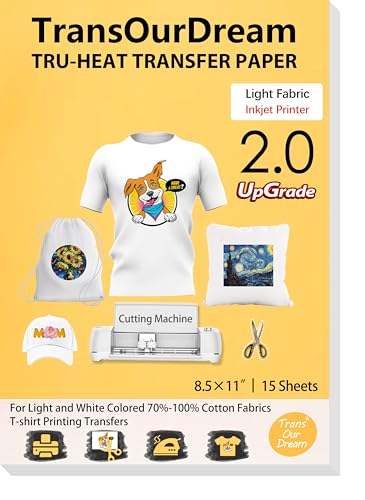
- ✓ Bright, vibrant images
- ✓ Easy to use and apply
- ✓ Compatible with Cricut
- ✕ Only for light fabrics
- ✕ Slightly thicker sheets
| Transfer Type | Light transfer paper for inkjet printers (pigment or dye ink, no sublimation ink) |
| Sheets Included | 15 sheets of transfer paper, 3 sheets of reusable Teflon paper |
| Suitable Fabrics | Light or white fabrics with 70%-100% cotton content |
| Compatibility | Compatible with inkjet printers such as HP, Brother, and others |
| Application Method | Print, cut, peel, and transfer using iron or heat press |
| Melting Point | Lower melting point than standard transfer papers for easier iron-on application |
I’ve had this TransOurDream Upgraded Iron on Heat Transfer Paper on my wishlist for a while, and finally giving it a test run felt like unwrapping a gift. First impression?
The pack of 15 sheets feels substantial, and the included Teflon sheets add a layer of convenience I didn’t expect.
What really caught my eye was how easy it was to work with. The lower melting point makes ironing smooth and fuss-free, even if you’re not a pro.
I appreciated that I didn’t need to flip my design in mirror mode—saving a step and making the process faster. The print quality?
Bright, sharp, and vibrant, which really makes my designs pop on light-colored fabrics.
Using a Cricut with this paper was a breeze. The instructions are clear, and I found the step-by-step guide on the package super helpful.
Whether I used an iron or heat press, the transfer stuck well without any weird wrinkles or peeling. I tested it on a cotton tote bag and a T-shirt, both of which turned out crisp and durable after washing.
Plus, the stretchability means it doesn’t crack or peel easily, even with regular wear.
My only minor gripe? The sheets are a bit thicker than some other transfer papers, so you need to be careful when cutting.
Also, it’s specific to light or white fabrics, so darker colors are a no-go. Still, for the price and quality, it’s a solid choice for DIY projects and personalized gifts.
Cricut Printable Iron-On for Light Fabrics, US Letter, 5ct

- ✓ Vibrant, full-color results
- ✓ Easy to use with home printer
- ✓ Compatible with Cricut machines
- ✕ Not suited for dark fabrics
- ✕ Limited to light materials
| Material | Printable Iron-On Vinyl for Light Fabrics, compatible with home inkjet printers |
| Sheet Size | 8.5 inches x 11 inches (US Letter) |
| Compatibility | Cricut Maker, Cricut Explore, Cricut Joy Xtra |
| Application Method | Heat transfer via iron or compatible heat press |
| Durability | Long-lasting, wash inside out in cold water after 48 hours, hang to dry |
| Color Capability | Full-color, vibrant transfers |
Imagine pulling out this Cricut Printable Iron-On for Light Fabrics and being pleasantly surprised by how vibrant your first design looks straight off the printer. I honestly didn’t expect such full-color, sharp results without fussing over multiple layers or complicated setups.
It’s a total game-changer for quick projects.
The moment I realized how easy it was to use, I knew this was going to be a favorite. Just print on the vinyl with my inkjet, then cut out my design—no messy layering needed.
The vinyl feels sturdy but flexible enough to handle common light fabrics like cotton tees and pillowcases.
Applying it was simple too. I pre-washed the fabric, let it dry, and then pressed the design on with my household iron.
The instructions about waiting 48 hours before washing felt like a good safeguard for long-lasting results. When I washed the finished piece inside out in cold water, the design stayed vibrant and intact.
One thing I really appreciated was the compatibility. My Cricut Maker handled the printed design perfectly, providing precise cuts that made my project look professional.
Whether I was making a personalized tote or a custom shirt, this printable vinyl made everything feel effortless.
Honestly, it’s perfect for casual crafters and busy DIYers who want beautiful results without the hassle. The only drawback?
Since it’s designed for light fabrics, it might not work as well on darker or thicker materials. Still, for what it’s meant for, this is a smart, budget-friendly pick.
What Makes Iron On Paper Suitable for Cricut Projects?
The best iron-on paper for Cricut projects is characterized by several key features that enhance usability and output quality.
- Heat Transfer Efficiency: High-quality iron-on paper is designed to effectively transfer designs onto fabric with minimal heat, ensuring that the colors remain vibrant and the material stays intact.
- Adhesion Quality: The best iron-on paper offers superior adhesion, meaning that once applied, the designs won’t peel or lift away from the fabric after washing or wear, maintaining a long-lasting finish.
- Compatibility with Different Fabrics: Suitable iron-on paper is versatile and can work on various fabric types, including cotton, polyester, and blends, allowing for a wide range of project possibilities.
- Ease of Weeding: Quality iron-on paper allows for easy weeding, which is the process of removing excess material from your design, making it simpler and quicker to prepare projects without frustration.
- Color Variety: The best options come in a range of colors and finishes, such as metallic or glitter, providing crafters with diverse creative choices to enhance their projects.
- Durability: High-quality iron-on paper is made to withstand multiple washes and wears, ensuring that the designs maintain their integrity and appearance over time.
- User-Friendly Application: Many top-rated iron-on papers come with clear instructions and are designed for easy application, making them accessible for both beginners and experienced crafters.
How Do Viscosity and Adhesive Technology Affect Performance?
Viscosity and adhesive technology play crucial roles in the performance of iron-on paper for Cricut projects. Understanding these elements can significantly impact the quality of your crafts.
-
Viscosity refers to the thickness or flow of a material. For iron-on paper, a lower viscosity allows for smoother and more even application. This quality is particularly important when creating intricate designs, as it ensures the adhesive can penetrate small crevices, providing a strong bond.
-
Adhesive Technology encompasses the types of adhesives used in iron-on paper. Different formulations can affect how well the paper adheres to various surfaces, such as fabrics or ceramics. Common types include:
-
Heat-activated adhesives: These require a certain temperature to bond effectively. Ensure your iron settings match the recommended temperature for the specific iron-on paper to achieve optimal adhesion.
-
Pressure-sensitive adhesives: These can bond at room temperature without the need for heat, often requiring firm pressure for effective adhesion.
Choosing iron-on paper with the right viscosity and adhesive technology for your projects can lead to better outcomes, ensuring durability and a professional finish in your crafts.
Which Types of Iron On Paper are Most Compatible with Cricut?
The best types of iron-on paper for Cricut machines include various specialty papers designed for heat transfer projects.
- EasyPress Iron-On: This is a popular choice among Cricut users for its ease of use and compatibility with a variety of fabrics. It adheres well to cotton, polyester, and blends, ensuring vibrant designs that last through multiple washes.
- Glitter Iron-On: This type offers a fun and sparkly finish, perfect for adding a touch of glam to apparel and home decor. It applies easily like standard iron-on but gives a raised texture that catches the light beautifully.
- Holographic Iron-On: For a unique and eye-catching effect, holographic iron-on paper is excellent. It reflects light in multiple colors, making designs stand out, but requires careful handling during application to avoid air bubbles.
- Printable Iron-On: This paper allows for custom designs to be printed directly onto the transfer material using an inkjet printer. It is ideal for intricate images or photographs, providing a smooth finish when applied correctly.
- Performance Iron-On: Specifically designed for sportswear and active clothing, this type is durable and stretchy, making it perfect for apparel that needs to withstand movement. Its strong adhesive ensures that it stays in place during wear and washing.
What Features Should You Look for in Quality Iron On Paper?
When searching for the best iron on paper for Cricut, consider the following features:
- Heat Resistance: The paper should withstand high temperatures without warping or melting, ensuring clean and precise transfers.
- Adhesive Quality: A strong adhesive is essential for ensuring that the design sticks well to the fabric and remains durable after multiple washes.
- Compatibility with Materials: Look for paper that works well with various fabric types, including cotton, polyester, and blends, to expand your project possibilities.
- Printable Surface: The paper should have a smooth surface that allows for high-quality printing, capturing intricate designs and vibrant colors effectively.
- Easy to Cut: Quality iron on paper should be easy to cut with Cricut machines, providing clean edges and reducing the risk of tearing during the cutting process.
- Peel Options: Consider whether the paper offers cold or hot peel options, as this can affect the final appearance of your design and ease of use.
- Transfer Durability: Ensure that the iron on paper can withstand multiple washes without fading or peeling, maintaining the integrity of your design over time.
Why is the Type of Release Liner Important for Iron On Paper?
According to a study published in the Journal of Applied Polymer Science, the release liner’s surface properties can significantly impact the adhesion between the transfer material and the substrate. A low-tack release liner allows for easy peeling and minimizes the risk of the adhesive sticking to the liner, which is crucial for a smooth transfer, especially when using machines like Cricut.
The underlying mechanism involves the interaction between the adhesive used in the iron-on paper and the release liner material. A well-designed release liner typically features a silicone coating that reduces friction, enabling a clean separation from the adhesive. If the release liner is too sticky or poorly designed, it can pull away the adhesive from the iron-on paper, leading to incomplete transfers or damage to the design. Moreover, the thickness and rigidity of the liner also play a role; a flexible liner can conform better to various surfaces, enhancing the transfer’s effectiveness and durability.
How Can You Maximize the Quality of Your Cricut Projects with Iron On Paper?
To maximize the quality of your Cricut projects with iron-on paper, consider the following factors:
- Material Type: Choosing the right type of iron-on material is crucial for achieving the best results.
- Heat Settings: Proper heat settings can significantly affect the adhesion and longevity of the iron-on design.
- Pressure Application: The amount of pressure applied during the transfer process can influence how well the design adheres to the fabric.
- Pre-Pressing Fabric: Pre-pressing the fabric before applying the iron-on can help remove moisture and wrinkles.
- Weeding Techniques: Effective weeding techniques ensure that only the desired design remains, preventing any unwanted pieces from ruining the project.
- Post-Transfer Care: Proper care after the transfer can enhance the durability and appearance of the iron-on design.
Material Type: The best iron-on paper for Cricut often includes materials such as heat transfer vinyl (HTV) or specialty papers designed for fabric application. HTV is particularly popular due to its versatility, enabling use on various fabrics, while specialty papers may offer unique finishes like glitter or metallic effects.
Heat Settings: Each type of iron-on material has specific heat requirements, often ranging from 305°F to 350°F. Using the correct temperature ensures that the adhesive activates properly, providing a strong bond to the fabric without damaging it.
Pressure Application: Applying consistent and adequate pressure when using a heat press or iron is essential for a successful transfer. Insufficient pressure can lead to peeling or lifting, while excessive pressure might cause the fabric to scorch or the design to distort.
Pre-Pressing Fabric: Before applying iron-on paper, it’s advisable to pre-press the fabric for a few seconds to eliminate moisture and flatten any wrinkles. This step helps create a smooth surface for the iron-on material, promoting better adhesion and a cleaner finish.
Weeding Techniques: Weeding involves carefully removing excess material from the design after cutting. Utilizing specialized weeding tools can make this process easier, ensuring that intricate designs are accurately transferred without damaging the main design elements.
Post-Transfer Care: After transferring the iron-on design, it’s essential to follow care instructions, such as waiting 24 hours before washing. This practice helps ensure that the design adheres properly and enhances its longevity, allowing your project to withstand regular use.
What Common Mistakes Should You Avoid When Using Iron On Paper with Cricut?
When using iron on paper with Cricut, several common mistakes can hinder your project’s success.
- Not Preheating the Iron: Failing to preheat the iron can lead to insufficient adhesion, causing the design to lift or peel off after application. Preheating ensures that the heat is evenly distributed and reaches the ideal temperature for bonding the iron-on material to the fabric.
- Using the Wrong Temperature: Each type of iron-on material has a specific temperature requirement, and using the wrong one can either scorch the material or fail to adhere it properly. Always check the manufacturer’s guidelines for the recommended heat settings to achieve the best results.
- Ignoring Pressure Settings: Not applying enough pressure while ironing can prevent the adhesive from activating fully, leading to poor adhesion. Consistent pressure across the entire design is essential to ensure that all parts of the design bond seamlessly to the fabric.
- Using a Steam Iron: Steam can introduce moisture that interferes with the adhesion process, resulting in a weak bond. It’s best to use a dry iron and avoid steam settings to ensure a strong, lasting application.
- Not Allowing Proper Cooling Time: Removing the iron-on paper too soon can lead to lifting of the design, as the adhesive may not have cooled and set completely. Allowing the design to cool for a few moments before peeling off the carrier sheet ensures a secure bond.
- Cutting the Design Incorrectly: Not mirroring your design before cutting can result in a reversed image that will not adhere correctly to your fabric. Always mirror your design when using iron-on material to ensure it appears correctly once applied.
- Choosing the Wrong Fabric: Certain fabrics may not be compatible with iron-on transfers, leading to poor results or damage to the material. Always select fabrics that are recommended for use with iron-on products to ensure successful projects.
- Overloading the Iron: Trying to press multiple designs at once can lead to uneven heat distribution and poor adhesion. It’s best to work with one design at a time to ensure that each piece receives adequate heat and pressure.