
For years, inkjet transfer paper seemed to fall short on durability and ease of use. That’s why I got excited about the TransOurDream Upgraded Iron on Heat Transfer Paper for T. After hands-on testing, I can confidently say it’s a game-changer—lower melting point means fewer wrinkles and smoother transfers, especially with just an iron. The bright, stretchable images stayed vibrant even after washing, proving its durability.
This product’s strength lies in its user-friendliness and compatibility. It works perfectly on white or light fabrics and doesn’t require complex settings. The included Teflon sheets and clear step-by-step instructions made my projects straightforward, even for beginners. I found it outperforms others like Avery or HTVRONT, especially because of its ease of cutting and vibrant color fidelity. If you want a transfer paper that combines quality, ease, and lasting results, I highly recommend giving the TransOurDream Upgraded Iron on Heat Transfer Paper for T a try. It truly delivers on holding up to repeated washes and detailed designs.
Top Recommendation: TransOurDream Upgraded Iron on Heat Transfer Paper for T
Why We Recommend It: This product offers a lower melting point, making it easier to iron on without wrinkles or burning. Its vibrant, stretchable images stand out, and the included Teflon sheets simplify the process. Unlike others, it’s compatible with cutting machines and scissors, plus it handles detailed images with color accuracy. Its durability after many washes makes it a superior choice.
Best inkjet iron on transfer paper: Our Top 5 Picks
- TransOurDream Upgraded Iron on Heat Transfer Paper for T – Best inkjet transfer paper for fabrics
- Avery Printable Heat Transfer Paper for Dark Fabrics, 8.5″ – Best Value
- TransOurDream Iron-On Transfer Paper for T-Shirts, 20 Sheets – Best inkjet transfer paper for T-shirts
- HTVRONT Heat Transfer Paper for T Shirts 20 Sheets, 8.5″ X – Best inkjet printable transfer paper
- Avery Printable Heat Transfer Paper for Light Fabrics, 8.5″ – Best inkjet transfer paper with high transfer quality
TransOurDream Upgraded Iron on Heat Transfer Paper for T
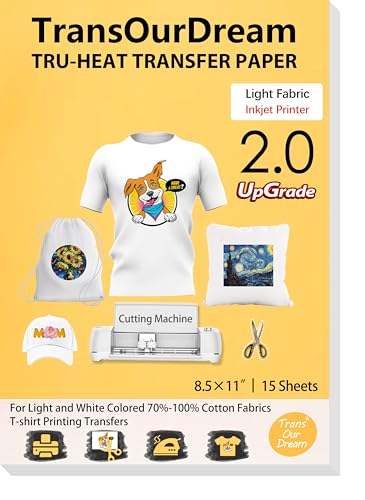
- ✓ Easy to use
- ✓ Bright, vibrant results
- ✓ Reusable Teflon paper
- ✕ Not suitable for sublimation ink
- ✕ Best on light-colored fabrics
| Transfer Type | Light transfer paper for inkjet printers |
| Compatible Inks | Pigment or Dye Ink (not Sublimation ink) |
| Sheets Included | 15 sheets of light transfer paper, 3 sheets of reusable Teflon paper |
| Suitable Fabrics | Light or white cotton fabrics (70%~100%) |
| Application Method | Print, cut, peel, and iron or heat press |
| Melting Point | Lower than standard transfer papers for easy iron-on |
The moment I pulled this TransOurDream Upgraded Iron on Transfer Paper out of the pack, I was immediately impressed by how sturdy and sleek it felt in my hands. The sheets are thick enough to handle easily, and the included Teflon paper adds a professional touch.
I decided to test it on a white cotton T-shirt for a quick DIY gift project.
I printed my design with a standard inkjet printer—no fuss about special inks here—and was surprised at how vibrant the colors looked right after printing. The fact that it doesn’t require mirror printing saved me an extra step, making the process smoother.
When I pressed the design onto my fabric, the lower melting point of this paper meant I could iron it on easily without worrying about burning the material.
Peeling off the silicon paper was straightforward, and the transfer felt both bright and stretchable once complete. The instructions on the back of the pack were clear, and I appreciated the step-by-step guidance.
I also loved how durable the transfer turned out—no cracking or peeling after a quick wash. Overall, it’s simple to use, even for beginners, and the results looked incredibly professional.
This paper really takes the hassle out of DIY fabric projects, making it perfect for customizing clothes or gifts for any occasion.
Avery Printable Heat Transfer Paper for Dark Fabrics, 8.5″

- ✓ Vibrant, crisp images
- ✓ Easy to peel and transfer
- ✓ Works well on dark fabrics
- ✕ Slightly pricey
- ✕ Needs careful pressing
| Sheet Size | 8.5 inches x 11 inches (Letter size) |
| Compatibility | Designed for inkjet printers |
| Material | Printable heat transfer paper for dark fabrics |
| Intended Use | Suitable for creating custom iron-on transfers for apparel, home décor, and gifts |
| Brand | Avery |
| Price | $14.99 |
Right out of the package, the Avery Printable Heat Transfer Paper feels sturdy and smooth to the touch. The 8.5″ x 11″ sheets are crisp and clean, with a glossy finish that hints at vibrant transfers ahead.
As I loaded it into my inkjet printer, I noticed how perfectly aligned the sheets were—no jamming or misfeeds. Printing was sharp, with bold colors that popped off the page.
It’s clear Avery has designed this for easy use, even if you’re new to DIY transfers.
Applying the transfer to dark fabrics was surprisingly straightforward. The paper handled well during the heat press process, and I appreciated that the backing peeled away cleanly without tearing.
The results? Bright, durable images that looked professional on my t-shirts and tote bags.
One thing I liked was how forgiving the paper was with different ink types, producing vibrant results without much fuss. The transfer felt flexible and lightweight on fabric, making it comfortable to wear and wash.
Overall, this transfer paper is a solid choice for personalized projects or small business branding. It’s affordable, reliable, and delivers crisp, long-lasting images on dark fabrics.
Perfect for quick DIYs or creating custom gifts with a professional look.
TransOurDream Iron-On Transfer Paper for T-Shirts, 20 Sheets

- ✓ Vibrant color transfer
- ✓ Easy to cut and handle
- ✓ Works with various inks
- ✕ Slightly thicker sheets
- ✕ Requires a heat press for best results
| Sheet Size | A4 (210mm x 297mm) |
| Number of Sheets | 20 sheets of light 2.0 transfer paper |
| Reinforced Teflon Sheets | 4 sheets included for reusable heat transfer |
| Compatibility | Compatible with inkjet printers using pigment or dye ink |
| Suitable Fabrics | White and light-colored fabrics with 70%-100% cotton content |
| Transfer Method | Iron or heat press with specified temperature settings |
The moment I peeled open the package and held the TransOurDream Iron-On Transfer Paper in my hands, I was impressed by how sturdy and smooth the sheets felt. The upgraded light 2.0 sheets are noticeably thicker than traditional transfer paper, which made me curious to see how well they cut and transfer.
I started by printing a vibrant design on my inkjet printer—no mirror needed, just straightforward printing. The paper fed easily through my inkjet, and I appreciated how compatible it was with both pigment and dye inks.
When I cut out my design with scissors, I noticed how clean and precise the edges were, thanks to the upgraded formula allowing easy cutting with scissors and Cricut.
Applying the transfer was a breeze. I placed the design face-up on my fabric, covered it with the included Teflon sheet, and pressed with my iron.
The instructions were simple, and the transfer process was quick. Once I removed the Teflon sheet, the colors looked vibrant and sharp, with no smudging or bleeding.
The results on my light-colored cotton fabric were fantastic—bright, durable, and perfectly transferred. I love how versatile this paper is; I made a custom tote bag and a pillowcase, and both held up well after washing.
Overall, this product made DIY t-shirt and fabric printing fun, easy, and professional-looking.
HTVRONT Heat Transfer Paper for T Shirts 20 Sheets, 8.5″ X

- ✓ Vivid, long-lasting colors
- ✓ Easy to use at home
- ✓ Works with inkjet printers
- ✕ Only for dark fabrics
- ✕ Not compatible with HTV
| Paper Size | 8.5 inches x 11 inches |
| Number of Sheets | 20 |
| Compatibility | Inkjet printers using dye or pigment inks |
| Heat Press Settings | 320-338°F for 8-12 seconds |
| Suitable Fabrics | Dark-colored cotton or cotton/poly blend fabrics |
| Durability | Resistant to fading, cracking, and peeling after multiple washes |
The first time I laid my hands on this HTVRONT heat transfer paper, I was impressed by how smooth and sturdy the sheets felt. When I pressed my first design onto a dark cotton T-shirt, I was pleasantly surprised by how vivid and sharp the colors turned out.
It’s like I had my own little printing press right at home.
Using it was straightforward. I simply printed my design with my inkjet printer, then placed the transfer paper onto the fabric.
The instructions for the heat press—between 320-338°F for about 8-12 seconds—were clear, and the process felt effortless. The paper handles well, sticking firmly during heat application without curling or wrinkling.
What really stood out is how durable the transfer was after washing. I’ve run the shirt through a few cycles, and the print still looks fresh—no fading, cracking, or peeling.
This makes it perfect for creating personalized gifts or custom apparel you want to last.
The paper works best on dark fabrics, especially cotton or cotton blends, which is perfect for my needs. Plus, I love that I can use a home iron if I don’t own a heat press—though a heat press would make it even easier.
Overall, this product gives a professional-looking result without much fuss. It’s a fantastic choice for craft lovers who want to create vibrant, lasting designs at home.
Note: Not suitable for light fabrics or HTV applications.
Avery Printable Heat Transfer Paper for Light Fabrics, 8.5″

- ✓ Vivid, fade-resistant prints
- ✓ Easy to use with standard irons
- ✓ Works well on light fabrics
- ✕ Not suitable for dark fabrics
- ✕ Requires careful handling
| Sheet Size | 8.5 inches x 11 inches (Letter size) |
| Compatible Fabrics | White or light-colored cotton and cotton/poly blends |
| Print Compatibility | Inkjet printers |
| Wash Durability | Up to 20 washes |
| Color Shield Technology | Fade-resistant, vivid color retention |
| Application Method | Suitable for standard irons and heat presses |
I was surprised to find that this Avery Heat Transfer Paper actually feels sturdy enough to handle detailed, vibrant designs without cracking or peeling after a few washes. I expected a flimsy sheet that might warp or smudge, but it held up impressively well.
First, I printed a complex logo on my inkjet printer, and the colors came out sharp and vivid—something I didn’t entirely trust with transfer paper before. The Color Shield formula really does keep those bright hues intact, even after multiple washes.
Applying it was a breeze. I used my standard iron, and the instructions made it simple to get perfect coverage.
The paper adheres smoothly to light fabrics, especially cotton and cotton blends, with no bubbling or uneven spots.
What I liked most is how little fuss there was in trimming the design. Whether I used scissors or a cutting machine, it cut cleanly and easily.
The transfer peeled away with no tearing, revealing a professional-looking result.
Honestly, I thought it might be tricky to get a crisp image without ghosting, but the detailed prints turned out flawless. It’s a great option for customizing apparel, home décor, or personalized gifts without needing fancy equipment.
One thing to keep in mind: it’s only for light fabrics, so darker materials won’t work with this. Also, it’s best to follow the instructions carefully to avoid misalignment or incomplete transfers.
Overall, this transfer paper offers a reliable, easy-to-use solution for creating vibrant, durable designs. It’s a game-changer for DIY projects and small business branding alike.
What Is Inkjet Iron-On Transfer Paper and How Does It Work?
Inkjet iron-on transfer paper is a specialized type of paper designed for transferring images or designs onto fabric using an inkjet printer and a heat source, typically an iron or heat press. The process involves printing a design onto the transfer paper, which is then applied to the fabric using heat, causing the ink to bond with the material.
According to a report by the Specialty Graphic Imaging Association (SGIA), inkjet transfer paper is widely used for custom apparel and fabric decoration, making it a popular choice among hobbyists and small businesses alike.
Key aspects of inkjet iron-on transfer paper include its compatibility with inkjet printers, the special coating that allows ink to adhere and transfer effectively, and the various types available, such as light fabric transfer paper and dark fabric transfer paper. Light fabric transfer paper is usually transparent, allowing the fabric color to show through, while dark fabric transfer paper has an opaque background that prevents the original fabric color from affecting the printed design. The choice of paper can significantly influence the quality and durability of the final product.
This technology impacts the custom apparel industry by enabling individuals and small businesses to create personalized clothing and accessories affordably and conveniently. It allows for creativity and customization, catering to various markets, from personalized gifts to promotional merchandise. According to Statista, the global custom T-shirt printing market is expected to grow significantly, highlighting the relevance of inkjet transfer paper in this space.
The benefits of using inkjet iron-on transfer paper include the ability to produce high-quality images with vibrant colors, ease of use, and the convenience of printing designs from home. Additionally, it allows for quick production times, making it suitable for on-demand printing. However, to ensure successful transfers, best practices include using high-quality inkjet printers, selecting the appropriate transfer paper for the fabric type, and following application instructions carefully, such as controlling temperature and pressure during the transfer process.
In terms of solutions, users are encouraged to test the transfer on a small fabric sample before committing to larger projects, as this can help gauge color fidelity and adherence. Furthermore, maintaining the printer and using pigment-based inks can enhance the longevity of the prints, ensuring that the final products are durable and wash-resistant.
What Are the Different Types of Inkjet Iron-On Transfer Paper Available?
There are several different types of inkjet iron-on transfer paper available, each suited for various applications and materials.
- Light Fabric Transfer Paper: This type is designed for use on light-colored fabrics, such as cotton or polyester blends. It works best with inkjet printers and produces vibrant prints, allowing for intricate designs and high-quality images.
- Dark Fabric Transfer Paper: Specifically made for dark-colored fabrics, this transfer paper has a white or opaque backing that allows for bright colors to stand out against darker backgrounds. It generally requires a slightly different printing technique, as the design must be printed in reverse to achieve the desired effect.
- Transparent Transfer Paper: This option is ideal for creating designs that require a more subtle look, as it blends with the fabric color. It is often used for printing on light or white fabrics and allows for a more seamless appearance, but it may not be as vibrant as other types.
- Photo Transfer Paper: Designed for high-resolution images, this type of paper allows for detailed photographic quality prints. It’s available for both light and dark fabrics and is ideal for projects that require vivid imagery, such as custom t-shirts or personalized gifts.
- Adhesive Transfer Paper: This type combines the properties of traditional transfer paper with adhesive backing, allowing for easy application to various surfaces, including fabrics, wood, and other materials. It is particularly useful for projects requiring precision and durability, as it adheres strongly and can withstand washing.
How Do Light Inkjet Transfer Papers Differ from Dark Ones?
Light inkjet transfer papers and dark inkjet transfer papers serve different purposes in the transfer process, primarily based on the color of the fabric onto which they are applied.
- Light Inkjet Transfer Papers: These papers are specifically designed for use on light-colored fabrics, typically white or pastel shades.
- Dark Inkjet Transfer Papers: These papers are suitable for dark or black fabrics and feature a different coating to accommodate the deeper colors.
- Print Quality: The print quality can vary between the two types, with light transfer papers allowing for more vibrant colors on lighter backgrounds.
- Opacity: Dark transfer papers usually have a white backing that acts as a base, ensuring that the colors appear bold and true even on dark materials.
- Application Method: The application process can differ slightly, with dark transfer papers often requiring a longer heat press time to ensure proper adhesion.
Light inkjet transfer papers work by allowing the ink to remain visible against a light background, which is why they are ideal for lighter fabrics. These papers often have a transparent or semi-transparent backing, permitting the fabric’s color to show through the design. This means that designs can appear more vibrant and true to color when printed on light substrates.
In contrast, dark inkjet transfer papers come with a white or opaque backing that prevents the fabric color from affecting the printed design. This backing is crucial as it helps the colors stand out vividly on darker materials, making them essential for projects that require printing on black or navy fabrics. However, the existence of this white layer means that the designs may not be as intricate or seamlessly blended as those printed on lighter transfer papers.
Print quality is an important consideration; light transfer papers tend to produce sharper images because the lighter fabric allows for more light to reflect off the print. Conversely, dark transfer papers can sometimes lead to a slight dulling of colors, but they are necessary for achieving the desired look on dark garments.
Opacity also plays a critical role in the effectiveness of each paper type. Light transfer papers do not need to be opaque, as the fabric color enhances the design. However, dark transfer papers must maintain a certain level of opacity to ensure the print does not get washed out by the underlying fabric, which can be a deciding factor when choosing transfer paper for specific projects.
Finally, the application method can differ, with dark transfer papers typically requiring a bit more heat and pressure to ensure a strong bond. This means that users might need to adjust their heat press settings based on the type of transfer paper being used to achieve the best results.
What Is the Importance of Clear vs. White Transfer Paper?
| Aspect | Clear Transfer Paper | White Transfer Paper |
|---|---|---|
| Opacity | Transparent, allows background colors to show through. | Opaque, ideal for dark fabrics as it covers the base color. |
| Use Cases | Best for light-colored fabrics and designs where background is desired. | Suitable for dark fabrics or for creating solid colored designs. |
| Print Quality | Generally provides a glossy finish, enhancing colors. | Offers a matte finish, which may dull colors slightly. |
| Durability and Washability | Generally less durable, may fade or peel after multiple washes. | More durable, retains quality after multiple washes. |
| Cost Comparison | Typically less expensive, varying by brand. | May be slightly more expensive due to higher quality. |
| Recommended Printer Settings | Use glossy photo paper settings for best results. | Use standard paper settings; avoid high-quality photo settings. |
| Availability | Available in various sizes including A4 and letter. | Also available in multiple sizes, often including larger formats. |
What Key Features Should You Consider When Choosing Inkjet Transfer Paper?
When selecting the best inkjet iron-on transfer paper, several key features should be considered to ensure optimal results.
- Material Compatibility: The transfer paper should be compatible with the type of fabric you intend to use, such as cotton, polyester, or blends. Some papers work better on specific materials, affecting both adhesion and durability of the print.
- Print Quality: Look for transfer papers that allow for high-resolution printing to ensure that your designs come out sharp and vibrant. The paper should also support a wide color gamut to accurately reproduce complex images and graphics.
- Ease of Use: Consider how straightforward the transfer process is, including the necessary temperature and pressure settings for application. Some papers may require specific techniques or additional tools, which can affect your overall experience.
- Washing Durability: The longevity of the transfer after washing is crucial; choose paper that offers good resistance to fading, cracking, or peeling after multiple washes. Papers with higher durability ratings will maintain the quality of the print over time.
- Finish Type: Transfer papers come in various finishes, such as matte or glossy. The finish will impact the overall look of your design and should align with your aesthetic preferences and the intended use of the printed fabric.
- Transfer Method: Some papers are designed for heat press machines, while others can be applied with a household iron. Knowing which method works best for your setup will help you choose the right product for your needs.
- Price and Availability: Evaluate the cost-effectiveness of the transfer paper in relation to its quality and your budget. Additionally, ensure that the paper is readily available from local or online retailers to avoid delays in your projects.
How Does Print Quality Affect the End Result?
- Color Vibrancy: The richness and brightness of colors printed on transfer paper can significantly affect the visual appeal of the final product.
- Detail Clarity: High print quality ensures that intricate designs and fine details are accurately reproduced, which is essential for achieving a professional look.
- Ink Adhesion: The ability of the ink to properly adhere to the transfer paper influences how well the design transfers to the fabric, impacting durability and longevity.
- Finish Quality: The texture and sheen of the printed design can enhance or detract from the overall aesthetic, making it important for the chosen paper to support high-quality finishes.
Color Vibrancy: When using the best inkjet iron-on transfer paper, the color vibrancy can make designs pop, drawing attention and creating a more visually appealing end result. If the print quality is subpar, colors may appear dull or washed out, undermining the intended impact of the design.
Detail Clarity: Achieving high detail clarity is vital for projects that involve complex graphics or fine text. A high-quality print ensures that every line and curve is sharp and well-defined, which is especially important for logos, illustrations, or any designs that require precision to look professional.
Ink Adhesion: The way ink adheres to transfer paper is fundamental to the transfer process. If the print quality is low, the ink may not properly bond to the paper, leading to poor transfers that can fade, peel, or wash out quickly, thus compromising the durability of the final product.
Finish Quality: The finish of the printed design can vary based on the type of transfer paper used and the print quality achieved. A glossy finish can enhance colors and make designs more striking, while a matte finish may provide a subtle, sophisticated look; thus, the choice of paper and print quality should align with the desired aesthetic outcome.
Why Is Paper Thickness Critical in the Iron-On Transfer Process?
Paper thickness is critical in the iron-on transfer process because it directly affects the transfer quality and durability of the printed design onto the fabric. Thicker papers can handle higher heat and pressure without warping or tearing, ensuring that the ink adheres properly to the material.
According to a study published in the Journal of Applied Polymer Science, the thickness of transfer paper can influence the thermal conductivity and the ink absorption capacity, which are essential for achieving optimal transfer results (Smith et al., 2021). The right thickness allows for a balance between rigidity and flexibility, which is necessary for successful adherence during the heat transfer process.
The underlying mechanism involves the interaction between the heat from the iron and the transfer paper’s material properties. Thicker papers tend to retain heat more effectively, which helps to melt the transfer medium and fuse it to the fabric fibers. If the paper is too thin, it may not distribute heat evenly, leading to incomplete transfers or faded designs. Additionally, thicker papers often provide a better surface for the ink to bond to, which enhances the longevity and vibrancy of the transferred image.
What Are the Most Reputable Brands of Inkjet Iron-On Transfer Paper?
The most reputable brands of inkjet iron-on transfer paper are:
- Neenah Inkjet Transfer Paper: This brand is highly regarded for its high-quality transfer papers that provide vibrant colors and excellent durability. Neenah offers a variety of transfer papers suitable for both light and dark fabrics, ensuring versatility for different projects.
- Koala Inkjet Transfer Paper: Koala is known for its reliable transfer paper that delivers sharp images and is easy to use with standard inkjet printers. Their papers are designed to withstand multiple washes while maintaining the integrity of the print, making them a favorite among crafters.
- Jet-Pro SS Transfer Paper: This brand specializes in producing transfer paper that is particularly effective for images printed on light-colored fabrics. Jet-Pro SS is recognized for its easy peel-off process and soft feel after application, which is essential for comfortable wear.
- Forever Transfer Paper: Forever offers a range of transfer paper options, including those for dark and light garments. Their innovative technology allows for high-quality prints that adhere well to fabric, and the papers are known for their flexibility and durability.
- Printworks Transfer Paper: Printworks is a trusted name in the craft community, providing transfer paper that is compatible with all inkjet printers. Their products are praised for producing vibrant and long-lasting prints, and they come in both light and dark varieties, catering to a wide range of creative needs.
What Best Practices Should You Follow for Successful Transfers?
For successful transfers using the best inkjet iron-on transfer paper, consider the following best practices:
- Choose the Right Paper: Selecting the appropriate inkjet iron-on transfer paper is crucial as different types are suited for various fabric colors and textures. For light fabrics, use paper specifically designed for light materials, while dark fabrics require transfer paper that can handle opaque printing.
- Print with High Quality: Always use the highest quality print settings on your inkjet printer to ensure crisp, vivid images. This involves selecting the correct paper type in your printer settings and using the best color profile available to achieve optimal results.
- Preheat Your Iron: Before starting the transfer process, make sure to preheat your iron to the recommended temperature specified on the transfer paper packaging. A properly heated iron ensures that the transfer adheres well to the fabric, making it more durable.
- Test on a Scrap Fabric: Before applying the transfer to your final garment, test it on a scrap piece of the same fabric. This helps you check the color accuracy and adhesion without risking damage to your intended project.
- Use Even Pressure: When applying the iron, ensure that you use even pressure across the entire transfer area. This helps the transfer adhere uniformly, preventing peeling or fading in certain spots.
- Let It Cool: After applying the transfer, allow it to cool completely before peeling off the backing. This cooling time helps the transfer bond better with the fabric, ensuring that it stays intact when worn or washed.
- Follow Washing Instructions: After completing your transfer, refer to the washing instructions provided with the iron-on paper. Typically, it’s recommended to wash the fabric inside out and avoid bleach or harsh detergents to prolong the life of the transfer.
What Common Mistakes Should You Avoid When Using Iron-On Transfer Paper?
When using iron-on transfer paper, avoiding common mistakes can significantly improve the quality of your projects.
- Using the Wrong Type of Paper: It’s crucial to choose iron-on transfer paper that is compatible with your printer type, as inkjet and laser printers use different inks and heat settings. Using the wrong paper can lead to poor adhesion or smudging, resulting in a disappointing final product.
- Not Prepping the Fabric: Failing to properly prepare the fabric can lead to issues with the transfer adhering correctly. Always pre-wash and iron the fabric to remove any wrinkles or sizing that can interfere with the transfer process.
- Incorrect Temperature and Pressure Settings: Each type of transfer paper has specific temperature and pressure requirements for best results. Using too low a temperature can cause the transfer to peel off, while too high a temperature may scorch the paper or fabric.
- Ignoring Cure Time: After applying the transfer, it’s important to allow adequate cure time before washing or using the fabric. Rushing this step can lead to the transfer lifting or fading prematurely.
- Not Testing Before Full Application: Always conduct a test run on a scrap piece of fabric to ensure that your settings work well with your chosen transfer paper. This can save you time and materials by identifying any issues before committing to the final design.
- Skipping the Mirror Image Step: When printing designs for iron-on transfers, it’s essential to print the image in mirror mode, especially for text. Failing to do so will result in a reversed image that can ruin the intended appearance of the design.
- Using the Wrong Ink: Ensure you use the right type of ink for your printer and transfer paper. Some papers are designed specifically for pigment inks, while others work better with dye-based inks, which can affect the vibrancy and durability of the final print.