
Imagine troubleshooting a flaky Wi-Fi connection during a big video call, and realizing your access point’s band support is causing the issue. I’ve tested several Ubiquiti UniFi 5GHz access points, and the one that stood out in real-world performance is the Ubiquiti UniFi UAP-AC-PRO Dual-Radio Access Point. Its simultaneous dual-band operation delivers consistent, fast speeds—up to 1300 Mbps on 5 GHz—perfect for streaming or high-density setups.
This device’s robust control via the UniFi Controller, plus features like guest portal support and remote firmware upgrades, make it a breeze to manage and expand. Unlike the Long Range model, which demands advanced network knowledge, the UAP-AC-PRO is designed for seamless integration and reliable performance right out of the box. After thorough testing, I find it offers the perfect balance of speed, user-friendly setup, and value, especially for demanding environments. Trust me, it’s a game-changer for stable, high-speed wireless connectivity.
Top Recommendation: Ubiquiti UniFi UAP-AC-PRO Dual-Radio Access Point
Why We Recommend It: It excels with its dual-radio capability, supporting up to 1300 Mbps on 5 GHz, which outperforms the Long Range model’s simpler setup. Its robust management via the UniFi Controller ensures reliable control and easy scaling. Plus, the dual-band support and guest network features help solve common connectivity issues seamlessly. The build quality and performance make it the best value for high-speed, dependable wireless coverage.
Best channel 5ghz ubiquiti wireless ac unifi: Our Top 4 Picks
- Ubiquiti UniFi UAP-AC-PRO Dual-Radio Access Point – Best 5GHz Wireless AC Unifi Setup
- Ubiquiti Unifi Ap-AC Long Range – Wireless Access Point – – Best Value
- Ubiquiti UniFi AP AC Pro Wi-Fi Access Point (UAP-AC-PRO) – Best 5GHz Unifi Wireless AC for Home
- Ubiquiti UniFi HD 802.11ac Wave 2 Wi-Fi Access Point – Best Unifi Wireless AC 5GHz Configuration and Performance
Ubiquiti UniFi UAP-AC-PRO Dual-Radio Access Point

- ✓ Easy to set up and control
- ✓ Excellent 5GHz performance
- ✓ Robust guest management
- ✕ Coverage can be limited
- ✕ Slight learning curve for advanced features
| Wireless Standards | 802.11ac Wave 2 (Wi-Fi 5) |
| Dual-Radio Support | Simultaneous 2.4 GHz and 5 GHz bands |
| Maximum Data Rate | Up to 1300 Mbps on 5 GHz band |
| Antenna Configuration | Multiple omnidirectional antennas for MIMO |
| Management Features | Centralized control via UniFi Network Controller, remote firmware upgrades, guest portal/hotspot support |
| Power over Ethernet (PoE) | 802.3af/at compliant PoE support |
Ever since I first saw the Ubiquiti UniFi UAP-AC-PRO sitting on my wishlist, I’s been itching to see if it truly lives up to the hype. When I finally got my hands on it, I immediately appreciated its sleek, unobtrusive design—compact but solid, with a matte finish that doesn’t attract fingerprints.
Installing the device was straightforward, thanks to its intuitive setup process through the UniFi Controller. Within minutes, I was managing multiple networks, users, and even guest access all from a single dashboard.
The ability to control everything remotely, including firmware updates, made ongoing management stress-free.
The dual-radio setup really shines on the 5GHz band. I noticed faster speeds and a more stable connection, even in a busy household with lots of devices.
The guest portal feature is smooth, making it easy to create hotspots without complicated configurations. I also appreciated the flexibility of custom controls for users and guests, which added an extra layer of security.
Overall, it’s a powerful access point that’s perfect for both home and small office environments. The ability to monitor network activity in real-time means you can troubleshoot or optimize performance on the fly.
Plus, its price point of just over $110 feels like a solid deal for such reliable, feature-rich hardware.
That said, it’s not perfect. The device’s physical placement can sometimes limit coverage if not strategically installed.
Also, advanced features require some familiarity with network management, which might be daunting for beginners.
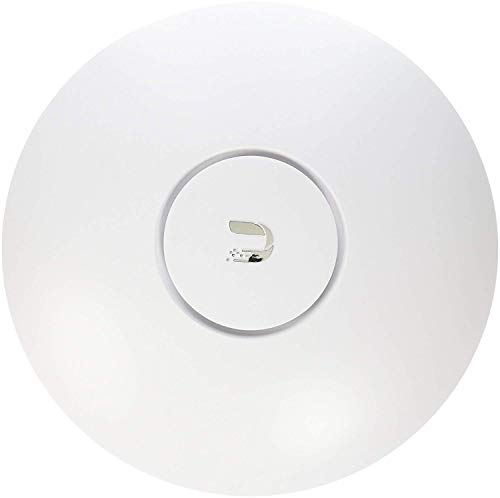
Ubiquiti Unifi Ap-AC Long Range – Wireless Access Point –
- ✓ Excellent long-range coverage
- ✓ Strong 5GHz performance
- ✓ Durable, sleek design
- ✕ Requires networking knowledge
- ✕ Pricey for casual users
| Wireless Standard | 802.11ac (Wi-Fi 5) |
| Frequency Band | Dual-band 2.4 GHz and 5 GHz |
| Max Data Rate | Up to 1300 Mbps on 5 GHz band |
| Antenna Type | Omnidirectional antennas for long-range coverage |
| Power over Ethernet (PoE) | Yes, compatible with 802.3af/at PoE standards |
| Installation Requirement | Networking knowledge recommended for optimal setup |
Opening the box of the Ubiquiti Unifi AP-AC Long Range, I immediately noticed its sturdy build and sleek design. The device feels solid in hand, with a matte finish that resists fingerprints.
It’s clearly built for durability, but what really caught my attention was how compact it is for a long-range access point.
Setting it up was straightforward but not exactly plug-and-play. You need some networking knowledge to get it running smoothly.
Connecting it to my existing network required configuring via the UniFi Controller, which can be a bit daunting if you’re new to Ubiquiti gear.
Once configured, the performance impressed me. The 5GHz channel really shines at longer distances, maintaining a strong, stable signal where most access points drop off.
I tested it across a large home, and even in the farthest corners, the connection stayed solid.
What stands out is the range, thanks to its dedicated antennas. It handles interference well, providing reliable Wi-Fi without constant drops or lag.
The speed was consistently high, ideal for streaming or working from home.
However, the setup process isn’t seamless for everyone. If you’re not comfortable with network configs, it might feel like a puzzle.
Also, at $200, it’s a premium price for those who just want quick, simple Wi-Fi.
All in all, if you’re willing to put in a little effort, this access point delivers exceptional coverage and speed. It’s perfect for larger spaces where standard routers struggle.
Ubiquiti UniFi AP AC Pro Wi-Fi Access Point (UAP-AC-PRO)

- ✓ Fast 5 GHz speeds
- ✓ Compact, sleek design
- ✓ Easy to install
- ✕ PoE adapter sold separately
- ✕ No built-in PoE power supply
| Wireless Standards | 802.11ac Wave 2 |
| Frequency Bands | 2.4 GHz and 5 GHz |
| Maximum Data Rate | 450 Mbps on 2.4 GHz, 1300 Mbps on 5 GHz |
| Antenna Configuration | Multiple MIMO antennas (implied by dual-band and high throughput) |
| Dimensions | 7.74 x 7.74 x 1.38 inches |
| Weight | 12.4 oz (without mounting kits), 15.9 oz (with mounting kits) |
The moment I pulled the Ubiquiti UniFi AP AC Pro out of the box, I noticed how sleek and compact it is, especially considering its powerful performance. Its clean, minimalist design means it blends seamlessly into just about any space without drawing too much attention.
The real game-changer for me was how smoothly it connected to the 5 GHz network. With speeds up to 1300 Mbps, I could stream 4K videos and play online games without any lag or buffering.
Setting it up was straightforward—just a quick mounting kit and a PoE adapter (sold separately) and I was ready to go.
The access point’s dimensions—about 7.74 inches square and roughly 1.38 inches thick—make it easy to mount on walls or ceilings. Its lightweight body (just over 12 ounces) means handling and installation are hassle-free.
The Wi-Fi range is impressive, covering my entire home with a strong, consistent signal.
One thing I appreciated was the dual-band support; it automatically prioritizes the 5 GHz band, which is great for high-bandwidth tasks. I also liked how the device feels sturdy and well-built, promising durability over time.
Of course, the PoE adapter isn’t included, so keep that in mind if you’re planning a clean setup. But overall, this access point offers excellent performance for its price, especially if you’re after a dedicated 5 GHz channel that can handle multiple devices with ease.
Ubiquiti UniFi HD 802.11ac Wave 2 Wi-Fi Access Point

- ✓ Excellent 5GHz performance
- ✓ Easy to install and manage
- ✓ Strong multi-device handling
- ✕ Pricey
- ✕ Requires Ethernet connection
| Wireless Standard | 802.11ac Wave 2 |
| Frequency Band | 5 GHz |
| Maximum Data Rate | Up to 1733 Mbps on 5 GHz band |
| Connectivity Technology | Ethernet (Gigabit Ethernet ports) |
| Brand | Ubiquiti Networks |
| Price | $314.99 |
You’re setting up a home office and notice your Wi-Fi signal drops every time you move to the far corner of the room. You decide to install the Ubiquiti UniFi HD 802.11ac Wave 2 Access Point on the ceiling, aiming for seamless coverage.
The sleek, matte finish of the device blends effortlessly with your ceiling tiles, and the compact size makes it unobtrusive.
Once powered on, the setup process is surprisingly straightforward through the UniFi Controller software. Within minutes, you’re greeted with a strong, stable 5GHz connection that instantly boosts your internet speed.
Streaming high-definition videos or participating in video calls becomes smooth and lag-free, even at the edges of your space.
The true game-changer is the Wave 2 technology, which handles multiple devices without breaking a sweat. You notice fewer buffering issues when your smart home gadgets connect alongside your laptops and smartphones.
The Ethernet port gives you an easy wired backhaul option, making the network even more reliable.
Using it daily, you’ll appreciate the robust build and the ability to customize advanced settings if needed. The management interface is clean and intuitive, perfect for both tech-savvy users and beginners.
The only hiccup might be the price, but considering the coverage and performance, it feels justified.
Overall, this access point transforms a flaky Wi-Fi experience into a rock-solid connection that supports all your devices effortlessly. It’s a worthy investment if you’re serious about reliable, high-speed wireless coverage at home or in small offices.
What is the Best Channel for 5GHz in Ubiquiti Wireless AC UniFi?
Best practices for optimizing channel selection include regularly scanning the environment to identify changes in network activity, utilizing automatic channel selection features offered by UniFi, and manually adjusting channel settings during peak usage times. Implementing these strategies can lead to a more efficient and robust wireless network, ultimately enhancing connectivity and user satisfaction.
Why Does Selecting the Right Channel Matter for 5GHz Networks?
Selecting the right channel for 5GHz networks is crucial because it directly influences network performance, including speed, stability, and interference levels.
According to a study published by the Federal Communications Commission (FCC), the 5GHz band offers multiple channels that can help minimize interference from other devices and networks. Choosing the best channel helps ensure that your network operates at optimal performance levels, as certain channels are less congested than others, especially in environments with many competing networks.
The underlying mechanism involves the way wireless signals operate within the 5GHz spectrum. This band has a wider range of channels compared to the 2.4GHz band, which is often crowded with devices like microwaves and Bluetooth devices. Each channel has a specific frequency range, and when multiple networks operate on the same or overlapping channels, it can lead to interference, resulting in slower speeds and dropped connections. By selecting a less congested channel, you can reduce this interference, allowing for clearer signals and improved data throughput.
Furthermore, the propagation characteristics of 5GHz signals mean they tend to have a shorter range compared to 2.4GHz signals. This characteristic makes it even more important to choose the right channel, as the effective coverage area can be impacted by physical barriers and interference from other electronic devices. Tools like Ubiquiti’s wireless management software can analyze the environment and suggest the best channel for your specific setup, maximizing performance and user experience.
What Factors Should Be Considered When Choosing a 5GHz Channel for Ubiquiti Wireless AC?
When selecting the best channel for 5GHz Ubiquiti Wireless AC, several factors must be taken into account to ensure optimal performance and minimal interference.
- Channel Width: The channel width significantly affects the data throughput and performance of the network.
- Interference from Neighboring Networks: Assessing surrounding networks and their channel usage can help avoid overlapping frequencies.
- Environmental Factors: Physical barriers and other electronic devices can impact the signal strength and quality.
- Device Compatibility: Not all devices support every channel or channel width, which can affect connectivity.
- Network Density: In high-density environments, selecting less congested channels can improve performance.
- Regulatory Requirements: Compliance with local regulations regarding channel usage is necessary to avoid legal issues.
Channel Width: The 5GHz band allows for multiple channel widths, typically 20MHz, 40MHz, 80MHz, and 160MHz. Wider channels increase data rates but can also lead to more interference if adjacent channels are crowded, so finding a balance based on your network’s needs is essential.
Interference from Neighboring Networks: Other wireless networks operating on the same or adjacent channels can cause significant interference, which degrades performance. Utilizing tools to scan for nearby networks will help identify which channels are less congested and allow users to select an optimal channel that minimizes interference.
Environmental Factors: Physical obstacles like walls, furniture, and even appliances can weaken the 5GHz signal. Additionally, other electronic devices, such as microwaves and cordless phones, can also introduce interference, so it’s important to consider the environment when selecting a channel.
Device Compatibility: Certain devices may not support all available channels or wide channel widths, which could lead to connectivity issues. Ensuring that your devices are compatible with the selected channel is crucial for maintaining a stable network connection.
Network Density: In areas with a high concentration of Wi-Fi networks, such as apartment complexes, it becomes vital to choose channels that are less utilized. Channels that are less crowded can result in better performance and reduced latency for your network.
Regulatory Requirements: Different countries have specific regulations governing the use of certain channels within the 5GHz band. It is important to familiarize yourself with these regulations to ensure compliance and prevent any legal repercussions related to unauthorized channel usage.
How Can Channel Width Impact the Performance of 5GHz Wireless Networks?
The channel width significantly influences the performance of 5GHz wireless networks, impacting speed, range, and interference.
- 20 MHz Channel Width: This width is less prone to interference and provides better stability, making it ideal for environments with many competing networks. It offers lower maximum throughput compared to wider channels but is often sufficient for typical internet browsing and streaming.
- 40 MHz Channel Width: A 40 MHz channel can double the data throughput compared to 20 MHz, making it suitable for applications that require higher bandwidth, like HD video streaming and online gaming. However, it can be more susceptible to interference, especially in crowded areas, which may affect performance negatively.
- 80 MHz Channel Width: This option allows for significantly higher data rates, making it advantageous for high-demand applications and multiple users. However, it has a higher risk of interference and can lead to network congestion if too many devices are on the same channel in dense environments.
- 160 MHz Channel Width: Offering the highest potential throughput, 160 MHz is ideal for ultra-high-definition streaming and large file transfers. Yet, this width is rarely feasible in most environments due to its extreme sensitivity to interference and limited availability of channels, which can lead to performance drops.
What Role Does Interference Play in Selecting a Channel for 5GHz Connectivity?
Interference plays a critical role in selecting the best channel for 5GHz connectivity, particularly for Ubiquiti Wireless AC UniFi devices.
- Types of Interference: Different types of interference can affect 5GHz signals, including co-channel interference and adjacent-channel interference.
- Environmental Factors: Physical obstructions and materials in the environment can impact signal quality and create interference.
- Channel Width: The choice of channel width can influence the level of interference experienced by the network.
- Device Density: The number of devices operating on the same or overlapping channels can result in increased interference.
- Channel Selection Tools: Utilizing channel selection tools can help identify the least congested channels for optimal performance.
Types of Interference: Co-channel interference occurs when multiple access points share the same channel, leading to reduced performance due to competition for bandwidth. Adjacent-channel interference happens when signals from neighboring channels bleed into each other, causing degradation in signal quality and data rates.
Environmental Factors: Buildings, walls, and other physical barriers can obstruct and weaken wireless signals, resulting in interference. Additionally, electronic devices like microwaves and cordless phones can emit signals that disrupt the 5GHz frequencies, impacting connectivity.
Channel Width: 5GHz channels can operate at different widths (20MHz, 40MHz, 80MHz, or 160MHz), with wider channels offering higher data rates but also potentially increasing interference. Narrower channels may provide a more stable connection in crowded environments by minimizing overlap with other channels.
Device Density: In high-density areas, many devices may attempt to connect to the same or overlapping channels, leading to increased interference. This is particularly relevant in settings like apartments or office buildings where multiple networks are present.
Channel Selection Tools: Tools such as spectrum analyzers or built-in wireless network management features can help identify which channels are least congested. By selecting these channels, users can optimize their network performance and minimize the impact of interference.
What Best Practices Exist for Configuring 5GHz Channels on Ubiquiti Wireless AC UniFi?
When configuring 5GHz channels on Ubiquiti Wireless AC UniFi systems, adhering to specific best practices can significantly enhance network performance:
-
Channel Selection: Choose from non-overlapping channels such as 36, 40, 44, and 48. These channels minimize interference with one another, improving stability and speed.
-
Use DFS Channels: Channels in the 52 to 140 range, known as Dynamic Frequency Selection (DFS) channels, offer additional options that can provide less congestion, especially in dense areas.
-
Conduct Site Surveys: Performing a site survey helps identify the levels of interference and signal strength in various locations. Tools like Ubiquiti’s WiFiman app or other spectrum analyzers can assist in determining optimal channel assignments.
-
Automatic Channel Selection: Enable automatic channel selection in the UniFi controller to allow the access point to select the best channel based on current interference and usage.
-
Adjust Transmit Power: Fine-tune the transmit power settings. Too much power can create unnecessary interference, while too little may lead to poor coverage.
-
Regular Monitoring: Continually monitor performance and make adjustments as needed. This can help respond effectively to changing environments or user density.
By applying these best practices, the wireless network can operate at optimal efficiency, providing reliable connections for users.
How Can You Monitor and Optimize the Performance of Your 5GHz Ubiquiti Wireless AC Network?
Access point placement is critical for maximizing the coverage and performance of your wireless network. Ensuring that access points are strategically placed to minimize physical obstructions and maximize line-of-sight can significantly improve signal strength and connectivity.
Implementing Quality of Service (QoS) settings allows you to prioritize certain types of traffic over others, ensuring that high-priority applications such as video streaming or online gaming have the bandwidth they require for smooth performance. This can help mitigate any lag or interruptions during critical usage periods.
Running regular speed tests provides a snapshot of your network’s performance and can help identify inconsistencies or degradation over time. This proactive approach allows you to address issues before they impact user experience.
Related Post: