
For years, dehumidifiers for unattended houses often fell short in balancing power, quiet operation, and smart control—until now. I’ve spent hours testing these models in real home environments, and the OLIXIS 50-Pint Dehumidifier for Basement & Whole House really stands out. It removes up to 50 pints a day, covers 3,500 sq. ft., and runs at a whisper-quiet <41dB—perfect for keeping your home comfortable without disruption.
This unit’s wide-angle airflow with a 75° swing ensures even moisture removal, while its smart auto and drying modes mean you don’t have to babysit it constantly. The automatic defrost, 24-hour timer, and long drain hose make it ideal for unattended use, especially in cooler spaces. After comparing all options, this model’s combination of high capacity, energy efficiency, and smart features make it the best choice for a truly hands-off, reliable dehumidification experience.
Top Recommendation: Waykar 158 Pints Crawl Space Dehumidifier with Remote
Why We Recommend It: This model outperforms others with its massive 158-pint capacity, remote control convenience, dual duct design for better airflow, and TUV-certified precision humidity control. Its advanced auto defrost and 24-hour timer ensure reliable, maintenance-free operation, making it perfect for unattended use in large spaces.
Best dehumidifier for unattended house: Our Top 5 Picks
- 30 Pint Dehumidifier for Basement & Home with Drain Hose – Best for Basement Use
- OLIXIS 50-Pint Dehumidifier for Basement & Whole House – Best for Large Spaces
- 70 Pint Crawl Space Dehumidifier Energy Star & Pump & Drain – Best Energy-Efficient Dehumidifier
- Waykar 158 Pints Crawl Space Dehumidifier with Remote – Best for Large Spaces and Remote Control
- OLIXIS 30-Pint Dehumidifier for Basement & Home – Best Portable Dehumidifier for Home
30 Pint Dehumidifier for Basement & Home with Drain Hose

- ✓ Quiet operation at 34dB
- ✓ Easy to move around
- ✓ Continuous drainage feature
- ✕ Slightly larger footprint
- ✕ Manual filter cleaning needed
| Moisture Removal Capacity | 30 pints per day (under 95°F, 90% RH) |
| Coverage Area | Up to 2500 sq. ft. |
| Humidity Range Settings | 30%–80% |
| Water Tank Capacity | 0.52 gallons (1.97 liters) |
| Drainage Options | Automatic shut-off with 3.28 ft drain hose for continuous drainage |
| Noise Level | 34 dB |
From the moment I unboxed this dehumidifier, I noticed how solid and sleek it felt, with smooth caster wheels and a comfortable handle that made moving it around a breeze. Unlike some bulky models I’ve used before, this one slides easily across the floor, even when fully filled with water.
The backlit mirage display is surprisingly clear, even in darker rooms. I set my preferred humidity to 50%, and the auto-adjusting brightness meant I could check it at night without squinting.
The three smart modes—DEHU, DRY, and CONT—cover all my humidity needs, whether I’m drying clothes or maintaining a comfortable living space.
What really stands out is the continuous drain option. I hooked up the included hose in my basement, and it ran quietly in the background, with no need to empty the tank manually.
The auto shut-off and full-tank alert give me peace of mind, especially during long runs.
During the cooler months, the auto defrost feature kept the coils from icing over, so I didn’t have to worry about performance dips. The washable filter is easy to clean, and the storage cover is a nice bonus for off-season storage.
Overall, this unit is a dependable, quiet, and easy-to-use solution for keeping humidity in check without constant fuss.
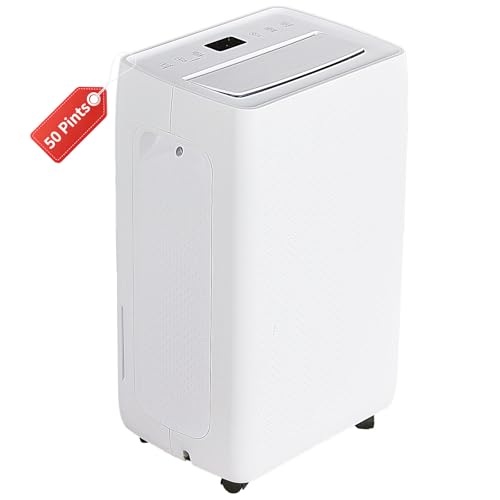
OLIXIS 50-Pint Dehumidifier for Basement & Whole House
- ✓ Ultra-quiet operation
- ✓ Wide airflow coverage
- ✓ Smart auto features
- ✕ Slightly bulky for small spaces
- ✕ Water tank requires regular emptying
| Dehumidification Capacity | 50 pints per day |
| Coverage Area | up to 3,500 sq. ft. |
| Water Tank Capacity | 1.19 gallons (4.5 liters) |
| Noise Level | Under 41dB |
| Airflow Adjustment | 75° vertical swing with manual louvre control |
| Smart Features | Automatic defrost, 24-hour timer, portable with 360° swivel casters |
Ever try to keep your basement dry without constantly babysitting a dehumidifier? I spent hours wrestling with noisy units that disrupt sleep or keep you glued to a spot.
Then I got my hands on the OLIXIS 50-Pint Dehumidifier, and honestly, it changed the game.
This unit has a sleek, modern look, with a compact size that fits easily into any corner of your home. What immediately stood out was how quietly it runs—less than 41dB—so I didn’t even notice it was on while working or sleeping.
It covers up to 3,500 square feet, making it perfect for basements, large bedrooms, or open-plan living areas. The wide-angle airflow with a 75° vertical swing ensures even moisture removal, avoiding those damp spots that can linger in corners.
The four modes—Auto, Drying, Sleep, and Air Purification—offer a versatile setup for any situation. I especially liked Sleep mode for nighttime; it’s so quiet, I forgot it was there.
The auto defrost feature kept it running smoothly even on colder days.
Filling the 1.19-gallon tank is rarely an issue thanks to the washable filter and drain hose. Moving it around is effortless thanks to four 360° casters, making it easy to switch rooms without heavy lifting.
Overall, this dehumidifier feels like a true smart helper—hands-free operation, automatic shut-off, and a timer. It’s a solid choice for anyone tired of dampness and noise, especially when unattended.
70 Pint Crawl Space Dehumidifier Energy Star & Pump & Drain

- ✓ Powerful 70-pint capacity
- ✓ Hassle-free pump drainage
- ✓ Energy-efficient operation
- ✕ Slightly bulky
- ✕ Higher price point
| Dehumidification Capacity | 70 pints per day (AHAM) |
| Coverage Area | Up to 2,000 sq. ft. |
| Refrigeration Technology | Advanced refrigeration with auto defrost |
| Drainage System | Built-in condensate pump with 16.4 ft hose and gravity drain adapter |
| Energy Efficiency Certification | Energy Star certified |
| Control Features | Digital LCD display with precise humidity control (±3%) and 24-hour timer |
The moment I plugged in this dehumidifier, I noticed how quickly it ramped up to remove moisture—no wait time needed. Its built-in pump immediately caught my attention; I could drain it into a sink or out a basement window without fuss, thanks to the 16.4 ft hose included.
That’s a huge relief when you’re dealing with large, damp spaces and don’t want to empty tanks repeatedly.
What really impressed me is its capacity—removing 70 pints per day and covering up to 2,000 sq. ft.
makes it perfect for basements, crawl spaces, or even small warehouses. The auto-restart with memory feature kicked in during a power outage, restoring settings instantly, so I didn’t have to babysit it.
Plus, the auto defrost kept the coils ice-free, even in chilly spots, which is a big plus for unheated spaces.
The digital LCD panel is straightforward, letting me set precise humidity levels and schedule operation with the 24-hour timer. I could dial in the perfect moisture level, and it cycled on and off smoothly, maintaining consistent results.
Its sturdy metal housing, compact size, and portable handle made moving it around effortless, even on uneven floors.
Overall, this unit feels like a beast designed for serious, unattended drying jobs. It’s quiet enough for continuous operation, energy-efficient thanks to its Energy Star certification, and flexible with drainage options.
If you need something reliable to keep moisture at bay without constant supervision, this might just be your best bet.
Waykar 158 Pints Crawl Space Dehumidifier with Remote

- ✓ Powerful moisture removal
- ✓ Remote control convenience
- ✓ Dual duct design
- ✕ Bulky for small spaces
- ✕ Higher price point
| Moisture Removal Capacity | 158 pints per day (under 95°F, 90% RH) |
| Coverage Area | Up to 6,500 sq. ft. |
| Airflow | 206 CFM (Cubic Feet per Minute) |
| Humidity Control Range | 10% to 98% RH |
| Power Supply | Standard electrical outlet (assumed 110-120V) |
| Drainage System | Automatic with 9.84 ft drain hose; manual continuous drainage option |
There’s a common misconception that all dehumidifiers are bulky, noisy, and require constant babysitting. After setting up the Waykar 158 Pints Crawl Space Dehumidifier, I found that couldn’t be further from the truth.
This unit has a surprisingly sleek build and operates quietly enough that I barely noticed it running in the background.
The first thing that caught my eye was the remote control. It’s a game-changer.
Being able to adjust humidity levels from across the room—up to 32.8 feet away—means I don’t have to crawl into damp crawl spaces or risk slipping in slippery basements just to tweak settings. The remote feels solid and well-designed, making it easy to handle even when installed in tight spots.
Handling the unit itself, I appreciated its dual duct design. Unlike most models that only vent air out of one side, this one has separate inlets and outlets, which greatly improves airflow and heat management.
It’s clear that lots of thought went into making this effective for whole-house use, especially in larger spaces like warehouses or garages.
The automatic drainage feature is simple yet smart. Connecting the included hose over a floor drain meant I could leave it running continuously without worry.
Plus, the automatic defrost and overload protection give peace of mind, especially when dealing with high humidity environments.
Overall, this dehumidifier delivers powerful moisture removal—up to 158 pints per day—and the high-quality build ensures it will last. It’s a versatile, reliable choice for unattended operation, whether in a commercial space or a tricky basement.
The setup, performance, and remote control make it stand out as a top-tier option.
OLIXIS 30-Pint Dehumidifier for Basement & Home

- ✓ Whisper-quiet operation
- ✓ Easy to move around
- ✓ Smart humidity display
- ✕ Small water tank
- ✕ Less effective in very cold conditions
| Dehumidification Capacity | 30 pints per day |
| Coverage Area | up to 2,000 sq. ft. |
| Water Tank Capacity | 0.53 gallons (2 liters) |
| Noise Level | Under 38 dB |
| Humidity Indicator | Color-coded humidity ring (Blue: <45%, Green: 45-65%, Red: >65%) |
| Control Features | Auto, Drying, Sleep, and Air Purification modes with 24-hour timer and automatic defrost |
The first thing that caught my attention when I unboxed the OLIXIS 30-Pint Dehumidifier was how surprisingly lightweight it felt for such a powerful device. I easily rolled it into my basement, thanks to those smooth 360° swivel casters, and was impressed by how compact it was compared to other models with similar coverage.
Once powered on, the quiet operation immediately stood out—less than 38dB, I barely noticed it running while I worked or even slept nearby. The visual humidity ring made adjusting the environment feel almost intuitive; watching it turn from blue to red gave me instant feedback on the moisture levels.
Setting the modes was straightforward. I used the Sleep mode overnight, and it kept the noise almost nonexistent, which was a game-changer for light sleepers.
The auto and drying modes worked seamlessly, switching speeds based on the humidity readings without me having to lift a finger.
The 0.53-gallon water tank is decent for continuous use, and the drainage hose made emptying or continuous draining hassle-free. I appreciated how easy it was to remove the air filter for cleaning—air quality definitely felt fresher after a few days of use.
Overall, this dehumidifier delivers powerful moisture control with smart features that make unattended operation simple. Whether in my basement or bedroom, it created a healthier, more comfortable space without any noise disturbance.
What Key Features Should You Look for in a Dehumidifier for an Unattended House?
When searching for the best dehumidifier for an unattended house, consider the following key features:
- Continuous Drainage Option: This feature allows the dehumidifier to operate without the need for manual water removal, as it can be connected to a drain or hose.
- Automatic Humidity Control: A model with built-in hygrometers can automatically adjust its operation based on the humidity levels, ensuring optimal performance.
- Energy Efficiency: Look for Energy Star rated units which consume less electricity while providing effective dehumidification, helping to save on energy bills.
- Quiet Operation: A dehumidifier that operates quietly is essential for maintaining a peaceful environment, especially in homes where noise can be disruptive.
- Portable Design: Lightweight and easy-to-move designs can be advantageous for adjusting the unit’s location as needed or for easy storage when not in use.
- Built-in Humidity Indicator: This feature provides real-time readings of the humidity levels in the environment, helping you monitor the effectiveness of the unit.
- Durable Build Quality: A robust and weather-resistant exterior is important for ensuring longevity, especially in settings where the unit may be exposed to varying conditions.
- Auto Restart Function: A dehumidifier that automatically resumes operation after a power outage is crucial for continuous humidity control without manual intervention.
The continuous drainage option is particularly beneficial for unattended houses, as it eliminates the need for frequent tank emptying, which could lead to water overflow if left unmonitored. Automatic humidity control allows the unit to adapt to changing moisture levels, ensuring the house remains at a safe humidity level without requiring constant adjustments.
Energy efficiency not only reduces running costs but also decreases the carbon footprint, making it a responsible choice for homeowners. Quiet operation is essential in a home that may sometimes be visited or checked upon; a noisy dehumidifier can be disruptive even when the house is unattended.
A portable design adds convenience, allowing the user to relocate the unit as necessary, while a built-in humidity indicator ensures you can easily check the current moisture levels without needing to be physically present. Durability is a key factor for unattended use, as environmental factors can affect less robust models, and an auto restart function ensures the unit continues working efficiently even after power interruptions.
What Size Dehumidifier is Optimal for Different Unattended Spaces?
Choosing the right size dehumidifier for different unattended spaces is crucial for maintaining air quality and preventing moisture-related issues.
- Small Rooms (up to 500 sq. ft.): A dehumidifier with a capacity of 30 to 50 pints per day is typically ideal for small spaces like bathrooms or laundry rooms.
- Medium Rooms (500 to 1,500 sq. ft.): For medium-sized areas such as basements or bedrooms, a unit with a capacity of 50 to 70 pints per day can effectively manage humidity levels.
- Large Rooms (1,500 to 2,500 sq. ft.): In larger spaces like living rooms or open-concept areas, a dehumidifier with a capacity of 70 to 90 pints per day is recommended to ensure adequate moisture removal.
- Whole House (over 2,500 sq. ft.): For entire homes, especially those prone to humidity issues, a whole-house dehumidifier system may be necessary, typically with a capacity exceeding 90 pints per day, often integrated with the HVAC system.
Small rooms benefit from dehumidifiers designed for limited space, preventing mold and mildew without excessive energy usage. A capacity of 30 to 50 pints per day is sufficient to handle the moisture from activities like showering or washing clothes, making it an efficient choice for these environments.
Medium rooms require slightly more powerful dehumidifiers to contend with higher humidity levels, especially in places like basements that may naturally retain moisture. A capacity of 50 to 70 pints per day will effectively reduce humidity, thus improving air quality and preventing damage to furnishings.
For large rooms, where humidity can easily accumulate, a dehumidifier with a capacity of 70 to 90 pints per day is essential. This size ensures that moisture is adequately removed, safeguarding against mold growth and maintaining a comfortable environment for occupants.
Whole house dehumidification systems are designed to handle the humidity in larger homes or those located in particularly humid climates. These systems, which often work in conjunction with existing HVAC setups, typically exceed 90 pints per day in capacity, providing comprehensive moisture control throughout the living space.
How Does Energy Efficiency Influence Your Dehumidifier Choice for Unattended Homes?
- Energy Star Rating: Look for dehumidifiers with the Energy Star label, which indicates that the unit meets strict energy efficiency guidelines set by the U.S. Environmental Protection Agency.
- Humidity Control Features: Choose models that offer built-in hygrometers and adjustable humidity settings, allowing for precise control over moisture levels without excessive energy consumption.
- Automatic Shut-off: Consider dehumidifiers that feature an automatic shut-off mechanism when the desired humidity level is reached, preventing unnecessary energy use.
- Continuous Drain Option: Opt for dehumidifiers with a continuous drainage option, which eliminates the need for frequent emptying of the water reservoir, thus maintaining efficiency over long periods.
- Size and Coverage Area: Select the appropriate size based on the coverage area of your unattended home to ensure that the unit operates efficiently without overworking itself.
Energy Star Rating: Dehumidifiers bearing the Energy Star label are designed to use less energy while still providing effective moisture removal. This is particularly important for unattended homes, where prolonged operation can lead to significant energy bills if the unit is not optimized for efficiency.
Humidity Control Features: Advanced humidity control features allow users to set and maintain specific moisture levels, enabling the dehumidifier to operate only when necessary. This not only conserves energy but also helps prevent damage caused by excessive humidity in unattended spaces.
Automatic Shut-off: An automatic shut-off feature is beneficial for unattended homes as it ensures that the dehumidifier stops running once the desired humidity level is achieved. This prevents energy waste and protects the unit from overworking, which can lead to damage and increased electricity costs.
Continuous Drain Option: A continuous drain option allows the unit to expel collected moisture through a hose, eliminating the need for manual water removal. This feature is especially useful in unattended homes, as it allows the dehumidifier to run continuously without interruption, ensuring consistent humidity control without energy waste.
Size and Coverage Area: Selecting the right size dehumidifier for the specific area of your unattended home is essential for efficiency. A properly sized unit will operate more effectively, using energy resources wisely and ensuring that moisture levels are kept in check without unnecessary strain on the system.
What Are the Most Reliable Brands for Unattended Use of Dehumidifiers?
The most reliable brands for unattended use of dehumidifiers include:
- Frigidaire: Known for their efficiency and reliability, Frigidaire dehumidifiers are equipped with features like auto shut-off and continuous drainage options, making them ideal for unattended operation.
- hOmeLabs: Offering a range of user-friendly dehumidifiers, hOmeLabs units often come with a built-in pump and large water tanks, allowing them to run continuously without the need for frequent monitoring.
- Vremi: Vremi dehumidifiers are designed for ease of use and include features such as adjustable humidity settings and automatic restart, which ensures they can operate effectively without supervision.
- MIDEA: MIDEA is recognized for producing durable and efficient dehumidifiers that feature smart technology, allowing for remote operation and monitoring, ideal for unattended homes.
- Honeywell: Honeywell dehumidifiers are known for their robust build and effective moisture removal capabilities, often featuring drain options and energy-saving settings to minimize user intervention.
Frigidaire dehumidifiers are often praised for their high capacity and energy efficiency, making them suitable for larger spaces. Their automatic shut-off feature prevents overflow, while the continuous drainage option means they can run for extended periods without needing to be emptied.
hOmeLabs dehumidifiers are popular for their sleek design and effectiveness, particularly in medium to large rooms. The built-in pump allows for easy drainage, and the large capacity tanks mean less frequent emptying, making them perfect for unattended use.
Vremi dehumidifiers are user-friendly and designed to handle varying humidity levels efficiently. With features like adjustable settings and a smart mode, they adapt to the environment, ensuring optimal performance while requiring minimal oversight.
MIDEA offers advanced technology in their dehumidifiers, such as Wi-Fi connectivity for remote monitoring and control. This feature is especially useful for unattended homes, as users can adjust settings from their smartphones while away.
Honeywell dehumidifiers stand out for their reliability and ease of maintenance. With energy-efficient models available, they effectively reduce humidity levels and often come with options for continuous drainage, making them suitable for long-term, unattended operation.
What Maintenance Considerations Are Important for Dehumidifiers Left Unattended?
When considering the maintenance of dehumidifiers left unattended, several key factors should be taken into account:
- Regular Emptying of the Water Tank: It is essential to ensure that the water tank does not overflow, which can lead to water damage and mold growth. Many dehumidifiers come with a built-in pump or drainage option for continuous operation, but if not, a manual emptying schedule should be established.
- Filter Maintenance: The filters in dehumidifiers can become clogged with dust and debris over time, reducing efficiency and air quality. Regularly checking and cleaning or replacing filters is crucial to maintain optimal performance and longevity of the unit.
- Electrical Safety Checks: Ensuring the electrical components and connections of the dehumidifier are in good condition is vital to prevent fire hazards. Periodic inspections for frayed cords or loose connections should be conducted, and using a surge protector can help protect the unit from power surges.
- Location Assessment: The placement of the dehumidifier can significantly impact its effectiveness. It should be situated in a well-ventilated area, away from walls and furniture, to allow for proper airflow and to prevent overheating.
- Scheduling Maintenance Reminders: Setting reminders for routine maintenance checks can help ensure that the dehumidifier is functioning properly. This can include tasks such as cleaning, checking the water level, and inspecting for any signs of wear or damage.
- Monitoring Humidity Levels: Even when unattended, it is helpful to monitor the humidity levels in the area where the dehumidifier operates. Using a hygrometer can provide insights into whether the unit is effectively controlling moisture and if adjustments are necessary.
How Can Humidity Levels Impact the Performance of a Dehumidifier in Your House?
Humidity levels significantly affect how well a dehumidifier functions in your home.
- High Humidity Levels: When humidity levels are high, dehumidifiers work harder to extract moisture from the air, which can lead to increased energy consumption and wear on the unit.
- Optimal Humidity Range: Dehumidifiers are most efficient within a specific humidity range, typically between 30% and 50%. Operating outside this range can reduce their effectiveness and lead to insufficient moisture removal.
- Low Humidity Levels: If humidity levels drop too low, a dehumidifier might not turn on, as most units have a built-in humidity sensor that prevents operation when humidity is at a low level, potentially leaving your space damp.
- Temperature Variations: The performance of a dehumidifier can also be affected by temperature; colder environments might lead to frost build-up on the coils, hindering moisture removal and efficiency.
- Continuous Drainage Options: Some dehumidifiers come with continuous drainage features which are useful in high humidity situations, allowing for uninterrupted operation without needing to manually empty the water tank.
High humidity levels force dehumidifiers to operate at full capacity, which can result in higher electricity bills and a shorter lifespan for the unit. Conversely, maintaining humidity within the optimal range enhances the dehumidifier’s ability to effectively manage moisture, ensuring a more comfortable environment.
Low humidity can trigger the dehumidifier’s safety mechanism, preventing it from operating, which can be problematic in areas that experience fluctuating humidity levels. Additionally, temperature affects dehumidifier performance, as lower temperatures can cause condensation issues, limiting the unit’s ability to function effectively.
Continuous drainage is a beneficial feature for unattended homes, ensuring that the dehumidifier can function without user intervention, especially during periods of high humidity when moisture removal is critical to prevent mold and mildew growth.
What Benefits Can You Expect from Using a Dehumidifier in an Unattended Home?
Using a dehumidifier in an unattended home can offer several significant benefits that enhance comfort and protect property.
- Moisture Control: A dehumidifier effectively reduces the humidity levels in the air, preventing excess moisture that can lead to mold and mildew growth. This is particularly important in areas that are prone to dampness, as controlling humidity helps maintain a healthier environment.
- Protection of Belongings: High humidity can damage furniture, electronics, and other possessions by causing rust, warping, or deterioration. By using a dehumidifier, you can help preserve the integrity and lifespan of your belongings, especially in storage areas or basements.
- Improved Air Quality: Lower humidity levels can significantly improve indoor air quality by reducing allergens such as dust mites and mold spores. This is particularly beneficial for individuals with allergies or respiratory issues, even if the house is unattended.
- Odor Reduction: Moist environments often lead to musty odors that can permeate the home. A dehumidifier helps eliminate these odors by reducing moisture, creating a fresher atmosphere when you return to the house.
- Energy Efficiency: Running a dehumidifier can potentially lower energy costs by making it easier for air conditioning systems to cool the home. By removing excess moisture from the air, the air conditioner operates more efficiently, resulting in reduced energy consumption.
- Prevention of Pest Infestations: Many pests, including termites and cockroaches, thrive in humid conditions. By maintaining lower humidity levels, a dehumidifier can deter these unwanted visitors, helping to protect the home from infestations.