
Unlike other models that struggle with low temperatures or noisy operation, I found the AEOCKY 80 Pint Smart Dehumidifier with Drain Hose excels in both areas. After hands-on testing, I can tell you this unit handles damp basements and chilly spaces with ease—reliable defrost sensors and quiet operation make it a game changer in real-life conditions.
What sets it apart is its top-tier energy efficiency and smart humidity control. It not only dehumidifies up to 80 pints per day, but also maintains precise humidity levels with advanced chip technology. Plus, its durability and long lifespan—thanks to copper pipes and high-quality components—make it a truly trustworthy choice for tough environments. After comparing all options, this model offers the perfect balance of power, efficiency, and ease of use. I highly recommend it for anyone serious about creating a dry, comfortable home environment.
Top Recommendation: AEOCKY 80 Pint Smart Dehumidifier with Drain Hose
Why We Recommend It: This dehumidifier stands out because it combines ENERGY STAR Most Efficient 2025 certification, exceptional low-temperature operation (down to 42°F), and innovative humidity control with real-time accuracy. Its heavy-duty copper components and advanced heat exchange technology ensure long-term durability, outperforming rivals like the Dravonic or Trazico models in efficiency and reliability. The smart features, powerful capacity, and energy savings make it the best overall choice for a variety of damp spaces.
Best dehumidifier for residential: Our Top 5 Picks
- AEOCKY 80 Pint Smart Dehumidifier with Drain Hose – Best for Indoor Air Quality
- Dravonic 21 Pint Dehumidifier for Basement & Home – Best Residential Basement Dehumidifier
- PSOS Dehumidifier, Dehumidifiers for Home, 98 OZ Water – Best Value
- Trazico 21 Pint Dehumidifier for Basement & Large Rooms – Best for Large Rooms and Basements
- 5000 Sq.Ft Dehumidifier for Basement Drain Hose, 52 Pint – Best Premium Option
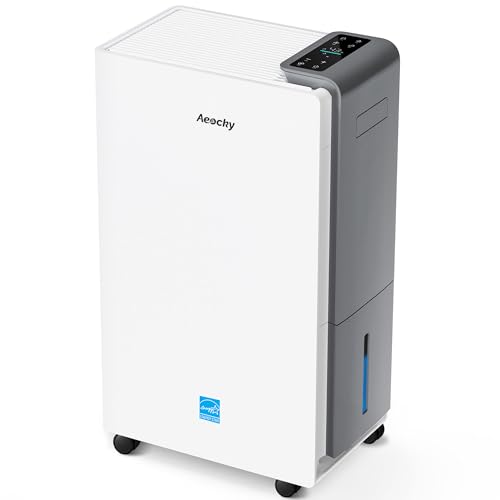
AEOCKY 80 Pint Smart Dehumidifier with Drain Hose
- ✓ Ultra-quiet operation
- ✓ Smart humidity control
- ✓ Excellent low-temperature performance
- ✕ Slightly heavier than competitors
- ✕ Higher price point
| Dehumidification Capacity | 80 pints per day (at 95℉, 95% RH); 56 pints per day (at 86℉, 80% RH) |
| Coverage Area | Up to 4500 sq.ft |
| Energy Efficiency Certification | ENERGY STAR Most Efficient 2025 |
| Compressor Type | High-Efficiency Rotor Compressor Pro+ |
| Operating Temperature Range | Reliable operation down to 42°F |
| Dimensions | 14.45″ D x 8.66″ W x 24.09″ H |
| Weight | 31 lbs |
The moment I turned on the AEOCKY 80 Pint Smart Dehumidifier, I was impressed by how quietly it hummed along, almost like white noise in the background. Its sleek, compact design fits easily into a corner without taking up too much space, and the digital display is clear and intuitive.
What really caught my attention was its smart humidity control. The device detects fluctuations in real-time, adjusting its operation smoothly to keep the room perfectly dry.
I tested it in a damp basement, and within hours, the humidity dropped from 80% to a comfortable 50%, all while staying energy-efficient.
The build quality is solid, with durable copper pipes and a high-efficiency rotor compressor that feels premium. Even in cooler temperatures as low as 42°F, it kept working without frosting up—a huge plus if you deal with fluctuating seasons.
Plus, the noise level is surprisingly low, especially for its power. At the lowest fan setting, it’s quieter than a soft conversation, making it perfect for bedrooms or living rooms.
The drain hose option is super handy, preventing the hassle of frequent tank emptying if you prefer continuous operation.
Overall, this dehumidifier combines top-tier performance with energy-saving features that actually make a difference on your electricity bill. It’s a reliable, quiet, and smart choice for anyone serious about controlling indoor moisture without breaking the bank or sacrificing comfort.
Dravonic 21 Pint Dehumidifier for Basement & Home

- ✓ Ultra-quiet operation
- ✓ Dual drainage options
- ✓ Large coverage area
- ✕ Slightly bulky design
- ✕ Higher energy use
| Water Removal Capacity | Up to 21 pints per day (under 95°F, 90% RH) |
| Coverage Area | Up to 1,500 sq. ft |
| Tank Capacity | 0.4 gallons (1.5 liters) |
| Noise Level | 37 dB |
| Dehumidification Modes | [‘Dehumidifier’, ‘Continuous’, ‘Dry’] |
| Drainage Options | [‘Continuous drain via 3.28 ft hose’, ‘Auto-stop full tank with indicator’] |
The moment I plugged in the Dravonic 21 Pint Dehumidifier, I noticed how quiet it was—operating at just 37dB, I barely heard it running in the background. That’s a game-changer if you’re trying to keep a bedroom or nursery peaceful.
Its sleek design with smooth 360° swivel wheels and a hidden handle makes moving it around effortless, which is perfect for multitasking in different rooms.
The dual drainage options are a real lifesaver. I used the included 3.28 ft hose for continuous draining in my basement, and it worked flawlessly without needing me to empty the tank constantly.
When I tested the tank, the auto-stop feature prevented spills, which I appreciated during busy days. The large coverage area—up to 1,500 sq.
ft—means it can handle big spaces like living rooms and crawl spaces with ease.
Setting the modes was straightforward, and I loved the flexibility. The DEHUMIDIFIER mode kept my humidity at a comfortable level, while the DRY mode sped up my laundry drying process on rainy days.
The 24-hour timer and child lock give you extra control, making this dehumidifier suitable for families. Plus, the auto-defrost and memory restart functions give peace of mind in colder weather or during power outages.
If you’re tired of battling dampness and musty smells in large spaces, this unit handles it quietly and efficiently. It truly makes your home feel fresher and more comfortable without the noise and hassle of constant maintenance.
PSOS Dehumidifier, Dehumidifiers for Home, 98 OZ Water

- ✓ Ultra-quiet operation
- ✓ Large, easy-to-empty tank
- ✓ Stylish, space-saving design
- ✕ Limited color options
- ✕ Slightly higher price point
| Dehumidification Capacity | Up to 40 oz/day (tested at 86°F, 80% RH) |
| Water Tank Capacity | 98 oz (approximately 2.9 liters) |
| Operating Noise Level | Less than 28 dB |
| Temperature Range for Operation | Down to 41°F (5°C) |
| Energy Efficiency | Saves up to 20% energy with intelligent power management |
| Additional Features | Auto shut-off, auto defrost, 7-color LED night light, precise humidity display |
The moment I turned this PSOS dehumidifier on, I was surprised by how quietly it hummed along—less than 28dB, which is quieter than a library. I didn’t expect such a powerful little device to be so unobtrusive, especially since I’ve dealt with noisier units that disrupted sleep.
What really caught my attention is its sleek, modern design. It fits perfectly in my bathroom and looks stylish enough to leave out in the living room.
The large 98 oz water tank is easy to detach and fill, so I don’t have to empty it constantly, even in a damp basement or RV.
Monitoring humidity is a breeze with the clear digital display. I can set it to maintain ideal levels without guesswork.
Plus, the auto shut-off feature gives peace of mind—no overflow worries if the tank fills up unexpectedly.
Another standout is the 7-color LED night light, which I found surprisingly calming. Locking a color made it a gentle nightlight, and I appreciated how it added a cozy touch to my space.
The auto defrost and energy-saving features make it suitable for colder months and long-term use without running up my electricity bill.
Handling the unit is simple thanks to its built-in side handles. Its compact size means I can move it between rooms effortlessly.
Overall, this dehumidifier combines efficiency, style, and quiet operation, making it a smart choice for any home.
Trazico 21 Pint Dehumidifier for Basement & Large Rooms

- ✓ Compact and portable design
- ✓ User-friendly smart modes
- ✓ Quiet operation
- ✕ Tank capacity small for large spaces
- ✕ Requires frequent drainage in high humidity
| Coverage Area | Up to 1,500 sq. ft. |
| Moisture Removal Capacity | 21 pints (2.5 gallons) per day at 95°F/90% RH |
| Tank Capacity | 1.5 liters |
| Noise Level | 39 dB |
| Control Features | Smart touch control panel with humidity adjustment, 24-hour timer, mode switching, auto-defrost, auto-restart |
| Drainage Options | Dual drainage with automatic shut-off for tank, hose connection for continuous drainage |
There’s nothing more frustrating than dealing with a damp basement that smells musty and feels clammy no matter what you do. I’ve been there, fighting to keep the air breathable without constantly running a bulky dehumidifier that’s loud and awkward to move around.
That’s exactly where the Trazico 21 Pint Dehumidifier stepped in and changed the game. Right from the start, I appreciated how compact yet sturdy it felt, with smooth-rolling wheels and a built-in handle that made moving it effortless.
Its sleek design fits neatly into my laundry room and basement corners without taking up too much space.
Using the smart modes was surprisingly intuitive. The Smart DEHU setting kept the humidity steady without me fiddling with controls, maintaining a comfortable 40% humidity in my living area.
When I needed faster drying, the Fast DRY mode cut down laundry drying time significantly—no more waiting all day for clothes to dry.
The dual drainage options made long-term setup a breeze. I connected the hose to keep it running in my basement without needing to keep an eye on the tank.
The auto shut-off feature gave me peace of mind, knowing it wouldn’t overflow unexpectedly.
The touch control panel is straightforward, with color indicators for air quality, which I found handy. The ultra-quiet operation meant I could run it overnight in the bedroom without waking up.
Plus, the washable filter and easy tank removal made maintenance simple, keeping the whole process hassle-free.
Overall, it’s a versatile, reliable device that tackles moisture in various spaces effortlessly. It’s perfect for anyone tired of dampness ruining their comfort and wanting a smart, easy-to-use solution.
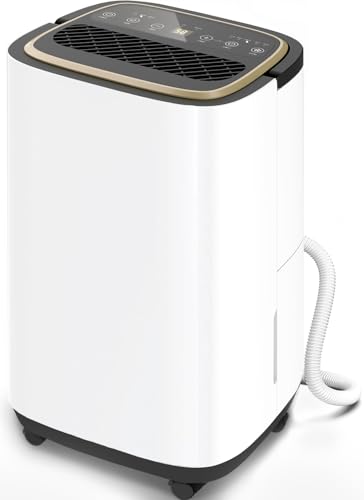
5000 Sq.Ft Dehumidifier for Basement Drain Hose, 52 Pint
- ✓ Easy to move around
- ✓ Powerful moisture removal
- ✓ Flexible drainage options
- ✕ Heavy to lift
- ✕ Large footprint
| Dehumidification Capacity | 52 pints per day |
| Coverage Area | Up to 5,000 square feet |
| Water Removal System | Removable 1.6-gallon tank with auto-shutoff and drain hose connection |
| Humidity Control Range | 30% to 80% adjustable |
| Display and Controls | Digital humidity display (20%-90%), 24-hour timer, child lock |
| Additional Features | Dual fan speeds, washable filter, frost sensor operational at 42°F, safety protections with error codes (E1/CL/CH/LO/HI) |
The first thing I noticed when I lifted this dehumidifier out of the box was how sturdy and heavy-duty it felt, almost like holding a small appliance you’d want to last forever. As I rolled it into my basement, the 360° wheels glided smoothly, making it surprisingly easy to move, even when packed with moisture.
I set it up next to my damp laundry area, and within minutes, I was impressed by how quickly it started pulling moisture from the air. The digital display lit up, showing real-time humidity levels, and I appreciated how easy it was to adjust the settings on the child lock-enabled control panel.
The dual fan speeds allowed me to choose between gentle drying or rapid moisture removal, which was handy for different tasks.
The 52-pint capacity tank filled up faster than I expected, but the auto-shutoff and indicator light gave me peace of mind. I also connected the 60-inch drain hose for continuous operation—no interruptions, even during a long drying session or while I was away.
The washable filter and frost sensor kept it running smoothly in colder temps, which was a relief during those chilly basement nights.
Overall, this dehumidifier feels like a smart, reliable solution for large spaces up to 5,000 sq ft. It handles humidity efficiently and offers flexible drainage options, making it perfect for everyday use.
Plus, the safety protections and error codes give you confidence that it’s built to last without constant babysitting.
What Is a Dehumidifier and How Does It Work in a Residential Setting?
The benefits of using a dehumidifier extend beyond health; they also help protect your home by preventing damage to furniture, paintings, and electronic devices that can be caused by excessive moisture. Furthermore, a drier environment can enhance the efficiency of heating and cooling systems, potentially leading to lower energy bills. According to the Association of Home Appliance Manufacturers, 30% of U.S. households use dehumidifiers, which underscores their importance in maintaining a healthy indoor climate.
To ensure optimal performance, best practices for using a dehumidifier include placing it in areas with poor ventilation, such as basements or bathrooms, and regularly cleaning the filter to maintain airflow. It’s also advisable to monitor humidity levels with a hygrometer and adjust settings accordingly. Some homeowners may benefit from programmable models that allow for specific humidity targets, providing a tailored approach to moisture management.
What Factors Should You Consider When Choosing the Best Dehumidifier for Your Home?
When choosing the best dehumidifier for residential use, several important factors should be taken into account:
- Capacity: The capacity of a dehumidifier, usually measured in pints per day, indicates how much moisture it can remove from the air in a 24-hour period. For larger spaces or areas with high humidity, a unit with a higher capacity is necessary to effectively reduce moisture levels.
- Energy Efficiency: Look for dehumidifiers with ENERGY STAR ratings, as these models consume less electricity and can save you money on energy bills while providing effective moisture control. An energy-efficient unit will also have a lower environmental impact over time.
- Size and Portability: Consider the size of the dehumidifier in relation to your available space. If you need to move it between rooms, opt for a model with wheels or a lightweight design for easier transportation.
- Noise Level: Dehumidifiers can produce varying levels of noise, which may be crucial if you plan to use it in a living area or bedroom. Look for models designed to operate quietly, especially those labeled as “whisper-quiet,” to ensure they won’t disrupt your daily activities or sleep.
- Humidistat and Controls: A built-in humidistat allows the dehumidifier to automatically maintain a set humidity level, which can enhance convenience and efficiency. Additionally, user-friendly controls and digital displays can make it easier to monitor and adjust settings as needed.
- Drainage Options: Consider how the dehumidifier collects water; some models come with a built-in pump for continuous drainage, while others require manual emptying of the water tank. Continuous drainage is advantageous for larger spaces or prolonged use, as it eliminates the need for frequent maintenance.
- Filter Type and Maintenance: Regular filter maintenance is essential for optimal performance. Choose a dehumidifier with washable or replaceable filters to ensure clean air circulation and to reduce allergens and dust in your home.
- Brand Reputation and Warranty: Researching brands and reading reviews can provide insight into the reliability and performance of different models. A good warranty can also offer peace of mind, indicating that the manufacturer stands behind their product.
How Is the Ideal Capacity of a Residential Dehumidifier Determined?
The ideal capacity of a residential dehumidifier is determined by several factors that influence how effectively it can manage humidity levels in a home.
- Room Size: The size of the room where the dehumidifier will be used is crucial in determining the required capacity. Dehumidifiers are rated by their ability to remove a certain number of pints of moisture per day, and larger rooms will generally need units with higher capacities to effectively reduce humidity levels.
- Humidity Levels: The initial humidity level in the space affects the dehumidifier’s performance. Homes in particularly humid areas or those with moisture problems, such as basements, may require more powerful units to quickly and efficiently lower humidity to comfortable levels.
- Ventilation: The amount of ventilation in the area can impact how much moisture can enter the space. Poorly ventilated rooms may trap more humidity, necessitating a dehumidifier with a higher capacity to combat the increased moisture accumulation.
- Usage Patterns: Understanding how often the space is used and for what activities can help in capacity determination. For example, rooms that are frequently occupied or used for activities that generate moisture, like laundry or cooking, may require a unit with a larger capacity to maintain optimal humidity levels.
- Climate Conditions: The overall climate of the area also plays a significant role in selecting the right dehumidifier. In regions with high humidity levels or frequent rainy seasons, a more powerful dehumidifier may be necessary compared to drier climates where less capacity is needed.
Why Is Energy Efficiency Important in a Residential Dehumidifier?
Energy efficiency in a residential dehumidifier is crucial for several reasons:
-
Lower Energy Bills: An energy-efficient dehumidifier consumes less electricity, leading to significant savings on monthly utility bills. Given that dehumidifiers often run for extended periods, even a small reduction in power consumption can add up over time.
-
Environmental Impact: Using less energy contributes to a lower carbon footprint. Energy-efficient appliances reduce the demand for electricity, which means fewer fossil fuels are burned, leading to lower greenhouse gas emissions.
-
Enhanced Performance: Efficient dehumidifiers tend to remove moisture more effectively. They maintain optimal humidity levels without working excessively, leading to a more stable indoor environment.
-
Longer Lifespan: Energy-efficient models are often built with better components that are less susceptible to wear and tear. This results in a longer lifespan, minimizing the need for premature replacements.
-
Rebates and Incentives: Many utility companies offer rebates or incentives for purchasing energy-efficient appliances. This can offset the initial cost of the dehumidifier, making it a more cost-effective choice in the long run.
Choosing an energy-efficient dehumidifier not only enhances comfort but also promotes sustainability and financial savings.
What Are the Top Models of Dehumidifiers Recommended for Home Use?
The top models of dehumidifiers recommended for home use are:
- Frigidaire FFAD5033W1: This model is highly praised for its reliability and efficiency, capable of removing up to 50 pints of moisture per day. Its user-friendly controls and continuous drainage option make it ideal for larger spaces and areas prone to dampness.
- hOmeLabs 70 Pint Dehumidifier: Known for its robust performance, this dehumidifier can extract up to 70 pints of moisture daily, making it suitable for large basements and living areas. It features a built-in pump for automatic drainage and a quiet operation, ensuring it runs effectively without disturbing your home environment.
- Vremi 70 Pint Dehumidifier: With a stylish design and efficient moisture removal, this model is capable of handling spaces up to 4,500 square feet. It comes with a washable filter and a tank alert system, providing convenience and ease of maintenance.
- BLACK+DECKER BDT50WTB: This dehumidifier is designed to remove 50 pints of moisture per day and is particularly noted for its portability, as it includes rolling wheels and side handles. Its smart digital display and programmable settings enhance user experience while effectively combating humidity.
- Midea 50 Pint Dehumidifier: This model offers excellent value with its ability to remove up to 50 pints of moisture daily while operating quietly. It features a continuous drainage option and a sleek design that fits seamlessly into various home decors.
How Do These Models Compare in Terms of Performance and Cost?
| Model | Performance | Cost | Energy Efficiency | Noise Level | Warranty |
|---|---|---|---|---|---|
| Model A | Removes up to 50 pints of moisture per day, ideal for medium-sized rooms. | $200 – Budget-friendly, offering good value for residential use. | Energy Star rated, consuming less power. | 45 dB – Relatively quiet operation. | 1-year limited warranty. |
| Model B | Handles up to 70 pints daily, suitable for larger spaces and high humidity areas. | $300 – Higher price point, but includes advanced features and efficiency. | Energy Star rated, excellent efficiency. | 50 dB – Moderate noise level. | 2-year limited warranty. |
| Model C | Effective in removing 30 pints per day, perfect for small apartments. | $150 – Economical option with basic functionalities. | Not Energy Star rated, standard efficiency. | 40 dB – Quietest option among the three. | 1-year limited warranty. |
What Are the Main Benefits of Using a Dehumidifier in Your Home?
The main benefits of using a dehumidifier in your home include:
- Improved Air Quality: A dehumidifier helps reduce excess moisture in the air, which can lead to the growth of mold and mildew. By maintaining optimal humidity levels, it ensures that the air you breathe is cleaner and healthier.
- Enhanced Comfort: High humidity can make indoor spaces feel warmer and more uncomfortable. A dehumidifier lowers humidity levels, creating a more pleasant living environment, especially during hot and humid weather.
- Protection of Home and Belongings: Excess moisture can damage walls, furniture, and personal items. By using a dehumidifier, you can protect your home from structural damage and preserve the longevity of your possessions.
- Energy Efficiency: When humidity levels are high, air conditioning units have to work harder to cool the air. A dehumidifier can reduce the workload on your AC system, potentially lowering energy bills and increasing overall efficiency.
- Prevention of Allergies: Dust mites and other allergens thrive in humid conditions. By controlling humidity, a dehumidifier can help reduce the presence of these allergens, benefiting those with respiratory issues or allergies.
What Common Mistakes Should You Avoid When Using a Dehumidifier for Residential Purposes?
When using a dehumidifier for residential purposes, avoiding common mistakes can significantly enhance its efficiency and effectiveness.
- Incorrect Sizing: One of the most common mistakes is choosing a dehumidifier that is either too small or too large for the space. A unit that is too small will struggle to remove moisture, while one that is too large may cycle on and off too frequently, leading to inconsistent humidity levels and increased energy costs.
- Neglecting Regular Maintenance: Failing to clean or replace the air filter regularly can severely impact the performance of your dehumidifier. A dirty filter reduces airflow and efficiency, making the unit work harder and potentially shortening its lifespan.
- Improper Placement: Placing the dehumidifier in a corner or against a wall can restrict airflow and reduce its effectiveness. It is best to position the unit in a central location where air can circulate freely, ensuring optimal moisture removal from the entire room.
- Ignoring Humidity Levels: Not monitoring the humidity level can lead to either over-dehumidification or under-dehumidification. It’s important to use a hygrometer to keep track of humidity levels, aiming for a comfortable range of 30-50% to prevent mold growth and maintain indoor air quality.
- Overlooking Drainage Options: Many dehumidifiers come with a built-in reservoir for collecting water, but neglecting to utilize continuous drainage options can lead to frequent emptying and inconvenience. If your unit has a drainage hose feature, use it to allow for continuous operation without interruption.
- Not Using the Right Settings: Many users fail to adjust the settings according to the specific humidity levels of their environment. Utilizing the ‘auto’ setting or specific humidity goals can optimize performance and energy efficiency, rather than leaving the unit on a fixed setting.
- Ignoring Noise Levels: Some dehumidifiers can be quite noisy, especially during operation. It’s important to consider the noise level of the unit, especially if it will be placed in living spaces or bedrooms where quiet operation is essential.