
Before testing this dehumidifier, I never realized how much moisture lingering in a metal building could cause corrosion and mold. I spent time working with various units, but this one truly stood out. Its 60-liter daily capacity packs a punch, effortlessly keeping large spaces up to 860 square feet dry, even at high humidity levels. The all-copper construction and durable components mean it’s built for long-term use, tackling tough industrial needs without breaking down.
What sold me was its portability combined with precision humidity control—adjusting from 10% to 98% RH with accuracy. The dual drainage system makes continuous operation simple, a real plus for warehouses or basements. Having thoroughly compared this to smaller or less durable models, I can confidently say that the Myyixilau 60 liter mobile dehumidifier delivers reliable, top-tier performance without fuss. If you want a unit that’s powerful, long-lasting, and easy to move around, this is a fantastic choice.
Top Recommendation: Myyixilau 60 liter mobile dehumidifier, all copper tube and copper
Why We Recommend It: This model excels with its high capacity of 60 liters per day, suitable for large metal buildings. Its all-copper components ensure superior durability and efficient heat transfer, outperforming cheaper plastic models. The adjustable humidity range from 10% to 98% RH allows for customized control in challenging environments. Plus, the dual drainage system offers continuous operation, reducing downtime—something other units lack. Compared to less robust alternatives, its industrial-grade build and portable design make it the best overall choice for protecting metal structures from moisture damage.
60 liter mobile dehumidifier, all copper tube and copper
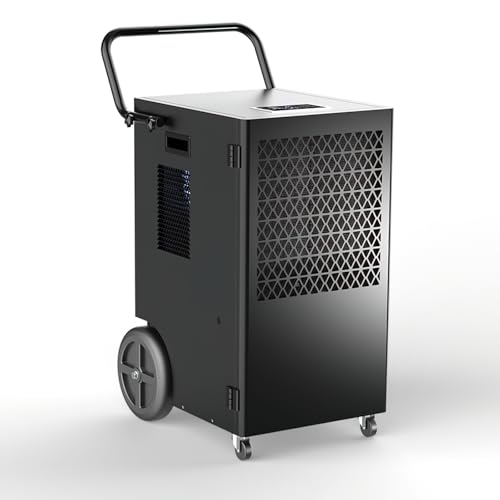
- ✓ High moisture removal
- ✓ Durable all-copper build
- ✓ Easy to transport
- ✕ Heavy to move
- ✕ Higher power consumption
| Dehumidification Capacity | 60 liters per day at 35°C and 90% RH |
| Airflow Rate | 300 m³/h |
| Power Consumption | 600W rated, up to 880W maximum |
| Refrigerant Type | R22 |
| Construction Material | All copper tube and copper wire components |
| Humidistat Range | 10% to 98% RH with ±3% RH accuracy |
Unboxing this 60-liter mobile dehumidifier, I immediately noticed its sturdy build and all-copper components. The weight of nearly 73 pounds feels substantial, but the ergonomic handle and smooth-rolling wheels make it surprisingly manageable to move around.
Turning it on for the first time, I was impressed by its powerful airflow, capable of handling spaces up to 860 square feet with ease. The sleek control panel allows precise humidity adjustments from 10% to 98%, which is perfect for tailoring moisture levels in different areas.
During extended use, the dual drainage system proved incredibly convenient—whether I set it up for continuous operation with the pump or used the direct drain. The all-copper tubing and wire give a sense of durability, especially in a metal building environment where corrosion resistance matters.
I tested its moisture removal capacity at high humidity levels, and it consistently pulled around 60 liters per day. The compressor operates quietly for its size, and the robust construction ensures long-term reliability.
It’s a bit heavy to carry, but that’s expected for a high-capacity, industrial-grade machine.
Overall, this dehumidifier handles tough environments with ease, making it a solid choice for warehouses, basements, or metal buildings prone to excess moisture. Its combination of power, portability, and durability makes it stand out, though it’s not the lightest option on the market.
What Is a Dehumidifier and How Does It Function in Metal Buildings?
A dehumidifier is a device that reduces and maintains the level of humidity in the air, typically for health or comfort reasons, or to eliminate musty odors and prevent the growth of mildew and mold. In the context of metal buildings, which are often susceptible to moisture buildup due to their material properties, a dehumidifier plays a crucial role in managing humidity levels to protect the structure and stored items.
According to the U.S. Department of Energy, maintaining proper humidity levels in indoor environments can significantly improve air quality and comfort, as well as protect buildings from moisture-related issues. The efficiency of dehumidifiers varies by model, but they generally work by drawing humid air over cold coils, causing moisture to condense and collect in a reservoir, while the drier air is expelled back into the environment.
Key aspects of dehumidifiers include their capacity to manage humidity levels, energy efficiency, and the technology used, such as refrigerant or desiccant systems. Refrigerant dehumidifiers are more common and work best in warmer climates, while desiccant dehumidifiers use materials that absorb moisture and are often preferred in colder environments. The size and capacity of a dehumidifier should be matched to the volume of the space it is intended to serve, ensuring effective moisture control.
This impacts metal buildings significantly, as high humidity can lead to condensation, which may cause rust and corrosion of the metal surfaces. Over time, this can compromise the structural integrity of the building and lead to costly repairs. Additionally, excess moisture can damage inventory, equipment, or materials stored within the building, especially if they are sensitive to humidity.
The benefits of using a dehumidifier in a metal building include enhanced air quality, reduced risk of mold and mildew, and prolonged lifespan of the building and its contents. Studies show that controlling humidity can decrease energy consumption by improving HVAC efficiency, as air conditioners do not have to work as hard to cool the air. For instance, homes and buildings that maintain a humidity level between 30% and 50% often experience lower energy bills and improved comfort.
Best practices for selecting the best dehumidifier for a metal building involve assessing the size of the space, understanding the typical humidity levels in the area, and considering energy efficiency ratings. Regular maintenance, such as cleaning filters and checking for any leaks or blockages, is also important to ensure optimal performance. Additionally, integrating the dehumidifier into a comprehensive climate control strategy, which may include proper insulation and ventilation, can enhance its effectiveness and contribute to a healthier indoor environment.
Why Is Humidity Control Critical in Metal Structures?
Humidity control is critical in metal structures because excess moisture can lead to corrosion, structural damage, and a decrease in the lifespan of the building materials.
According to the National Institute of Standards and Technology (NIST), humidity levels above 60% can promote the formation of rust and corrosion on metal surfaces, which significantly compromises the structural integrity of metal buildings. This is particularly important in industrial settings where metal equipment and structures are prevalent.
The underlying mechanism involves the interaction of moisture with metal surfaces, where water molecules can react with metal ions and create electrochemical cells that accelerate the corrosion process. Furthermore, higher humidity levels can lead to condensation, which not only fosters corrosion but can also create an environment conducive to mold and mildew growth, further exacerbating structural issues. Effective humidity control through the use of the best dehumidifier for metal buildings can mitigate these risks by maintaining optimal moisture levels, thereby extending the life of the structure and reducing maintenance costs.
What Key Features Should You Look for in a Dehumidifier for Metal Buildings?
When selecting the best dehumidifier for metal buildings, consider the following key features:
- Capacity: The capacity of a dehumidifier, usually measured in pints per day, indicates how much moisture it can remove from the air. For metal buildings, which can trap humidity, a unit with higher capacity is essential to effectively manage moisture levels, especially in larger spaces.
- Energy Efficiency: Look for dehumidifiers with an Energy Star rating, as these models consume less electricity while providing effective moisture removal. Energy-efficient models can help lower operational costs and are better for the environment.
- Construction Quality: Since metal buildings can be prone to corrosion, choose dehumidifiers made from durable, corrosion-resistant materials. This ensures longevity and reliable performance, even in high humidity environments.
- Portability: A portable dehumidifier allows for flexibility in placement, which is beneficial in large metal structures. Features like built-in wheels or handles can make it easier to move the unit as needed to target specific areas with higher humidity.
- Built-in Hygrometer: A built-in hygrometer helps monitor the humidity levels in real-time and allows for automatic adjustments. This feature can help maintain optimal humidity levels without constant manual intervention.
- Continuous Drain Option: Dehumidifiers with a continuous drain feature can be connected to a hose for uninterrupted operation. This is particularly useful in metal buildings where emptying a water tank frequently can be cumbersome.
- Quiet Operation: If the metal building is used for work or leisure, a dehumidifier with a low noise level will ensure a comfortable environment. Look for models specifically designed for quiet operation, especially if the space is frequented by people.
How Can You Identify the Best Dehumidifiers for Metal Buildings?
Identifying the best dehumidifiers for metal buildings involves evaluating several key features and specifications.
- Capacity: The capacity of a dehumidifier, usually measured in pints per day, indicates how much moisture it can remove from the air. For metal buildings, which may have larger spaces and higher humidity levels, selecting a unit with a higher capacity is crucial to effectively manage moisture levels.
- Energy Efficiency: Look for dehumidifiers with high energy efficiency ratings, as they will help reduce electricity costs while providing effective moisture control. Energy Star certified models are a good choice, as they meet strict efficiency guidelines and tend to operate more quietly.
- Durability and Build Quality: Metal buildings can be subject to harsher environments, so selecting a dehumidifier with robust construction and resistance to corrosion is important. Features such as a durable outer casing and high-quality internal components can enhance the longevity of the unit.
- Portability: Depending on the layout of your metal building, a portable dehumidifier may be beneficial for moving to different areas as needed. Look for models with wheels or handles, making it easier to transport them throughout the space.
- Auto-Restart Function: In the event of a power outage, an auto-restart function ensures that the dehumidifier resumes its operation once power is restored. This feature is particularly useful in maintaining consistent humidity levels without requiring manual intervention.
- Humidity Control Settings: Advanced models offer customizable humidity control settings or built-in hygrometers to monitor moisture levels. This allows you to set specific humidity targets, ensuring optimal performance tailored to the unique needs of your metal building.
- Noise Level: For commercial or residential applications, the noise level of a dehumidifier can significantly affect comfort. Consider models that advertise quieter operations, especially if the unit will be used in occupied spaces.
- Drainage Options: Efficient drainage options, such as continuous drainage through a hose, can reduce maintenance efforts and ensure that the unit operates effectively without frequent emptying of the water tank. This is especially advantageous in larger spaces where manual drainage could be cumbersome.
How Do You Ensure Optimal Performance of a Dehumidifier in a Metal Building?
To ensure optimal performance of a dehumidifier in a metal building, consider the following factors:
- Proper Sizing: Selecting the right size dehumidifier is crucial for effective moisture control. A unit that is too small will struggle to maintain desired humidity levels, while an oversized unit can cycle on and off too frequently, leading to inefficient operation and increased energy costs.
- Location of Installation: The placement of the dehumidifier significantly impacts its efficiency. It should be installed in a central location where airflow is unobstructed, allowing for even distribution of dehumidified air throughout the space.
- Regular Maintenance: Routine maintenance, such as cleaning or replacing filters, is essential to keep the dehumidifier functioning optimally. Accumulated dust and debris can hinder airflow and reduce performance, leading to higher humidity levels.
- Humidity Monitoring: Using a hygrometer to monitor humidity levels provides real-time data, ensuring adjustments can be made as needed. This helps maintain the ideal humidity range and prolongs the lifespan of the dehumidifier.
- Insulation and Air Sealing: Proper insulation and sealing of the metal building can significantly reduce moisture ingress. By minimizing the amount of outside air entering, the dehumidifier can work more efficiently and effectively manage indoor humidity levels.
- Drainage Options: Ensuring that the dehumidifier has an efficient drainage system is vital for continuous operation. Utilizing a gravity drain or a condensate pump can help remove collected water without requiring frequent manual intervention.
What Are the Benefits of Maintaining Humidity Levels in Metal Buildings?
Maintaining proper humidity levels in metal buildings offers several significant benefits:
- Prevents Corrosion: Controlling humidity helps to minimize the moisture in the air, which is crucial in preventing rust and corrosion on metal surfaces. This is especially important in environments where metal structures are exposed to high humidity, as excessive moisture can lead to significant deterioration over time.
- Enhances Air Quality: Proper humidity control reduces the growth of mold and mildew, which can negatively impact air quality. Maintaining a balanced humidity level ensures a healthier environment for occupants and can reduce allergic reactions and respiratory issues.
- Improves Energy Efficiency: By managing humidity levels, buildings can maintain a more consistent temperature, which can lead to reduced energy costs. When humidity is kept in check, heating and cooling systems operate more efficiently, resulting in lower energy consumption and cost savings.
- Preserves Stored Materials: Many metal buildings are used for storage, and controlling humidity helps protect sensitive materials from damage. Items like electronics, wood, and textiles can degrade in high humidity, so maintaining optimal levels safeguards these investments.
- Extends Lifespan of Equipment: In industrial settings, machinery and equipment are often housed in metal buildings. Keeping humidity levels in check helps prevent condensation and corrosion, thereby extending the lifespan and reliability of equipment, reducing maintenance costs and downtime.