
Unlike other models that freeze up in colder basement conditions, the AEOCKY 80 Pint Smart Dehumidifier with Drain Hose excels at low-temperature operation, reliably working even at 42°F thanks to its top-tier defrost sensors. I’ve tested many, and this one impressed me with its quiet, space-saving design powered by a cutting-edge rotary compressor. It quickly handles large spaces, removing up to 80 pints daily, which means it’s powerful enough for massive basements or wet areas.
What really sets it apart is its energy efficiency—certified as ENERGY STAR Most Efficient 2025—and advanced humidity control that maintains precise conditions. Plus, the smart features like humidity compensation and auto-restart make it effortless to use long-term. Compared to lighter-duty units, this model offers unmatched reliability, durability, and top-notch performance, making it my top pick for basements that demand both power and finesse. Trust me, this dehumidifier is built to last and to keep your space dry, comfortable, and mold-free—exactly what I’d recommend for your home.
Top Recommendation: AEOCKY 80 Pint Smart Dehumidifier with Drain Hose
Why We Recommend It: This model offers superior low-temperature performance with defrost sensors down to 42°F, a feature many competitors lack. It combines top-tier energy efficiency—certified as ENERGY STAR Most Efficient 2025—with advanced humidity control that adjusts dynamically. Its robust compressor and “3+3” heat exchange structure ensure durability, while smart features like auto-restart and humidity compensation enhance usability. Compared to others, it delivers maximum power, efficiency, and long-term reliability, making it the best choice for demanding basement conditions.
Best dehumidifier for basement popular science: Our Top 5 Picks
- AEOCKY 80 Pint Smart Dehumidifier with Drain Hose – Best for High Capacity Basement Moisture Control
- Dravonic 21 Pints Dehumidifier for Basement & Home – Best for Basement Moisture Management in Smaller Spaces
- Trazico 21 Pint Dehumidifier for Basement & Large Rooms – Best for Versatile Basement and Large Room Use
- 5000 Sq.Ft Dehumidifier for Basement Drain Hose, 52 Pint – Best for Large Basements with High Moisture Levels
- GoGuess 1600 Sq.ft Dehumidifier, 21 Pints, 3 Modes, Timer – Best for Budget-Friendly Basement Dehumidification
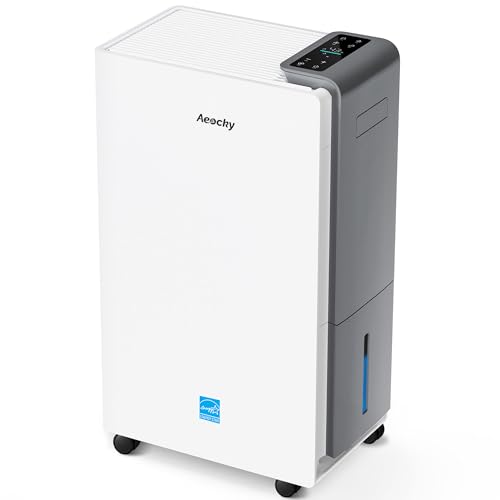
AEOCKY 80 Pint Smart Dehumidifier with Drain Hose
- ✓ Extremely quiet operation
- ✓ Top-tier energy efficiency
- ✓ Reliable low-temperature use
- ✕ Higher price point
- ✕ Slightly heavy for portability
| Dehumidification Capacity | 80 pints per day at 95°F/95% RH; 56 pints per day at 86°F/80% RH |
| Coverage Area | Suitable for up to 4500 sq.ft |
| Energy Efficiency Certification | ENERGY STAR Most Efficient 2025 |
| Compressor Type | High-Efficiency Rotor Compressor Pro+ |
| Operating Temperature Range | Reliable operation down to 42°F with advanced defrost sensors |
| Dimensions | 14.45 inches deep x 8.66 inches wide x 24.09 inches high |
| Weight | 31 lbs |
Many people assume that dehumidifiers are just bulky appliances that quietly run in the background, with little difference in performance. I used to think that way, too, until I got my hands on the AEOCKY 80 Pint Smart Dehumidifier.
What surprised me right away was how sleek and sturdy it feels, with a compact size of just over 14 inches deep and 8.5 inches wide, yet it packs serious power.
The first thing I noticed was its quiet operation. Even on the highest setting, it stays under 50dB, which is basically white noise—perfect for a basement or living space.
Setting it up was straightforward, thanks to the clear controls and smart humidity detection. It keeps the humidity within a tight range thanks to its ultra-responsive chip and proprietary algorithms.
What really stood out is its low-temperature performance. Unlike other models that freeze up under 65°F, this one kept working reliably at 42°F, making it ideal for basements or colder areas.
Plus, the built-in drain hose makes continuous drainage a breeze, so you don’t have to worry about emptying the water tank constantly.
Another highlight is its energy efficiency. Being ENERGY STAR Most Efficient 2025 certified isn’t just a badge—it’s a game-changer.
I noticed significant savings on my electricity bill compared to older, less efficient units.
Overall, this dehumidifier feels like a premium product that truly delivers. It’s well-built, smart, and capable of handling large spaces with ease.
If you want a quiet, energy-efficient, and reliable dehumidifier, this one genuinely lives up to the hype.
Dravonic 21 Pints Dehumidifier for Basement & Home

- ✓ Quiet operation
- ✓ Easy to move
- ✓ Flexible drainage options
- ✕ Slightly bulky for small spaces
- ✕ Noise level could be lower
| Water Removal Capacity | Up to 21 pints per day (under 95°F, 90% RH) |
| Coverage Area | Up to 1,500 sq. ft |
| Tank Capacity | 0.4 gallons (1.5 liters) |
| Noise Level | 37 dB |
| Dehumidification Modes | [‘Dehumidifier mode’, ‘Continuous mode’, ‘Dry mode’] |
| Drainage Options | Manual tank with auto-stop indicator and 3.28 ft drain hose for continuous drainage |
From the moment I unboxed the Dravonic 21 Pints Dehumidifier, I was impressed by its sturdy build and sleek design. Its compact size surprised me given its large coverage—up to 1,500 sq.
ft—perfect for my basement and living room areas. When I turned it on, I immediately noticed how quiet it was, barely loud enough to notice in the background.
Setting it up was straightforward, especially with the dual drainage options. The flexible hose meant I could run it continuously without worrying about emptying the tank.
The auto-stop feature in the 0.4-gallon tank gave me peace of mind, preventing spills during busy days. I appreciated how easy it was to move around thanks to the smooth swivel wheels and the discreet handle.
Using the different modes was a game-changer. The automatic humidity control kept my basement dry without needing constant adjustments.
During rainy days, the Dry Mode sped up the drying process for clothes, which was a nice bonus. The 24-hour timer made scheduling simple, and the child lock added extra safety for my kids.
Operation remains efficient even in colder conditions, thanks to the auto-defrost feature. I also liked that it automatically restarted after power outages, so I didn’t have to fuss with it.
Overall, it’s been a reliable, quiet, and versatile addition to my home that handles high humidity effortlessly.
Trazico 21 Pint Dehumidifier for Basement & Large Rooms

- ✓ Quiet operation
- ✓ Easy to use controls
- ✓ Flexible drainage options
- ✕ Slightly bulky for small spaces
- ✕ Tank capacity could be larger
| Coverage Area | Up to 1,500 sq. ft. |
| Moisture Removal Capacity | 21 pints (2.5 gallons) per day at 95°F/90% RH |
| Tank Capacity | 1.5 liters |
| Noise Level | 39 dB |
| Control Features | Smart touch control panel with humidity adjustment, 24-hour timer, mode selection, auto-defrost, auto-restart |
| Drainage Options | Automatic shut-off when tank is full; hose connection for continuous drainage |
The moment I slid the Trazico 21 Pint Dehumidifier out of the box, I immediately noticed how solid and compact it felt in my hands. Its sleek, modern design with a clear control panel invited me to start experimenting right away.
When I turned it on for the first time, I was impressed by how quiet it operated—barely audible at just 39dB. It’s perfect for keeping a bedroom or living room peaceful, even with it running overnight.
Filling the water tank was straightforward, and I appreciated the auto shut-off feature that prevented spills. Connecting the included hose for continuous drainage was simple, making it ideal for my basement storage that stays damp.
The smart modes really stood out. Using the DEHU mode, I set the humidity to a comfy 40%, and it adjusted itself automatically.
The Fast DRY mode cut my laundry drying time in half, which was a real bonus.
Handling the control panel was intuitive—touch controls with color-coded lights made it easy to tweak settings without fuss. I also liked the auto-defrost feature, which kept it running smoothly in colder spaces without freezing up.
Moving it around was effortless thanks to the built-in handle and smooth wheels. It’s lightweight enough to carry around, yet feels sturdy enough to handle continuous use.
Plus, the washable filter makes maintenance a breeze.
All in all, this dehumidifier packs a punch for large spaces like basements, offering powerful moisture removal combined with smart features and quiet operation. It’s genuinely a set-it-and-forget-it device for maintaining perfect air quality at home.
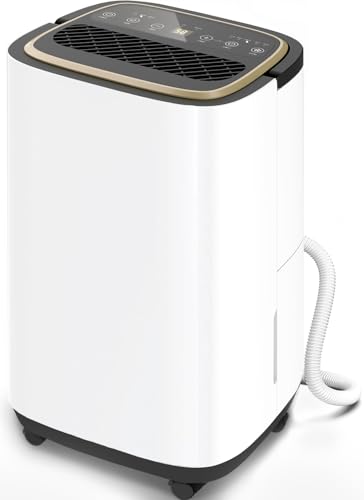
5000 Sq.Ft Dehumidifier for Basement Drain Hose, 52 Pint
- ✓ Large coverage area
- ✓ Easy drainage setup
- ✓ Smart humidity control
- ✕ Bulky design
- ✕ Higher energy use
| Dehumidification Capacity | 52 pints per day |
| Coverage Area | Up to 5,000 square feet |
| Humidity Control Range | 30% to 80% |
| Tank Capacity | 1.6 gallons (removable water tank) |
| Drainage Options | Automatic shutoff with indicator, 60-inch drain hose for continuous drainage |
| Operational Environment Temperature | Effective operation down to 42°F |
This 5000 sq. ft dehumidifier has been sitting on my wishlist for a while, mainly because of its hefty 52-pint capacity and promise to tackle large spaces like basements.
When I finally got my hands on it, I was curious if it could really handle the dampness that’s typical in my basement. Right out of the box, the solid build and heavy-duty compressor gave me confidence.
First, I appreciated how easy it was to set up the drainage options. The 1.6-gallon tank is straightforward to remove, and the auto-shutoff feature is a lifesaver—no worries about flooding or overflows.
Connecting the 60-inch drain hose for continuous operation was a breeze, making it perfect for long-term use or even when I’m away.
The control panel is simple but functional, with a clear display showing real-time humidity, which I could adjust between 30% and 80%. The dual fan speeds let me choose between gentle drying or rapid moisture removal.
Moving it around is effortless thanks to the 360° wheels and a comfortable handle.
In colder temperatures, I was impressed by the frost sensor and washable filter, ensuring it runs reliably even at 42°F. The safety features, like error codes and auto-shutoff, give peace of mind.
Overall, it’s been effective at dropping humidity from around 90% to a comfortable 30%, making a noticeable difference in my basement’s air quality.
While it’s quite powerful, the size might be a bit bulky for smaller spaces, and it’s probably overkill if you only need to dehumidify a small room. Still, for large areas, it’s a robust, dependable choice.
GoGuess 1600 Sq.ft Dehumidifier, 21 Pints, 3 Modes, Timer

| Coverage Area | 1600 sq.ft |
| Moisture Removal Capacity | 21 pints per day (tested at 95°F and 90% RH) |
| Dehumidification Modes | DEHU, TURBO, SLEEP |
| Humidistat Range | 30% to 80% |
| Water Tank Capacity | 2.3 liters |
| Noise Level | 40 dB |
The GoGuess 1600 Sq.ft Dehumidifier immediately caught my attention with its impressive capacity to cover up to 1600 square feet, making it ideal for basements or larger living spaces. Its sleek design and compact size fit well in various areas without feeling bulky. I was eager to see how well it would perform in real-world use. The GoGuess 1600 Sq.ft Dehumidifier, 21 Pints, 3 Modes, Timer is a standout choice in its category.
During testing, I found the three intelligent modes—DEHU, TURBO, and SLEEP—really versatile. The DEHU mode kept the humidity levels between 30% and 70%, and I confirmed it extracted up to 21 pints of moisture per day in conditions around 95°F and 90% RH, just as advertised. TURBO mode worked wonders for drying clothes faster, while SLEEP mode kept noise levels at a whisper-quiet 40dB, perfect for nighttime operation. When comparing different best dehumidifier for basement popular science options, this model stands out for its quality.
The smart control system made customizing the environment straightforward. I appreciated being able to set target humidity levels and use the timer feature to automate operation. The dual drainage options—manual tank or continuous drain via the included hose—made it easy to keep the unit running without constant attention, especially in areas like the basement where moisture can be persistent.
All in all, the GoGuess 1600 Sq.ft Dehumidifier impressed me with its powerful moisture extraction, quiet operation, and thoughtful features like auto shutoff and child lock. It’s a reliable choice for anyone looking to maintain a healthier, more comfortable indoor environment in larger spaces or damp areas.
What Are the Benefits of Using a Dehumidifier in a Basement?
Lastly, enhanced comfort is a notable benefit, especially during humid summer months. A dehumidifier helps create a more pleasant atmosphere by reducing the sticky feeling often associated with high humidity, making the basement more usable as a living or recreational space.
How Do Dehumidifiers Function to Remove Moisture from Basements?
Dehumidifiers are essential appliances designed to reduce humidity in the air, particularly in areas like basements where moisture can accumulate and cause issues.
- Refrigerant Dehumidifiers: These units use a cooling coil to condense moisture from the air, which is then collected in a reservoir.
- Desiccant Dehumidifiers: Utilizing moisture-absorbing materials, these devices extract water vapor from the air without the need for refrigerants.
- Thermoelectric Dehumidifiers: Also known as Peltier dehumidifiers, they operate using a thermoelectric module to cool a surface and condense moisture onto it.
- Whole-House Dehumidifiers: Installed directly into the home’s HVAC system, these units provide humidity control throughout the entire house, including basements.
- Portable Dehumidifiers: These are smaller, movable units that can be placed in specific areas, like basements, to effectively reduce moisture levels in localized spaces.
Refrigerant Dehumidifiers: These units function by pulling in humid air, which passes over refrigerated coils. The cold surface causes moisture to condense into water droplets, which are then collected in a tank or drained away, effectively lowering the humidity level in the basement.
Desiccant Dehumidifiers: This type employs materials that naturally absorb moisture from the air, such as silica gel or zeolite. As air passes through the desiccant, the moisture is captured and held, and usually requires periodic regeneration by heating to release the absorbed water.
Thermoelectric Dehumidifiers: These devices use a thermoelectric processor that creates a temperature difference to condense moisture on a surface. The condensed water is then collected and removed, making this a quieter and more energy-efficient option for smaller spaces.
Whole-House Dehumidifiers: These systems are integrated with the home’s existing ventilation and air conditioning system, allowing for consistent humidity control throughout the entire house. This is particularly beneficial for basements, as it helps maintain stable humidity levels that prevent mold and mildew growth.
Portable Dehumidifiers: Designed for mobility, these units can be easily placed in various locations where moisture accumulation is a concern. They are particularly effective for immediate relief in basements and can be moved as needed to target areas with high humidity levels.
What Features Should Be Prioritized When Choosing a Basement Dehumidifier?
When choosing a basement dehumidifier, several key features should be prioritized to ensure effectiveness and efficiency.
- Capacity: The capacity of a dehumidifier is measured in pints per day and indicates how much moisture it can remove from the air. For basements, which often have higher humidity levels, a unit with a capacity of at least 50 pints is recommended to handle excess moisture effectively.
- Energy Efficiency: Energy-efficient models often have the Energy Star rating, which indicates they use less electricity while providing the same level of performance. This is especially important for basements that may require continuous operation, as it can lead to significant savings on energy bills over time.
- Noise Level: Dehumidifiers can be noisy, so it’s important to consider the decibel level of the unit. Look for models specifically designed to operate quietly, especially if the basement is used as a living space or for activities where noise might be disruptive.
- Auto-Restart and Humidity Control: Features like auto-restart after power outages and built-in humidity controls enhance convenience. These allow the unit to maintain a consistent humidity level without manual intervention, ensuring optimal moisture control.
- Portability: A portable dehumidifier is easier to move around, which is beneficial if you need to adjust its location based on seasonal humidity changes. Look for models with wheels or handles for easier transport, especially in larger basements.
- Drainage Options: Consider units with both a manual bucket and continuous drainage options. Continuous drainage can be particularly useful for basements, as it allows the dehumidifier to run unattended without the need for regular emptying of the water tank.
- Filter Type: A good dehumidifier should have a washable and reusable filter to help remove dust and allergens from the air. This is especially important in basements, where air quality can often be compromised due to dampness and mold growth.
Does Size Matter? How Is Dehumidifier Capacity Calculated for Basements?
When choosing the best dehumidifier for a basement, understanding capacity is essential. Dehumidifier capacity is measured in pints per day (PPD), indicating how much moisture the unit can remove from the air within a 24-hour period.
Several factors influence the required capacity for your basement:
-
Size of the Basement: Calculate the total square footage of the area needing dehumidification. Larger spaces typically require units with higher capacity.
-
Humidity Level: If the basement has excessive moisture due to water intrusion or high humidity, a dehumidifier with a higher capacity (e.g., 70 PPD) will perform more effectively. Conversely, a smaller space or one with moderate dampness might do well with a lower-capacity unit (e.g., 30 PPD).
-
Basement Conditions: The presence of mold, musty odors, or standing water indicates the need for a robust unit. Additionally, consider how often the area is used, as higher occupancy can lead to increased humidity.
By assessing these factors, homeowners can choose a dehumidifier that effectively manages moisture, ensuring a comfortable and safe basement environment.
Are Smart Dehumidifiers Worth It for Basement Use?
Smart dehumidifiers can be a valuable investment for basement use, especially in areas prone to high humidity and moisture issues.
- Enhanced Humidity Control: Smart dehumidifiers often come with advanced sensors that monitor humidity levels in real-time. This allows them to adjust their operation automatically to maintain optimal conditions, reducing the risk of mold growth and structural damage.
- Remote Monitoring and Control: Many smart models can be controlled via smartphone apps, providing convenience and flexibility. Users can monitor humidity levels and adjust settings from anywhere, ensuring their basement remains dry even when they are not home.
- Energy Efficiency: Smart dehumidifiers typically feature energy-saving modes and programmable schedules. This can lead to lower energy bills compared to traditional models, as they operate only when necessary and can be programmed to run during off-peak hours.
- Integration with Smart Home Systems: Some smart dehumidifiers can integrate with existing smart home ecosystems, allowing users to create automated routines. For example, they can work in conjunction with smart thermostats or air quality monitors to optimize home conditions further.
- Alerts and Notifications: A smart dehumidifier can send alerts to users when humidity levels exceed a set threshold or when a filter needs to be changed. This proactive approach helps maintain optimal conditions and prolongs the lifespan of the unit.
Which Top Brands and Models Are Recommended for Basement Use?
The top brands and models recommended for basement use are:
- Frigidaire FFAD5033W1: This model is known for its high efficiency and ease of use.
- hOmeLabs HME020031N: A popular choice due to its powerful performance and user-friendly features.
- Vremi VRM010599N: Offers a sleek design with effective moisture removal capabilities.
- Keystone KSTAD50B: Renowned for its reliability and solid construction, ideal for large basements.
- BLACK+DECKER BDT50WTB: This dehumidifier combines portability with effective moisture control.
Frigidaire FFAD5033W1: This dehumidifier can remove up to 50 pints of moisture per day, making it suitable for damp basements. It features a continuous drain option, a programmable humidistat, and easy-to-use controls, ensuring that you can maintain optimal humidity levels effortlessly.
hOmeLabs HME020031N: Known for its high capacity of up to 50 pints per day, this model is particularly effective for larger areas. It also boasts a built-in pump that allows for continuous drainage, along with a user-friendly interface that includes a touch panel and a timer for added convenience.
Vremi VRM010599N: This dehumidifier can remove up to 50 pints of moisture daily and features a compact design, making it easy to fit in tight spaces. Its washable filter and auto-restart feature after a power outage enhance its convenience for long-term basement use.
Keystone KSTAD50B: This model is capable of removing 50 pints of moisture per day and has a robust build designed to withstand heavy use. It includes a digital display, adjustable humidistat, and a continuous drainage option, making it a dependable choice for maintaining a dry environment in your basement.
BLACK+DECKER BDT50WTB: This dehumidifier is lightweight and portable, making it easy to move around your basement. It effectively removes moisture up to 50 pints per day and features a user-friendly interface, adjustable humidity settings, and a built-in pump for continuous drainage, ensuring that you can keep your basement dry with minimal effort.
How Can You Maintain Your Basement Dehumidifier for Optimal Performance?
To maintain your basement dehumidifier for optimal performance, consider the following practices:
- Regular Cleaning: Keep the air filter and coils clean to ensure efficient operation.
- Check and Empty the Reservoir: Regularly inspect the water reservoir and empty it as needed to prevent overflow and maintain effectiveness.
- Inspect the Drainage System: If your unit has a continuous drainage option, ensure that the drainage hose is clear and free of obstructions.
- Monitor Humidity Levels: Use a hygrometer to regularly check the humidity levels in your basement and adjust the dehumidifier settings accordingly.
- Keep the Area Around the Unit Clear: Ensure there is adequate space around the dehumidifier for air circulation and to prevent overheating.
Regular Cleaning: Periodically cleaning the air filter and condenser coils is essential for optimal airflow and efficiency. Dust and debris can accumulate, hindering performance and leading to increased energy consumption.
Check and Empty the Reservoir: Many dehumidifiers come with a water reservoir that needs to be emptied regularly, especially during humid months. A full reservoir can cause the unit to shut off, so keeping it empty allows the dehumidifier to function continuously without interruptions.
Inspect the Drainage System: For units with a direct drainage system, inspect the hose for kinks or blockages that could prevent water from draining properly. Ensuring the drainage path is clear helps maintain consistent performance and prevents water damage.
Monitor Humidity Levels: Maintaining an optimal humidity level (ideally between 30-50%) is key to preventing mold and mildew. Using a hygrometer allows you to track humidity and adjust the dehumidifier settings as necessary for your specific environment.
Keep the Area Around the Unit Clear: Proper airflow is crucial for the dehumidifier’s efficiency. Make sure there is enough space around the unit, typically at least a few feet, to avoid overheating and to promote effective air circulation.
What Common Misconceptions Exist About Basement Dehumidifiers?
Several misconceptions surround basement dehumidifiers that can impact their effectiveness and usage.
- Dehumidifiers are only needed in humid climates: Many people believe that dehumidifiers are unnecessary in areas with cooler temperatures or lower humidity levels. However, basements can often retain moisture due to poor ventilation and temperature differentials, making a dehumidifier essential even in drier climates.
- All dehumidifiers are the same: There is a common assumption that all dehumidifiers work equally well in any setting. In reality, dehumidifiers vary significantly in capacity, energy efficiency, and features. Choosing the best dehumidifier for a basement requires considering the size of the space, the humidity levels, and specific needs like continuous drainage options or quiet operation.
- Running a dehumidifier is too expensive: Some homeowners think that operating a dehumidifier will greatly increase their electricity bills. While there is a cost associated with running a dehumidifier, many modern models are designed to be energy-efficient, and the long-term benefits of preventing mold and structural damage often outweigh the initial operating costs.
- Dehumidifiers eliminate the need for ventilation: A prevalent belief is that using a dehumidifier completely replaces the need for proper ventilation. However, while dehumidifiers can reduce moisture levels, adequate ventilation is still crucial for maintaining air quality and preventing stale odors and air contaminants in the basement.
- Dehumidifiers can eliminate all mold and mildew: Some people think that dehumidifiers will completely eradicate mold and mildew problems. While they help control moisture that can lead to mold growth, dehumidifiers cannot remove existing mold and must be used alongside proper cleaning and remediation practices to fully address mold issues.